Key takeaways
- Occasional travelers who mostly browse, message and stream on one or two devices.
- Anyone needing a cheap Client-mode adapter to put a wired device on Wi-Fi.
- Students in dorms with a wired-only port and modest bandwidth.
- A spare “emergency” router to keep in a laptop bag.
The TP-Link AC750 travel router (model TL-WR902AC) is still a handy, low-cost way to turn a single hotel Ethernet jack or captive Wi-Fi network into your own private network, but in 2026 its 10/100 Ethernet port, Wi-Fi 5 radios and lack of VPN support make it a budget pick only; anyone who streams, works over VPN or has a fast connection at their destination should step up to a Wi-Fi 6 travel router. Here is what it does well, where it falls short and what to buy instead.
Our top picks

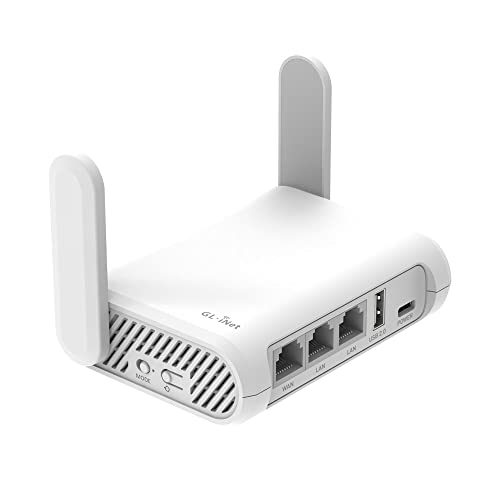


As an Amazon Associate we earn from qualifying purchases at no extra cost to you. Ratings are shown as listed on Amazon.
TL-WR902AC at a glance
| Spec | TP-Link TL-WR902AC (AC750) |
|---|---|
| Wi-Fi | Wi-Fi 5 (802.11ac), dual-band: 433 Mbps on 5 GHz + 300 Mbps on 2.4 GHz |
| Ethernet | 1 x 10/100 Mbps port (works as WAN or LAN depending on mode) |
| USB | 1 x USB 2.0 for file/media sharing and device charging |
| Power | 5 V / 2 A over micro-USB (wall adapter, laptop port or power bank) |
| Size | About 2.9 x 2.6 x 0.9 in (74 x 67 x 22 mm) |
| Operating modes | Router, Hotspot (WISP), Range Extender, Access Point, Client |
| VPN client | No |
| Typical price range | About $30–$45 |
What each mode is for
The physical mode switch on the side is the main reason this little box remains popular. Each position solves a different travel problem:
| Mode | Input | Output | Typical use |
|---|---|---|---|
| Router | Ethernet from a modem or wall jack | Private Wi-Fi | Hotel or dorm room with only a wired port |
| Hotspot (WISP) | Existing Wi-Fi network | Private Wi-Fi with its own subnet | Sharing one paid hotel login across all your devices |
| Range Extender | Existing Wi-Fi | Repeated Wi-Fi | Weak signal in a rental or far room |
| Access Point | Ethernet from a router | Wi-Fi on the same network | Adding Wi-Fi to a wired-only network |
| Client | Existing Wi-Fi | Ethernet port | Getting a wired-only device (TV, console, printer) online over Wi-Fi |
Hotspot mode is the most useful in hotels. You log in to the captive portal once from a laptop, and every phone, tablet, streaming stick and laptop then connects to your travel network with your saved password. For streaming sticks that cannot handle captive portals at all, this is often the only way to get them online.
Real-world performance limits
Three bottlenecks matter more than the “AC750” label:
- Fast Ethernet port: when plugged into a wired jack, the port tops out at 100 Mbps, and real throughput is usually 90 to 95 Mbps. Many hotels and short-term rentals now deliver more than that over a wired connection.
- Single-stream 5 GHz radio: the 433 Mbps 5 GHz link rate typically delivers well under 200 Mbps of real throughput to a client nearby.
- Repeating halves bandwidth: in Hotspot or Range Extender mode, the router listens to the upstream Wi-Fi and rebroadcasts on the same hardware, so expect roughly half of whatever the hotel Wi-Fi provides, minus overhead.
For context, a 4K stream needs about 15 to 25 Mbps, and a video call about 3 to 5 Mbps per person. If the hotel network itself manages 30 to 50 Mbps, the TL-WR902AC will not be the limiting factor for one or two travelers. If you are paying for a fast connection or sharing among a family, it will be.
Power and portability
Running from 5 V micro-USB is convenient: a laptop USB port or a 10,000 mAh power bank can keep it going for a long train ride. Some older laptop ports cannot supply a full 2 A, which causes random reboots, so carrying the included adapter or a phone charger rated 2 A or more avoids that. The micro-USB connector is also the most fragile part of the unit; travelers who plug and unplug daily often find it loosens over time.
Security limits worth knowing
Using your own travel router means your devices sit behind its NAT and firewall instead of being visible to everyone else on the hotel network, which is a real benefit. What it cannot do is encrypt your traffic beyond the hotel network: the TL-WR902AC has no built-in VPN client. You need a VPN app on each device instead. It also runs older firmware, so update it to the latest version from TP-Link before a trip and change the default admin and Wi-Fi passwords.
Who it still suits
- Occasional travelers who mostly browse, message and stream on one or two devices.
- Anyone needing a cheap Client-mode adapter to put a wired device on Wi-Fi.
- Students in dorms with a wired-only port and modest bandwidth.
- A spare “emergency” router to keep in a laptop bag.
What to buy instead
| Need | Better option | Why | Typical price range |
|---|---|---|---|
| Same TP-Link simplicity, faster | TP-Link TL-WR1502X (AX1500) | Wi-Fi 6, gigabit ports, USB-C power, VPN client support | $60–$90 |
| Built-in VPN, power users | GL.iNet Beryl AX (GL-MT3000) | Wi-Fi 6 AX3000, 2.5 GbE WAN, WireGuard and OpenVPN | $80–$110 |
| Several wired devices | GL.iNet Slate AX (GL-AXT1800) | Wi-Fi 6 with three gigabit ports and VPN | $100–$140 |
| Lowest cost, light use | TP-Link TL-WR902AC | Still works fine for basic browsing and streaming | $30–$45 |
The cost gap between the TL-WR902AC and a Wi-Fi 6 travel router is usually $30 to $60. Spread across a few trips per year over three years, that difference works out to a few dollars per trip for gigabit ports, faster Wi-Fi and built-in VPN, which is easy to justify for anyone who works on the road.
Quick setup for hotel use
- At home, set the switch to Hotspot, connect to the default network printed on the label, and open the setup page at tplinkwifi.net.
- Set your own Wi-Fi name and password, and change the admin password. Save it so all your devices remember the network.
- At the hotel, power it up, open the setup page, scan for the hotel network and join it.
- Open any web page on a laptop to trigger the captive portal and accept the terms. Your other devices now connect automatically.
- If the portal blocks the router, enable MAC address cloning on the WAN settings using the laptop that logged in.
Verdict
The TP-Link AC750 travel router is cheap, tiny and genuinely useful for sharing one hotel login or putting wired gear on Wi-Fi. Its 100 Mbps port, modest Wi-Fi 5 radios and missing VPN client keep it in the “good enough for light travel” category in 2026; frequent travelers and remote workers get far more from a Wi-Fi 6 model for a modest step up in price.