Key takeaways
- Battery efficiency at low load: Business lines hold 6-9W idle drain with an optimized Intel vPro / AMD PRO platform, versus 9-14W on gaming or budget consumer models. That is the difference between finishing a cross-country flight and hunting for an outlet.
- Keyboard and trackpad consistency: ThinkPad T-series, EliteBook 600-series, and Latitude 5000-series use 1.35-1.5mm key travel with drainage channels for minor spills. Most thin consumer models use 1.0-1.1mm travel that causes more typos on long reports.
- Durability testing: MIL-STD-810H means hinge-cycle, vibration, drop, humidity, and dust testing. It does not mean indestructible, but hinges and lid corners survive backpack compression far better than all-plastic chassis.
- Manageability and security: TPM 2.0, self-healing BIOS (HP Sure Start, Dell SafeBIOS, Lenovo ThinkShield), fingerprint reader plus IR facial login, and physical camera shutter are standard on the ThinkPad, EliteBook, and Latitude models above.
The best business laptop under 1000 for most work and travel is the Lenovo ThinkPad T14 Gen 5 (AMD) or Lenovo ThinkPad E14 Gen 6, because they combine MIL-STD-810H tested chassis, 1.5mm+ key travel, TPM 2.0 with fingerprint reader, and 10-12 hours of real-world office battery life in a 2.8-3.0 lb package.
If you prioritize a lighter carry and better display for client presentations, the ASUS Zenbook 14 OLED UX3405 and Acer Swift Go 14 are the best work laptop under 1000 alternatives. If you are mostly desk-based and want the best laptop for working from home under $1000, the HP EliteBook 640 G11 and Dell Latitude 5540 give you larger 14-inch and 15.6-inch anti-glare screens, full-size HDMI and Ethernet, and easier docking.
As an Amazon Associate we earn from qualifying purchases at no extra cost to you.


Top work-ready picks under $1000 compared
All of these lines existed through 2025-2026 and are regularly configured under $1000 with Intel Core Ultra 5 / 7 or AMD Ryzen 7 PRO 7735U / 7840U, 16GB RAM, and 512GB SSD. Specs below are for the common 16GB / 512GB business configurations, not the base 8GB models.
| Model | Weight / Chassis | Display | Battery / Real-world life | Security |
|---|---|---|---|---|
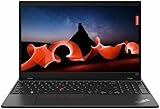
| Lenovo ThinkPad T14 Gen 5 AMD | 2.96 lb (1.34 kg), aluminum + carbon fiber hybrid, MIL-STD-810H | 14.0-in 1920×1200 IPS anti-glare, 400 nits | 57Wh, 10-12 hours office (Word, Chrome, Zoom) | TPM 2.0, fingerprint, IR camera, ThinkShield, camera shutter |
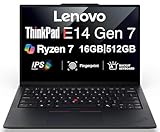
| Lenovo ThinkPad E14 Gen 6 | 3.04 lb (1.38 kg), aluminum top, MIL-STD-810H | 14.0-in 1920×1200 IPS anti-glare, 300 nits | 57Wh, 9-11 hours office | TPM 2.0, fingerprint optional, camera shutter |
| HP EliteBook 640 G11 | 2.96 lb (1.34 kg), aluminum, MIL-STD-810H | 14.0-in 1920×1200 IPS anti-glare, 300 nits | 51Wh, 9-11 hours office | TPM 2.0, fingerprint, IR camera, HP Sure Sense, camera shutter |
| Dell Latitude 5540 | 3.71 lb (1.68 kg), aluminum / recycled plastic, MIL-STD-810H | 15.6-in 1920×1080 IPS anti-glare, 250 nits | 64Wh, 10-12 hours office | TPM 2.0, fingerprint optional, IR camera, Dell ControlVault 3 |
| ASUS Zenbook 14 OLED UX3405 | 2.65 lb (1.20 kg), aluminum | 14.0-in 2880×1800 OLED, 600 nits peak | 75Wh, 11-14 hours office, 7-9 hours at full brightness OLED | TPM 2.0, fingerprint, IR camera |
| Acer Swift Go 14 | 2.76 lb (1.25 kg), aluminum | 14.0-in 1920×1200 IPS or 2880×1800 OLED | 65Wh, 9-12 hours office | TPM 2.0, fingerprint |
Manufacturer claims of 18-21 hours refer to local video playback at 150 nits with Wi-Fi off. For business use, cut that number by 35-45% to estimate Teams/Zoom, VPN, and 15+ browser tabs.
What actually makes it business-grade
Under $1000, you are not paying for faster chips. A Core Ultra 5 125U and Ryzen 7 PRO 7840U feel nearly identical in Excel, QuickBooks, Salesforce, and PDF work. You are paying for four things consumer laptops often skip:
- Battery efficiency at low load: Business lines hold 6-9W idle drain with an optimized Intel vPro / AMD PRO platform, versus 9-14W on gaming or budget consumer models. That is the difference between finishing a cross-country flight and hunting for an outlet.
- Keyboard and trackpad consistency: ThinkPad T-series, EliteBook 600-series, and Latitude 5000-series use 1.35-1.5mm key travel with drainage channels for minor spills. Most thin consumer models use 1.0-1.1mm travel that causes more typos on long reports.
- Durability testing: MIL-STD-810H means hinge-cycle, vibration, drop, humidity, and dust testing. It does not mean indestructible, but hinges and lid corners survive backpack compression far better than all-plastic chassis.
- Manageability and security: TPM 2.0, self-healing BIOS (HP Sure Start, Dell SafeBIOS, Lenovo ThinkShield), fingerprint reader plus IR facial login, and physical camera shutter are standard on the ThinkPad, EliteBook, and Latitude models above.
Decision matrix: pick by how you work
| Your situation | Best choice | Why |
|---|---|---|
| Fly 2+ times per month, work from cafes, carry all day | ASUS Zenbook 14 OLED or Acer Swift Go 14 | Under 2.8 lb, 65-75Wh battery lasts a full workday, charges via 65W USB-C in 1.5 hours |
| Consulting, accounting, writing 4+ hours per day | ThinkPad T14 Gen 5 or E14 Gen 6 | Best keyboard, TrackPoint + large trackpad, 16:10 screen shows more spreadsheet rows |
| Working from home under $1000, docked 80% of time | HP EliteBook 640 G11 or Dell Latitude 5540 | Full HDMI 2.1, USB-C with DisplayPort, optional Ethernet, less dongle hassle for dual monitors |
| IT-managed, need remote wipe, BitLocker, compliance | ThinkPad T14, EliteBook 640, Latitude 5540 | vPro or Ryzen PRO + TPM 2.0 + BIOS recovery support zero-touch deployment |
| Presentations and screen sharing | Zenbook 14 OLED | OLED contrast holds up in bright meeting rooms, 1080p IR camera looks cleaner than 720p |
Battery math: will it last a full workday
Do not rely on the headline hour rating. Use capacity and your workload:
Runtime (hours) = Battery capacity (Wh) / Average power draw (W). A typical business day with Outlook, 10 Chrome tabs, Slack, and 2 hours of Zoom at 180-200 nits draws 6-8W on a modern ThinkPad, EliteBook, Latitude, or Zenbook.
Example: 57Wh / 6.5W = 8.7 hours. Add 30 minutes of unplugged phone charging over USB-C or max-brightness outdoor work, and draw rises to 9-11W, which cuts the same laptop to 5.2-6.3 hours. For travel, target 57Wh minimum for 14-inch models and 64Wh minimum for 15.6-inch models, plus 65W or 100W USB-C PD charging so you can top up from a power bank or airplane outlet.
Practical rule: if you need 9 hours away from a desk, choose the 75Wh Zenbook 14 OLED or 64Wh Latitude 5540 and set Windows to Best Power Efficiency, 60Hz refresh, and Battery Saver at 30%. That alone adds 60-90 minutes versus Balanced mode.
Keyboard, build, and security trade-offs
Keyboard quality
ThinkPad T14 and EliteBook 640 have the least flex and the most distinct key feel for touch typists. Dell Latitude 5440/5540 is close but slightly shallower. Zenbook 14 and Swift Go 14 are quieter and fine for 2-3 hours per day, but prolonged typing produces more bottoming out. For working from home, any of these is comfortable with an external keyboard, so prioritize screen size and ports instead.
Build durability and what wears first
Across business lines, the first failures are rarely the CPU or SSD. They are hinges loosening after 2-3 years of one-handed lid opening, palm-rest shine and key legend wear, USB-C ports loosening from yanking cables sideways, and fans clogging with dust in home offices with pets.
Aluminum lids on the EliteBook, Zenbook, and ThinkPad T-series resist corner dents better than ABS plastic. Spill resistance handles a knocked coffee, not a soaked keyboard — power off immediately, flip upside down, and do not use a hair dryer. Clean fans every 6 months with short bursts of air with the laptop off, wipe screens with a damp microfiber only, and store in a sleeve with the charger in a separate pocket to avoid pressure marks on the display.
Avoid these common mistakes: buying 8GB RAM to save money (Windows 11 Pro + Teams + browser will use 10-12GB daily), choosing a glossy OLED for all-day outdoor field work, and using a 45W phone charger as your only charger — it will charge slowly or not at all under load.
Business security features that matter
At minimum, look for Windows 11 Pro (not Home), TPM 2.0 for BitLocker encryption, fingerprint reader plus IR camera for Windows Hello, and BIOS protection with automatic recovery. Lenovo ThinkShield, HP Wolf Security for Business, and Dell SafeBIOS all provide this on the models in the table.
If you handle client financials, legal files, or health data, choose an Intel vPro Essentials/Enterprise or AMD Ryzen PRO configuration. It enables remote management and hardware-based memory encryption that consumer chips lack. It usually adds little to the price in the $750 to $950 general market range when on sale.
Best for travel vs. best for home office
For travel, weight and charger size matter more than raw performance. The 2.65 lb Zenbook 14 OLED with a 0.6 lb 65W GaN USB-C charger totals under 3.3 lb in your bag. The 3.71 lb Latitude 5540 with a larger brick totals over 4.5 lb. Over a week of commuting, that difference is noticeable.
For working from home, a 15.6-inch Latitude 5540 reduces eye strain and shows side-by-side documents without scaling issues. Pair any pick with 16GB RAM minimum, 512GB PCIe Gen 4 SSD minimum, Wi-Fi 6E, Bluetooth 5.3, at least 2x USB-C with charging, 2x USB-A, HDMI, and a 3.5mm jack. All six models above meet that port baseline except some Zenbook configurations that omit Ethernet — use a USB-C dock with pass-through charging if you need wired office internet.
Final recommendations
- Most business travelers: ThinkPad T14 Gen 5 AMD — best balance of keyboard, durability, security, and 10-hour real battery.
- Tightest budget under $1000: ThinkPad E14 Gen 6 or Acer Swift Go 14 IPS — same workday battery, slightly dimmer screen and fewer management features.
- Home office dock setup: Dell Latitude 5540 or HP EliteBook 640 G11 — bigger screen options, best port selection, easiest IT support.
- Display and battery champion: ASUS Zenbook 14 OLED UX3405 — lightest carry with the largest 75Wh battery, best for flights and presentations.
Get 16GB RAM and Windows 11 Pro regardless of model. That configuration will remain viable for office work, VPN, virtual meetings, and browser-based apps for 4-5 years, which brings ownership cost to roughly $0.55 to $0.70 per workday over three years before accessories.
Frequently asked questions
Is 16GB RAM necessary for business work under $1000?
Yes for most office multitasking in 2026. With Outlook, Teams, VPN, and 15 browser tabs open, 8GB systems rely on slower SSD swapping and stutter during screen shares. 16GB is the practical minimum for a full workday.
Do I need Intel vPro or AMD PRO?
Only if your employer manages devices remotely or you need BitLocker, remote wipe, and hardware-level protection for compliance. For solo freelancers, standard Core Ultra or Ryzen with TPM 2.0 and Windows 11 Pro is sufficient.
Is OLED good for business documents?
OLED is excellent for contrast and battery efficiency in dark mode, but matte IPS at 300-400 nits is easier on the eyes for 8 hours of spreadsheets in bright offices and avoids any risk of taskbar burn-in. Use auto-hide taskbar and 5-minute screen-off if you choose OLED.