Our Top Picks
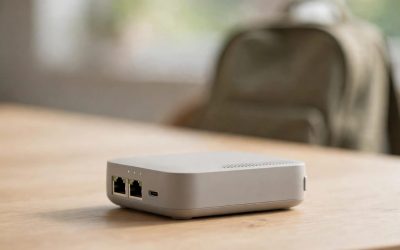
 TP-Link Roam 6 AX1500 Portable Wi-Fi 6 TravelPocket Size4.09 x 3.54 x 1.1 inches0.34 poundsCheck on Amazon

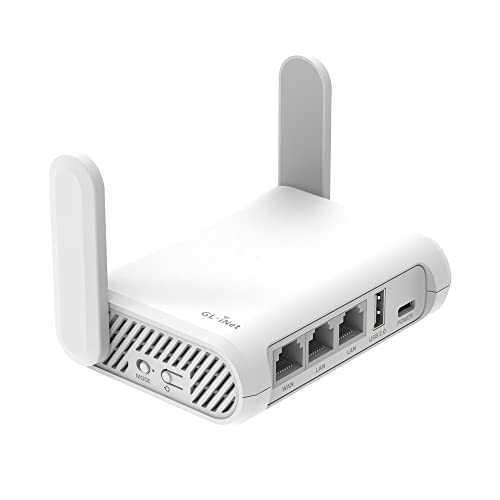
A travel router does one job a phone hotspot cannot: it signs into a hotel’s Wi-Fi once, then broadcasts your own private network to every device you packed — laptop, phone, tablet, streaming stick — behind a single login and, if you want it, a single VPN tunnel.
The honest news first: $100 is exactly enough, but only just. The best travel router you can buy in November 2026 costs $98.99, leaving $1.01 of headroom. The tier below it is genuinely good, though — a Wi-Fi 6 travel router with a real WireGuard client costs $39.99. What $100 does not buy is Wi-Fi 7, a battery, or a tri-band radio. Every travel router under $100 is dual-band, none has a battery, and none creates internet out of thin air.
As an Amazon Associate, we earn from qualifying purchases.
Our top picks
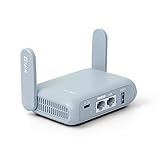
Best for: Most travelers — one router for hotel Wi-Fi, a wired desk, a VPN tunnel, and a phone tether
Check price on Amazon
Best for: Budget travelers who want Wi-Fi 6 and a VPN client for $40
Check price on Amazon
Best for: ASUS Homes and Tethering
Check price on Amazon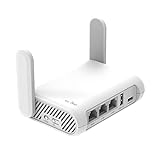
Best for: Light travelers, or anyone who wants a $40 backup router that lives in the bag
Check price on Amazon
Best for: Travelers who plug in more than they broadcast and want GL
Check price on AmazonQuick Picks
| Router | Price | Wi-Fi | VPN speed | Best for |
|---|---|---|---|---|
| GL.iNet Beryl AX (GL-MT3000) | $98.99 | Wi-Fi 6 AX3000 | 300 Mbps WireGuard | Most travelers |
| TP-Link TL-WR1502X (Roam 6) | $39.99 | Wi-Fi 6 AX1500 | ~150 Mbps WireGuard | Best value |
| ASUS RT-AX57 Go | $99.00 | Wi-Fi 6 AX3000 | 300 Mbps WireGuard | ASUS homes and tethering |
| GL.iNet Opal (GL-SFT1200) | $39.99 | Wi-Fi 5 AC1200 | 65 Mbps WireGuard | Tightest budget |
| GL.iNet Slate Plus (GL-A1300) | $69.99 | Wi-Fi 5 AC1300 | Under 300 Mbps WireGuard | Pocket VPN with extra ports |
Prices checked November 2026 — check the current price on Amazon before buying.
How to Choose
Start with the upstream, not the router. A travel router gets online three ways: repeater (WISP) mode, where it joins the hotel Wi-Fi and rebroadcasts it; wired mode, where it plugs into the Ethernet jack on the hotel desk; and USB tethering, where your phone supplies data over a cable. Repeater mode is the one you will use most, and it has the most failure modes: some captive portals refuse routers or bind access to one MAC address. Every pick below has a documented captive-portal flow, but no router guarantees admission to every portal.
VPN speed is the real spec. The advertised AX3000 or AX1500 number is a radio rate, not a speed you will ever see on hotel Wi-Fi. What limits you is the VPN tunnel: the router’s processor encrypts every byte, and small travel routers top out far below their Wi-Fi rating. GL.iNet publishes lab figures measured on a local network — 300 Mbps WireGuard for the Beryl AX, 65 Mbps for the Opal — and real hotel results will be lower.
Size, power, and ports decide whether it travels. The Beryl AX weighs 196 g and runs on USB-C at 5V/3A, under 8 W; the Opal is 145 g at under 6 W. None of the five picks has a battery, so budget a USB-C charger or a power bank. One wired port is enough for a hotel desk jack, but two or three let a streaming stick or console skip the captive portal entirely.
OpenWrt is the dividing line. GL.iNet routers run OpenWrt-based firmware, and that is why they dominate this category: WireGuard and OpenVPN clients and servers, Tailscale, and AdGuard Home are all in the stock interface on the newer models. TP-Link and ASUS offer VPN clients too, but their firmware is closed. If you want to tinker, buy GL.iNet; if you want an app and an ecosystem you already own, buy TP-Link or ASUS. And remember: most hotel connections deliver 25–100 Mbps, so on a 50 Mbps link a $39.99 router and a $98.99 router feel identical.
1. GL.iNet Beryl AX (GL-MT3000) — Our Top Pick
The Beryl AX is the default answer, and the price is the story: at $98.99 it fits by $1.01, and it is the cheapest travel router with a 2.5G WAN port, Wi-Fi 6, and a 300 Mbps WireGuard rating in one pocket-sized box. GL.iNet’s store and Amazon both listed it at $98.99 in late October and early November 2026, and roundups re-checking live prices on November 17, 2026 still read $98.99.
Specs: Wi-Fi 6 AX3000 (574 + 2,402 Mbps); 1x 2.5G WAN + 1x gigabit LAN; USB 3.0; USB-C 5V/3A, under 8 W; 196 g; WireGuard up to 300 Mbps, OpenVPN up to 150 Mbps (GL.iNet lab figures); OpenWrt firmware with Tailscale and AdGuard Home; repeater, router, access point, and tethering modes.
Pros: The fastest VPN ceiling under $100; the only pick with a 2.5G WAN port; USB 3.0; Tailscale in the stock admin panel.
Cons: Fits by $1.01 with no room for accessories; one LAN port only; 300 Mbps is a lab figure, not a hotel result.
Best for: Most travelers — one router for hotel Wi-Fi, a wired desk, a VPN tunnel, and a phone tether.
2. TP-Link TL-WR1502X (Roam 6) — Best Value
The TL-WR1502X is the pick that makes this guide honest: for $39.99 you get Wi-Fi 6, two gigabit ports, USB tethering, and a real OpenVPN and WireGuard client and server. Roundups checking live US prices in early November 2026 read $39.99 for a new unit, and the Meta Catalog agrees. At that price it is less than half the Beryl AX, and on a typical 25–100 Mbps hotel connection you will not feel the difference.
Specs: Wi-Fi 6 AX1500 (300 + 1,201 Mbps); 1x gigabit WAN + 1x gigabit LAN; USB 2.0; USB-C, 9V/12V PD/QC power-bank support, no battery; OpenVPN and WireGuard client and server; router, hotspot, access point, extender, client, and tethering modes; one-step captive-portal login via the Tether app.
Pros: Wi-Fi 6 at the lowest price here; the cheapest route to a real WireGuard client; one-step captive-portal login in TP-Link’s app.
Cons: AX1500 radio is a step below the Beryl AX; USB 2.0, no 2.5G port; no Tailscale and no OpenWrt; the ~150 Mbps WireGuard figure is a roundup report, not a manufacturer claim.
Best for: Budget travelers who want Wi-Fi 6 and a VPN client for $40.
3. ASUS RT-AX57 Go — Best for ASUS Homes and Tethering
The RT-AX57 Go is the Beryl AX’s equal on paper: the same AX3000 radio rates, the same 300 Mbps WireGuard and 150 Mbps OpenVPN maximums, and a live US price of $99.00 to $99.99 in November 2026. What it buys over the Beryl AX is ecosystem, not speed: AiMesh, the ASUS Router app, AiProtection, VPN Fusion, and a physical tri-mode switch.
Specs: Wi-Fi 6 AX3000 (574 + 2,402 Mbps); 1x gigabit WAN + 1x gigabit LAN; USB 3.0; USB-C powered; dual-core 1.3 GHz, 512 MB RAM, 128 MB flash; VPN client and server (WireGuard, OpenVPN, IPSec, L2TP, PPTP), VPN Fusion, Instant Guard; WISP mode; 4G/5G tethering; AiMesh node mode.
Pros: AX3000 speeds and 300 Mbps WireGuard at the budget ceiling; the broadest VPN protocol list here; 4G/5G tethering as a headline feature.
Cons: Fits by $1.00 at best, a dollar over at some retailers; Instant Guard needs a public IPv4 address, which most hotel and cellular connections lack; closed ASUS firmware, no OpenWrt.
Best for: Travelers who already run ASUS routers at home, or who tether from a phone more than they repeat hotel Wi-Fi.
4. GL.iNet Opal (GL-SFT1200) — Tightest Budget
The Opal is the cheapest real travel router from a brand you can trust: $39.99, the same price as the TP-Link, with three gigabit Ethernet ports and GL.iNet’s OpenWrt-based firmware. It is Wi-Fi 5, and its WireGuard ceiling is 65 Mbps with OpenVPN at just 12 Mbps. On a 50 Mbps hotel link with a VPN running, 65 Mbps is enough; on a 200 Mbps link, the Opal becomes the bottleneck.
Specs: Wi-Fi 5 AC1200 (300 + 867 Mbps); 1x gigabit WAN + 2x gigabit LAN; USB 2.0; USB-C 5V/3A, under 6 W; 145 g; WireGuard up to 65 Mbps, OpenVPN up to 12 Mbps (GL.iNet lab figures); 128 MB RAM; OpenWrt firmware; repeater, router, access point, and tethering modes.
Pros: $39.99 from a reputable brand; three gigabit ports, the most wired connectivity here; the lightest pick at 145 g.
Cons: Wi-Fi 5 in a Wi-Fi 6 world; 65 Mbps WireGuard is the lowest here and 12 Mbps OpenVPN is barely usable; 128 MB of RAM is marginal, and Tailscale does not run on it.
Best for: Light travelers, or anyone who wants a $40 backup router that lives in the bag.
5. GL.iNet Slate Plus (GL-A1300) — Best Pocket VPN with Extra Ports
The Slate Plus sits between the Opal and the Beryl AX at $69.99, and its case is the ports: three gigabit Ethernet ports and a USB 3.0 port in a pocket-sized box, with GL.iNet’s OpenWrt firmware and a real VPN client. It is Wi-Fi 5 AC1300, and GL.iNet publishes no headline WireGuard figure for it. What you are paying for is wired flexibility: a hotel desk jack in, a laptop and a streaming stick out, without touching the captive portal twice.
Specs: Wi-Fi 5 AC1300 (400 + 867 Mbps); 1x gigabit WAN + 2x gigabit LAN; USB 3.0; USB-C power; 256 MB RAM; OpenWrt firmware with WireGuard and OpenVPN client and server; repeater, router, access point, and tethering modes.
Pros: Three gigabit ports plus USB 3.0 at $69.99; twice the RAM of the Opal.
Cons: Wi-Fi 5 while the two best picks are Wi-Fi 6; no published WireGuard speed; only $29 less than the faster Beryl AX.
Best for: Travelers who plug in more than they broadcast and want GL.iNet firmware without paying the full Beryl AX price.
What to Avoid
Repeaters wearing a travel-router name. A wall-plug Wi-Fi extender repeats a signal; it does not create your own network, run a VPN tunnel, or handle a captive portal once for all your devices. No Ethernet port, no WISP mode, no VPN client? It is a repeater, not a travel router.
No-name brands with fake specs. The travel-router aisle is full of unbranded listings claiming AX3000 speeds, gigabit ports, and VPN support at $19.99. The tells are always the same: no manufacturer spec page, no firmware updates, and a brand name that returns nothing on a web search. A router with no firmware updates is a security device that will never be patched.
“VPN” claims without a real client. Some routers advertise VPN support and mean a VPN passthrough, which lets a VPN app on your laptop work through the router but encrypts nothing by itself, or a PPTP-only client, a protocol too old to trust. Check for WireGuard or OpenVPN client support by name.
Old pocket routers as daily drivers. The GL.iNet Mango (GL-MT300N-V2) costs $29.99, but it is a 2.4 GHz-only Wi-Fi 4 router with 100 Mbps ports and a ~45 Mbps WireGuard ceiling — an emergency spare, not a work router. The TP-Link TL-WR902AC, the classic AC750 pocket router, is still sold at $39.99 to $55.99, but its Wi-Fi 5 radio makes it a worse buy than the TL-WR1502X.
Tri-band, batteries, and Wi-Fi 7. No travel router under $100 is tri-band, and none has a battery — if a listing claims either, it is mislabeled. Tri-band lives in home routers (our guides put the full-size GL.iNet Flint 2 VPN router at $169.99) and batteries live in cellular hotspots, a different product with a data plan. Wi-Fi 7 is the same story: the GL.iNet Beryl 7 is $129.99, so the honest Wi-Fi 7 budget is $130, not $100.
FAQ
Do I need a travel router if my phone has a hotspot?
Not always. A phone hotspot is fine for one laptop for an afternoon. A travel router earns its place with several devices, a streaming stick that cannot join a captive portal by itself, one VPN tunnel for everything, or a hotel that charges per device.
Will a travel router work with every hotel’s login page?
No. Most captive portals work with the one-time login modes on these picks, but some bind access to a single MAC address or use WPA-Enterprise. The fallback is USB tethering from your phone, which is why every pick here supports it.
Is 65 Mbps WireGuard on the Opal enough?
For one person browsing, streaming in HD, and working over a VPN on a typical hotel connection, yes — the hotel link is usually slower than 65 Mbps anyway. It is not enough for 4K streaming over VPN or several people sharing one tunnel.
Can I use a travel router at home too?
Yes. The Beryl AX works as a small VPN gateway behind your main router, the RT-AX57 Go can join an ASUS AiMesh network as a node, and any of these can serve as a wired access point. Just do not buy one as your only home router: the radios are sized for a hotel room.
What else do I need to pack with it?
A USB-C charger or a PD power bank, a short Ethernet cable, and your VPN provider’s configuration file — set the VPN up at home, not in the hotel lobby. The router is the cheap part; the VPN subscription, typically $60–$140 a year, is the running cost nobody puts in the headline price.
Verdict
Buy the GL.iNet Beryl AX (GL-MT3000) at $98.99 if you want the best travel router under $100 without a footnote: Wi-Fi 6, a 2.5G WAN port, USB 3.0, and a 300 Mbps WireGuard ceiling in a 196 g box. Buy the TP-Link TL-WR1502X at $39.99 if you want the smartest $40 in this category — Wi-Fi 6 and a real VPN client for less than half the top pick’s price. Buy the ASUS RT-AX57 Go at $99.00 if you already live in the ASUS ecosystem and tether from your phone.
The honest budget has not moved: $100 buys a very good travel router, and $130 buys a Wi-Fi 7 one. What $100 does not buy is a battery, a tri-band radio, or a guarantee that every hotel portal will let you in. Pack the router, pack a power bank, set up the VPN before you leave — and check the live price, because the top pick only fits by a dollar.
Suggested Internal Links
- Best Router with VPN Under $100 — the full-size VPN router version of this guide, including the $89 ASUS RT-AX58U.
- Best Wi-Fi 6 Router Under $100 — what the same money buys when the router stays home.
- Best Long-Range Wi-Fi Router Under $100 — for the opposite problem: covering a house instead of a hotel room.
More from Amazon
Programs that pair well with the guide above. Offers and eligibility are set by Amazon and may change.
Free shipping on eligible items, Prime Video and more. Eligible new members can start with a free trial.
Start a Prime free trialAd-free music streaming. Eligible new subscribers can start with a free trial.
Try Music Unlimited freeA Prime membership for ages 18-24 with a trial period. Eligibility is set by Amazon.
See Prime for Young AdultsAudiobooks and podcasts to listen to on the go. Eligible new members can start with a free trial.
Try Audible freeAs an Amazon Associate we earn from qualifying purchases.