Our Top Picks
Two hundred dollars changes exactly one thing: a travel router with a real battery finally fits. The GL.iNet Mudi V2 with the Cat 6 module is $169.99, in stock at GL.iNet’s own US store, with a 7,000 mAh battery rated for about eight hours.
Everything else stays where the $150 guide left it. Tri-band still does not fit: the only tri-band travel router, the Slate 7 Pro, is $239.99 and unavailable in the US. Six gigahertz still does not fit — the Slate 7 Pro is the only travel router with a 6 GHz radio. The best router overall is still the Beryl 7 at $129.99. The extra $50 buys a battery, a touchscreen, or a second Wi-Fi 7 option — not a third band.
One warning first: hotel Wi-Fi is usually the bottleneck — a typical hotel connection runs 25–100 Mbps, and on a link that slow a $39.99 router feels identical to a $129.99 one.
Our top picks
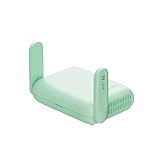
Best for: The traveler who wants the fastest, most capable travel router under $200 and already owns a power bank
Check price on AmazonBest for: The traveler who needs internet with no wall outlet and no hotel Wi-Fi — the battery and the SIM slot are the whole point
Check price on Amazon
Best for: The traveler who wants to see the router’s status and change settings without opening a phone app
Check price on AmazonBest for: The traveler who wants Wi-Fi 7 for the least money and does not need the fastest VPN tunnel
Check price on AmazonQuick Picks
| Router | Price | Best for |
|---|---|---|
| GL.iNet Beryl 7 (GL-MT3600BE) | $129.99 | Best overall |
| GL.iNet Mudi V2 Cat 6 (GL-E750V2) | $169.99 | Best battery |
| GL.iNet Slate 7 (GL-BE3600) | $159.99 | Best touchscreen |
| TP-Link Roam 7 (TL-WR3602BE) | $87.99–$109.99 | Best value Wi-Fi 7 |
| ASUS RT-BE58 Go | $136.88 | Best for AiMesh |
Prices checked November 2026 — check the current price on Amazon before buying.
How to Choose
Wi-Fi 7 or Wi-Fi 6? At $200, Wi-Fi 7 is the default: four of the five picks below are Wi-Fi 7. The one Wi-Fi 6 exception is the Mudi V2, and it earns its place with a battery and a cellular modem. But every Wi-Fi 7 travel router under $200 is dual-band — none has a 6 GHz radio. A listing that says “Wi-Fi 7” and “tri-band” at this price is either a home router or a lie.
VPN speed is the real spec. A travel router’s job is to tunnel your traffic on untrusted hotel Wi-Fi, and the WireGuard number decides how fast that tunnel feels. GL.iNet’s lab figures: 1,100 Mbps for the Beryl 7 and Slate 7, 300 Mbps for the Beryl AX, 40 Mbps for the Mudi V2. TP-Link publishes 450 Mbps for the Roam 7. Treat these as ceilings, not promises.
Battery or power bank? A built-in battery means the router works on a plane or in a taxi. A USB-C router plus a power bank you already own does the same job for less, and the bank charges your phone too. Buy the battery only if you will use the router away from a wall.
Ports and tethering. A 2.5G WAN port lets a fast hotel Ethernet jack feed the router at full speed: the Beryl 7 and Slate 7 have two; the Roam 7 and RT-BE58 Go have one 2.5G WAN plus a gigabit LAN; the Mudi V2 has a single gigabit port. Every pick handles hotel captive-portal pages. The RT-BE58 Go and Beryl 7 can also tether your phone over USB. Only the Mudi V2 has a SIM slot.
1. GL.iNet Beryl 7 (GL-MT3600BE) — Best Overall
Specs: Wi-Fi 7 BE3600 dual-band (688 + 2,882 Mbps) | 2 x 2.5G Ethernet ports | USB 3.0 | USB-C 5V/3A | WireGuard up to 1,100 Mbps, OpenVPN up to 300 Mbps (GL.iNet lab figures) | OpenWrt with Tailscale | 196 g
Pros: Fastest VPN in this guide by a wide margin; two 2.5G ports; Wi-Fi 7 at the lowest price in the class; OpenWrt with Tailscale; pocket-sized
Cons: No battery; no touchscreen; no 6 GHz radio; no SIM slot
Best for: The traveler who wants the fastest, most capable travel router under $200 and already owns a power bank.
The Beryl 7 was the top pick at $150, and nothing at $200 displaces it. At $129.99 — confirmed at an authorized retailer and at B&H — it fits by $70.01. On fast hotel Ethernet, its 1,100 Mbps WireGuard tunnel is fast enough that you will not feel it.
The extra $50 does not buy a better Beryl 7 — the Slate 7 shares the same silicon and charges $30 more for a touchscreen. Keep the Beryl 7 and spend the $70 on a power bank, which covers the one thing it cannot do alone: run away from a wall outlet.
2. GL.iNet Mudi V2 Cat 6 (GL-E750V2) — Best Battery Travel Router
Specs: Wi-Fi 5 AC750 (300 + 433 Mbps) | 4G LTE Cat 6 module EM060K-G (300/50 Mbps) | 7,000 mAh battery, ~8 hours | 1 x gigabit Ethernet | USB 2.0 | microSD up to 1TB | WireGuard 40 Mbps (GL.iNet figure) | 285 g
Pros: The only travel router under $200 with a battery; built-in 4G LTE with a SIM slot; works on a plane or in a taxi; OpenWrt with WireGuard and OpenVPN
Cons: Wi-Fi 5 only; WireGuard just 40 Mbps; single gigabit port; heaviest pick here at 285 g; the cheaper Cat 4 version is out of stock
Best for: The traveler who needs internet with no wall outlet and no hotel Wi-Fi — the battery and the SIM slot are the whole point.
This is the pick the $150 guide could not make: there, the honest battery budget was $170, because the Cat 4 was $139.99 but out of stock and the buyable Cat 6 was $169.99. At $200 the battery finally fits — GL.iNet’s US store lists the Cat 6 at $169.99 as available, the Cat 4 as out of stock — and it fits by $30.01.
But read the trade-offs. The Mudi V2 is a Wi-Fi 5 router in a Wi-Fi 7 guide: 733 Mbps combined. Its WireGuard speed is 40 Mbps in GL.iNet’s own figures — the slowest VPN here by an order of magnitude.
It is a specialist buy, not a bad one. If your travel day includes a long layover, a train, or a hotel whose Wi-Fi you do not trust, the Mudi V2 is the only router here that keeps working — on its battery, on a SIM card, for about eight hours. If your day is a hotel room with a wall outlet, buy the Beryl 7 and keep the $40.
3. GL.iNet Slate 7 (GL-BE3600) — Best Touchscreen
Specs: Wi-Fi 7 BE3600 dual-band (688 + 2,882 Mbps) | 2 x 2.5G Ethernet ports | 2.8″ color LCD touchscreen | USB 3.0 | USB-C power | WireGuard up to 1,100 Mbps (GL.iNet lab figure) | OpenWrt | 328 g
Pros: Same fast Wi-Fi 7 silicon and VPN speed as the Beryl 7; touchscreen for quick setup and status; two 2.5G ports
Cons: $30 more than the Beryl 7 for the same networking; heavier at 328 g; no battery; no 6 GHz radio
Best for: The traveler who wants to see the router’s status and change settings without opening a phone app.
The Slate 7 is the Beryl 7 with a screen. Same BE3600 Wi-Fi 7 radio, same two 2.5G ports, same 1,100 Mbps WireGuard figure, same OpenWrt firmware. The difference is the 2.8-inch color touchscreen, which shows connection status, clients, and VPN state at a glance.
Is the screen worth $30? At $159.99 the Slate 7 fits by $40.01. The Beryl 7 does the same networking for $129.99. If you configure a travel router once per trip, buy the Beryl 7. If you change networks daily, the screen earns its $30.
4. TP-Link Roam 7 (TL-WR3602BE) — Best Value Wi-Fi 7
Specs: Wi-Fi 7 BE3600 dual-band (688 + 2,882 Mbps) | 1 x 2.5G WAN, 1 x gigabit LAN | USB 3.0 | USB-C 5V/3A | WireGuard up to 450 Mbps, OpenVPN up to 350 Mbps (TP-Link figures) | Up to 90 devices | 250 g | Fold-flat antennas
Pros: Cheapest Wi-Fi 7 travel router in this guide; 2.5G WAN port; WireGuard and OpenVPN as client or server; works from a power bank; 3-year TP-Link warranty
Cons: No 6 GHz radio; WireGuard 450 Mbps is less than half the Beryl 7’s 1,100 Mbps; only one 2.5G port; older Roam 6 reportedly faster in lab tests
Best for: The traveler who wants Wi-Fi 7 for the least money and does not need the fastest VPN tunnel.
The Roam 7 is the newest name here, and the cheapest way into Wi-Fi 7. List price is $139.99, but live November readings are lower: $87.99 at B&H and on TP-Link’s own store (37% off), and $109.99 on Amazon as of November 18. At $87.99 it undercuts the Beryl 7 by $42.
The gap is the VPN. TP-Link rates the Roam 7’s WireGuard at up to 450 Mbps and OpenVPN at 350 Mbps — less than half of the Beryl 7’s 1,100 Mbps lab figure. For email and browsing you will never notice; for large files through a tunnel all day, the Beryl 7 is worth the extra $42.
5. ASUS RT-BE58 Go — Best for AiMesh

Specs: Wi-Fi 7 BE3600 dual-band (688 + 2,882 Mbps) | 1 x 2.5G WAN, 1 x gigabit LAN | 4G/5G phone tethering over USB | VPN Fusion | AiMesh | Guest Network Pro | 1GB RAM, 256MB flash | 2 external antennas
Pros: Doubles as an AiMesh node at home; VPN Fusion runs multiple VPNs at once; 4G/5G tethering; Costco 2-pack is $200 — $100 per unit
Cons: No 2.5G LAN port; no battery; no touchscreen; street price moves around — list is $159.99
Best for: The ASUS household — buy it as a travel router that becomes a mesh node when you get home.
The RT-BE58 Go is the only pick here that earns its keep twice. On the road it is a Wi-Fi 7 travel router with a 2.5G WAN port, VPN Fusion, and 4G/5G phone tethering. At home it flips a switch and becomes an AiMesh node, extending the network your main ASUS router already runs. No GL.iNet or TP-Link travel router does that.
The price needs care, because it moves. List is $159.99, confirmed on ASUS’s own store. The live Amazon reading in November 2026 is $136.88, and a tracker shows an average of $120.97 and a lowest-ever $94.99. The price you will pay today is $136.88, and it fits by $63.12. One catalog listing showed $100 from an authorized retailer; we could not verify it against a live storefront, so treat it as unconfirmed. Costco also sells a two-pack online for $200 — $100 per router, the cheapest per-unit price here, membership required.
What to Avoid
The Slate 7 Pro (GL-BE10000), $239.99 — not sold in the US. The only tri-band travel router, with a dedicated 6 GHz radio and WireGuard up to 1,100 Mbps. It misses this budget by $39.99, and its product page says it is “currently unavailable in the U.S.” Do not import one.
The Mudi 7, $419.99. The only tri-band travel router with a battery — more than twice this budget. A Beryl 7 plus a power bank costs about $130.
The Beryl AX at $159.89. The real price is $98.99, confirmed live on November 17. One marketplace seller lists it at $159.89 — $60.90 over, and more than the Beryl 7 costs.
The Cudy TR3000, $159.92. A legitimate router, not a trap — Wi-Fi 6 AX3000, a 2.5G WAN port, six modes, WireGuard, OpenVPN, IPsec and ZeroTier, OpenWrt-ready. It did not make the five because it costs $159.92 for Wi-Fi 6 when the Beryl 7 costs $129.99 for Wi-Fi 7, and Cudy publishes no WireGuard figure.
Repeaters, no-name brands, and fake VPN claims. A repeater extends a network; it does not create a private one. A no-name router with no firmware updates is a security hole you carry in your pocket. And “VPN” on a listing can mean passthrough only, or PPTP only. Buy a router whose VPN client is named: WireGuard or OpenVPN, with a published speed.
The Mango and the TL-WR902AC. Wi-Fi 4-era hardware with WireGuard around 45 Mbps — museum pieces in 2026. The Roam 6 at $39.99 is faster and barely more expensive.
FAQ
Does $200 buy a tri-band travel router?
No. The only tri-band travel router is the Slate 7 Pro at $239.99, and it is not sold in the US. The honest tri-band budget is $240.
Does $200 buy 6 GHz?
No, for the same reason. The Slate 7 Pro is the only travel router with a 6 GHz radio, and every Wi-Fi 7 travel router under $200 is dual-band. The honest 6 GHz budget is $240.
Is the Mudi V2’s battery worth the slow VPN?
Only if you will actually use the router away from a wall. Its WireGuard speed is 40 Mbps in GL.iNet’s figures, against 1,100 Mbps for the Beryl 7. But on a plane, a train, or a beach, the Beryl 7 is a paperweight and the Mudi V2 works for eight hours on its battery and a SIM card. Buy the battery for the battery, not for the speed.
Beryl 7 or Slate 7?
Same networking, $30 apart. The Beryl 7 is $129.99, pocket-sized, no screen; the Slate 7 is $159.99 with a 2.8-inch touchscreen. Change networks daily and the screen earns its $30; set it once per trip and keep the $30.
Do I need Wi-Fi 7 in a travel router at all?
Not for hotel Wi-Fi at 25–100 Mbps — any router here is faster than the hotel. Wi-Fi 7 matters on fast hotel Ethernet, for tethering, and for the VPN tunnel: the Beryl 7’s 1,100 Mbps WireGuard figure is a Wi-Fi 7-era number, and the Wi-Fi 6 Beryl AX tops out at 300 Mbps. At $129.99 versus $98.99, Wi-Fi 7 costs $31.
Verdict
The best travel router under $200 is the GL.iNet Beryl 7 at $129.99: Wi-Fi 7, two 2.5G ports, and the fastest VPN tunnel in this guide. It fits by $70.01.
The $200 budget has one real upgrade over $150: the Mudi V2 Cat 6 at $169.99 — the battery finally fits, in stock, with a SIM slot and about eight hours of runtime. Buy it for the battery, not for speed: its 40 Mbps WireGuard tunnel is the slowest here by far.
If money is tight, the TP-Link Roam 7 at $87.99 is the cheapest Wi-Fi 7 travel router we found, and the ASUS RT-BE58 Go at $136.88 — or $100 each in Costco’s two-pack — is the pick for an ASUS household.
As an Amazon Associate, we earn from qualifying purchases.
Suggested internal links
More from Amazon
Programs that pair well with the guide above. Offers and eligibility are set by Amazon and may change.
Free shipping on eligible items, Prime Video and more. Eligible new members can start with a free trial.
Start a Prime free trialAd-free music streaming. Eligible new subscribers can start with a free trial.
Try Music Unlimited freeA Prime membership for ages 18-24 with a trial period. Eligibility is set by Amazon.
See Prime for Young AdultsAudiobooks and podcasts to listen to on the go. Eligible new members can start with a free trial.
Try Audible freeAs an Amazon Associate we earn from qualifying purchases.