Our Top Picks
 ASUS RT-AX1800S Dual Band WiFi 6 Extendable RouterRouter9.06 x 5.28 x 2.2 inches0.82 poundsCheck on Amazon


A router with a VPN built in does something no app can: it encrypts every device on your network at once — the TV, the game console, the smart speaker, the laptop you forgot to protect. No per-device installs, no five-device limit. But the label “VPN router” hides a wide range of reality: some routers under $100 run a modern WireGuard tunnel at 300 Mbps, others only speak the older OpenVPN protocol and crawl at 60 Mbps.
Every pick below runs a real VPN client and a real VPN server and costs under $100 in November 2026. One honest fact up front: $100 buys the router, not the VPN. A paid subscription — NordVPN, Surfshark, Mullvad, Proton VPN — typically costs another $60–$140 a year, and none of these routers includes one.
Our top picks

Best for: Most homes that want a real VPN router without paying for one twice
Check price on Amazon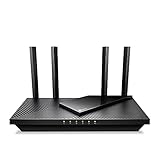
Best for: Homes with a multi-gig internet plan that still want VPN under $100
Check price on Amazon
Best for: The cheapest honest way into a router-level VPN
Check price on AmazonBest for: A home office that already has Wi-Fi and needs a serious wired VPN gateway
Check price on AmazonQuick Picks
| Router | Price | VPN protocols | VPN speed | Best for |
|---|---|---|---|---|
| ASUS RT-AX58U | ~$89 | WireGuard, OpenVPN, L2TP, PPTP | ~165 Mbps WireGuard / ~95 Mbps OpenVPN | Most homes |
| TP-Link Archer AX55 Pro | $79.99 | WireGuard, OpenVPN, PPTP, L2TP | Not independently researched | 2.5G ports on a budget |
| GL.iNet Beryl AX (GL-MT3000) | $98.99 | WireGuard, OpenVPN | 300 Mbps WireGuard / 150 Mbps OpenVPN | Travel and small flats |
| ASUS RT-AX1800S | $69.99 | WireGuard, OpenVPN | Light VPN duty | Cheapest real VPN router |
| TP-Link TL-R605 SafeStream | $76.78 | OpenVPN, PPTP, L2TP, IPsec | Wired only | Wired home office |
Prices checked November 2026 — check the current price on Amazon before buying.
How to Choose a VPN Router Under $100
WireGuard is the first filter. WireGuard is the modern VPN protocol: less code, less CPU work, and dramatically faster on the weak processors inside budget routers. Independent testing of three budget routers on a 200 Mbps line in October 2026 tells the story: the ASUS RT-AX58U went from about 95 Mbps on OpenVPN to 165 Mbps on WireGuard; the Slate AX from 110 to 170 Mbps; the Cudy AX3000 from 105 to 175 Mbps. A router without WireGuard throws away roughly half its speed.
VPN throughput is CPU-bound, not Wi-Fi-bound. A router advertising AX3000 Wi-Fi can still only push 95 Mbps through an OpenVPN tunnel, because encrypting traffic is processor work and budget routers have small processors. Ignore the headline Wi-Fi number; the only number that matters is the tested tunnel speed.
1. ASUS RT-AX58U — Best Overall
Best for: Most homes that want a real VPN router without paying for one twice.
The RT-AX58U does everything a home VPN router needs to do. It is a dual-band Wi-Fi 6 AX3000 router — 2,402 Mbps on 5 GHz plus 574 Mbps on 2.4 GHz — with four external antennas, four Gigabit LAN ports, a USB 3.1 port, and AiMesh support. The VPN support is the full set: WireGuard and OpenVPN as both client and server, plus L2TP and PPTP clients and an IPsec server. VPN Fusion routes individual devices through the tunnel or around it. AiProtection Pro, powered by Trend Micro, is free for life.
The tested numbers are what win it: on a 200 Mbps line, independent testing in October 2026 measured about 95 Mbps through OpenVPN and 165 Mbps through WireGuard. That is not gigabit — but it is fast enough for 4K streaming, video calls, and a household behind one tunnel. The honest catch is the 160 MHz fine print: the 2,402 Mbps headline needs a client supporting 160 MHz, 2×2 MU-MIMO, and 1024-QAM at once, and most devices do not. There is also no 2.5G port.
Specs: Wi-Fi 6 AX3000 (2,402 + 574 Mbps); WireGuard, OpenVPN, L2TP, PPTP client; WireGuard, OpenVPN, IPsec, PPTP server; VPN Fusion; AiProtection Pro free for life; 4x Gigabit LAN, 1x Gigabit WAN, USB 3.1; AiMesh; WPA3.
Pros: Full WireGuard and OpenVPN client and server; VPN Fusion per-device routing; free lifetime AiProtection Pro; AiMesh expansion; tested 165 Mbps WireGuard.
Cons: No 2.5G port; 160 MHz headline needs rare client support; VPN speeds cap well below gigabit.
Best for: A household that wants one router to cover VPN, security, and future mesh expansion.
Check price on Amazon — ASUS RT-AX58U
2. TP-Link Archer AX55 Pro — Best 2.5G Value
Best for: Homes with a multi-gig internet plan that still want VPN under $100.
The Archer AX55 Pro is the only pick here with two 2.5 Gbps ports, and at $79.99 in Meta Catalog it costs $9 less than the top pick while offering the faster wired backbone. It is an AX3000 Wi-Fi 6 router with OFDMA, MU-MIMO, a USB 3.0 port, and OneMesh support. The VPN story is genuinely good on paper: client and server support for OpenVPN, PPTP, L2TP, and WireGuard, with the router able to run VPN and ordinary internet at the same time, routing specified devices through the tunnel. TP-Link names Surfshark, NordVPN, Mullvad, Proton VPN, and ExpressVPN as compatible providers — the service itself is not included.
The honest caveat is the gap between the spec sheet and the test bench: we found no independent VPN throughput test of the AX55 Pro. Its CPU is in the same class as the RT-AX58U, so expect roughly 100–200 Mbps through WireGuard, less through OpenVPN — but that is an estimate, not a measurement. The second caveat is the name trap: the plain Archer AX55, at $74.99–$99.99, looks nearly identical, but its stock firmware has no native WireGuard support — reviewers measured its OpenVPN server at roughly 60–85 Mbps. The “Pro” is worth about $5 and the entire WireGuard feature.
Specs: Wi-Fi 6 AX3000 (2,402 + 574 Mbps); WireGuard, OpenVPN, PPTP, L2TP client and server; 2x 2.5 Gbps ports, 4x Gigabit LAN, USB 3.0; OneMesh; HomeShield Basic free, Pro paid; WPA3.
Pros: Two 2.5G ports at $79.99; WireGuard client and server; per-device VPN routing; USB 3.0.
Cons: No independent VPN speed test found; HomeShield Pro is a paid subscription; the non-Pro AX55 looks identical but lacks WireGuard.
Best for: A multi-gig connection where the WAN port matters as much as the tunnel.
Check price on Amazon — TP-Link Archer AX55 Pro
3. GL.iNet Beryl AX (GL-MT3000) — Best for Travel
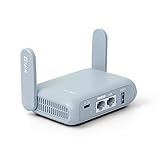
Best for: Travelers, renters, and small flats where the router lives in a bag, not a rack.
The Beryl AX is the fastest VPN box in this guide, and also the smallest. GL.iNet rates it at up to 300 Mbps over WireGuard and 150 Mbps over OpenVPN in client mode — measured on a local network, by the manufacturer’s own admission — roughly double the tested WireGuard speed of the full-size ASUS. It is a pocket-sized Wi-Fi 6 travel router with a 2.5G WAN port, USB-C power, and GL.iNet’s OpenWrt-based firmware, the most VPN-friendly software here: WireGuard and OpenVPN are pre-installed, more than 30 providers have one-click setup, and AdGuard Home and Tor are built in. VPN policies route by device.
The trade is coverage and ports. This is a travel router: two Ethernet ports, a small antenna array, and Wi-Fi designed for a hotel room or a one-bedroom flat, not a three-bedroom house. As a primary home router it covers a small space well and a large one badly, with no AiMesh-style expansion. At $98.99 list it fits by exactly $1.01, and one catalog read put it at $79.52. The honest budget is $80–$99. If your home is small or your life is mobile, it is the best VPN-per-dollar here. If your home is large, it is the wrong shape.
Specs: Wi-Fi 6 AX3000; WireGuard up to 300 Mbps, OpenVPN up to 150 Mbps (manufacturer lab figures); 1x 2.5G WAN, 1x Gigabit LAN; USB-C powered; OpenWrt-based firmware; VPN client and server; AdGuard Home; 196 g.
Pros: Fastest rated VPN speeds under $100; 2.5G WAN; OpenWrt with 30+ providers pre-configured; pocket-sized; USB-C power.
Cons: Travel-sized coverage and only two ports; fits by $1.01 at list; no mesh expansion.
Best for: Hotel Wi-Fi, rentals, and small flats where the router travels with you.
Check price on Amazon — GL.iNet Beryl AX GL-MT3000
4. ASUS RT-AX1800S — Best Budget Pick
Best for: The cheapest honest way into a router-level VPN.
At $69.99 direct from ASUS, the RT-AX1800S is the lowest-priced real VPN router in this guide. It is a dual-band Wi-Fi 6 AX1800 router with WireGuard and OpenVPN client and server support, AiMesh for later expansion, and AiProtection Classic security from Trend Micro at no extra subscription. One 2026 roundup rated it 8.4 out of 10 and named it the best budget VPN router.
The honest limit is throughput. The AX1800S has a smaller processor and less RAM than the RT-AX58U — the same roundup classes it as “light VPN duty” without publishing a number. On the hardware class, expect roughly 60–120 Mbps through WireGuard and less through OpenVPN: enough for browsing, email, and one 4K stream behind the tunnel, but not for a household of heavy users. The Wi-Fi is also a step down — AX1800 instead of AX3000 — with no USB port and no 2.5G port. For a single person or a couple on a sub-gigabit plan, that is a fair trade for $20 saved.
Specs: Wi-Fi 6 AX1800 (1,201 + 574 Mbps); WireGuard and OpenVPN client and server; AiMesh; AiProtection Classic free; 4x Gigabit LAN, 1x Gigabit WAN; WPA3.
Pros: Cheapest real VPN router here at $69.99; WireGuard and OpenVPN both included; AiMesh; free security.
Cons: Light VPN duty only — no published throughput test; AX1800 Wi-Fi; no USB or 2.5G port.
Best for: One or two people on a sub-gigabit plan who want VPN protection without a project.
Check price on Amazon — ASUS RT-AX1800S
5. TP-Link TL-R605 SafeStream — Best Wired-Only Pick
Best for: A home office that already has Wi-Fi and needs a serious wired VPN gateway.
The TL-R605 is the odd one out: a wired multi-WAN VPN router with no Wi-Fi radio at all. At $76.78 in Meta Catalog it gives you a gigabit VPN gateway — OpenVPN, PPTP, L2TP, and IPsec client and server, multi-WAN load balancing, and TP-Link’s Omada software-defined networking. Pair it with an access point you already own: the TL-R605 handles the tunnel and the routing, the access point handles the air.
The catch is the whole point: there is no Wi-Fi in this box. Buy it alone and you have no wireless network. It also has no WireGuard support — its OpenVPN throughput sits in the same modest band as the other budget picks, and IPsec is its strongest protocol.
Specs: Wired gigabit VPN router; OpenVPN, PPTP, L2TP, IPsec client and server; multi-WAN; Omada SDN; 5x Gigabit ports; no Wi-Fi; no WireGuard.
Pros: Multi-WAN and Omada management at $76.78; serious wired VPN gateway; pairs with any access point.
Cons: No Wi-Fi at all; no WireGuard; needs a separate access point.
Best for: A wired home office where Wi-Fi already exists separately.
Check price on Amazon — TP-Link TL-R605 SafeStream
What to Avoid
“VPN passthrough” is not a VPN router. Many budget routers list “VPN passthrough” and mean only that they do not block VPN traffic from your devices — a basic feature every router has. A real VPN router runs the client or the server itself. If the spec sheet does not name OpenVPN or WireGuard as a client, it is not a VPN router.
Do not buy the plain Archer AX55 by mistake. The Archer AX55 and the Archer AX55 Pro share a name, a look, and nearly a price — but only the Pro has native WireGuard and 2.5G ports. The plain AX55 runs OpenVPN at roughly 60–85 Mbps. Check for “Pro” on the box.
Do not buy a travel router as a family router. The GL.iNet Opal costs $39.99, but GL.iNet rates it at 65 Mbps over WireGuard and 12 Mbps over OpenVPN — unusable as a household tunnel. The Beryl AX is the smallest GL.iNet that works as a main router, and only in a small space.
Do not pay over $100 for the “next step up” and call it a deal. The GL.iNet Flint 2 is the best VPN router most reviewers name — around 900 Mbps over WireGuard and 880 Mbps over OpenVPN with data channel offload — but its street price drifted to roughly $139–$170 in November 2026, and the Slate AX lists at $119.99. Both are excellent; neither fits this budget. If your plan is gigabit, save for the Flint 2 rather than buying a $99 router twice.
FAQ
Do I still need a VPN subscription if my router has VPN?
Yes. None of these routers includes a VPN service. You still pay a provider such as NordVPN, Surfshark, Mullvad, or Proton VPN — typically $60–$140 a year — and enter its credentials or configuration file into the router. The router then encrypts every device behind it with that one subscription.
Is WireGuard really that much faster than OpenVPN?
On budget hardware, yes. Independent testing of three sub-$120 routers on a 200 Mbps line measured OpenVPN at roughly 95–110 Mbps and WireGuard at 165–175 Mbps on the same boxes. WireGuard does the same job with less code and less processor work.
Will a VPN router slow down my internet?
Yes, always — the question is how much. Expect a 200 Mbps line to deliver roughly 95–165 Mbps through a tunnel on the ASUS picks, and up to 300 Mbps on the Beryl AX under lab conditions. If your plan is gigabit, no router under $100 will keep up; the honest answer is the GL.iNet Flint 2 at roughly $139–$170.
Can I use a VPN router to watch streaming services from another country?
Usually, for a while. Routing a streaming device through the VPN changes its apparent location, and VPN Fusion makes it easy to send only the TV through the tunnel. But streaming services actively block known VPN addresses, so a location that works today may stop tomorrow.
Verdict
The ASUS RT-AX58U at about $89 is the best router with VPN under $100 because it is the most complete answer: WireGuard and OpenVPN as both client and server, VPN Fusion per-device routing, free lifetime AiProtection Pro, AiMesh expansion, and tested speeds of 165 Mbps on WireGuard and 95 Mbps on OpenVPN. It is neither the fastest nor the cheapest, but it is the one pick with no serious weakness for a normal home.
If your internet plan is multi-gig, take the TP-Link Archer AX55 Pro at $79.99 — and double-check the box says “Pro”. If you travel, take the Beryl AX at $98.99. The router is $69–$99, the VPN subscription is another $60–$140 a year.
As an Amazon Associate, we earn from qualifying purchases.
Suggested internal links:
– /best-wifi-7-router-under-200/
– /best-wifi-6-router-under-100/
– /best-mesh-wifi-6-system-under-300/
More from Amazon
Programs that pair well with the guide above. Offers and eligibility are set by Amazon and may change.
Free shipping on eligible items, Prime Video and more. Eligible new members can start with a free trial.
Start a Prime free trialAd-free music streaming. Eligible new subscribers can start with a free trial.
Try Music Unlimited freeA Prime membership for ages 18-24 with a trial period. Eligibility is set by Amazon.
See Prime for Young AdultsAudiobooks and podcasts to listen to on the go. Eligible new members can start with a free trial.
Try Audible freeAs an Amazon Associate we earn from qualifying purchases.