Our Top Picks


The honest answer to the $250 question is disappointing in the best way: the extra $50 over our under-$200 guide buys Wi-Fi 7 with a 6 GHz band, a 10 Gbps port, and mesh coverage — not a faster VPN tunnel. The GL.iNet Flint 2 at $169.99 is still the fastest VPN router under $250, with a tested 888–899 Mbps tunnel. Its successor, the Flint 3, costs $40 more and tunnels slower.
One fact up front: $250 buys the router, not the VPN. A paid subscription (NordVPN, Surfshark, Mullvad, Proton VPN) costs another $60–$140 a year, and none of these routers includes one. Free VPNs are a privacy trap.
Prices below are November 2026 snapshots — check the current price on Amazon before you buy.
Our top picks

Best for: Any home on a fast plan that wants the fastest VPN tunnel under $250
Check price on Amazon
Best for: Homes whose devices are Wi-Fi 7 and who want the 6 GHz band with a real VPN
Check price on Amazon
Best for: Homes that want a 10 Gbps port and tri-band Wi-Fi 7 at the lowest honest price
Check price on Amazon
Best for: Large homes that need two rooms of Wi-Fi 7 behind one VPN tunnel
Check price on AmazonBest for: A home office that already has Wi-Fi and needs a serious wired VPN gateway
Check price on AmazonQuick Picks
| Router | Price | VPN protocols | VPN speed | Best for |
|---|---|---|---|---|
| GL.iNet Flint 2 (GL-MT6000) | $169.99 | WireGuard, OpenVPN | ~900 Mbps WireGuard, tested | Most homes |
| GL.iNet Flint 3 (GL-BE9300) | $199.99–$209.99 | WireGuard, OpenVPN | 680 Mbps WireGuard (maker figure) | Wi-Fi 7 VPN |
| TP-Link Archer BE600 | $189.99–$249.99 | WireGuard, OpenVPN, PPTP, L2TP | No independent test found | Tri-band value with 10G |
| TP-Link Deco BE23 (2-pack) | $154.99 | WireGuard, OpenVPN, PPTP, L2TP | No independent test found | Mesh VPN |
| TP-Link ER707-M2 | $99.99–$104.99 | WireGuard, OpenVPN, IPsec, L2TP, PPTP | 343 Mbps WireGuard (TP-Link figure) | Wired office |
How to Choose a VPN Router Under $250
WireGuard is the first filter. WireGuard is the modern VPN protocol: less code, less CPU work, and far faster on budget-router processors. The Flint 2 proves it — 888–899 Mbps measured, against about 170 Mbps under $150.
VPN throughput is CPU-bound, not Wi-Fi-bound. A router advertising BE9700 Wi-Fi can still only push a fraction of that through a tunnel, because encryption is processor work. Ignore the headline Wi-Fi number.
Client versus server is two different jobs. A VPN client sends your home traffic out through a provider such as NordVPN; a VPN server lets you dial back in from a hotel. Policy routing decides what the tunnel covers: VPN Fusion on ASUS, VPN policies on GL.iNet, and per-device routing on TP-Link send the TV through the tunnel and the work laptop direct — generally only for LAN devices, not guests.
Mesh VPN works — on the main unit. In a mesh system the VPN client runs on the main unit only, and the satellites forward traffic to it. TP-Link’s own FAQ says the VPN works when enabled on the main Deco even if a satellite does not support it — and the main unit’s CPU is the speed limit for the whole house. The same holds for AiMesh and GL.iNet’s mesh (firmware 4.10).
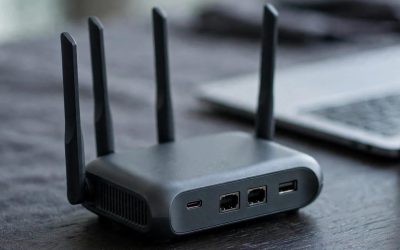
1. GL.iNet Flint 2 (GL-MT6000) — Best Overall
Best for: Any home on a fast plan that wants the fastest VPN tunnel under $250.
The Flint 2 leads its third guide in a row, and the $250 budget does not dethrone it. At $169.99 it fits with $80.01 to spare, verified at Amazon and on GL.iNet’s own store. It is a dual-band Wi-Fi 6 AX6000 router with two 2.5 Gbps ports, running OpenWrt-based firmware with WireGuard and OpenVPN pre-installed.
The tunnel numbers are still the story. GL.iNet rates it at up to 900 Mbps on WireGuard and 880 Mbps on OpenVPN with Data Channel Offload, and CNX Software measured 888–899 Mbps as a client and 834 Mbps as a server. OpenVPN without DCO is a different router at about 190 Mbps, so turn DCO on.
Caveats: Wi-Fi 6 only, so no 6 GHz band and no mesh; the OpenWrt-style setup has a steep learning curve.
Specs: Wi-Fi 6 AX6000; WireGuard up to 900 Mbps, OpenVPN up to 880 Mbps with DCO (888–899 Mbps measured by CNX Software); 2x 2.5G ports, USB 3.0; OpenWrt firmware; VPN client and server; AdGuard Home.
Pros: Fastest tested VPN tunnel under $250; dual 2.5G ports; OpenWrt with 30+ providers; AdGuard Home built in.
Cons: No 6 GHz band; no mesh; steep learning curve.
Best for: A household on a 500 Mbps or gigabit plan that wants every device behind one fast tunnel.
Check price on Amazon — GL.iNet Flint 2 GL-MT6000
2. GL.iNet Flint 3 (GL-BE9300) — Best Wi-Fi 7 VPN
Best for: Homes whose devices are Wi-Fi 7 and who want the 6 GHz band with a real VPN.
The Flint 3 is the first Wi-Fi 7 router in this family that is also a serious VPN router. It is a tri-band BE9300 router with five 2.5 Gbps ports and the same OpenWrt-based firmware as the Flint 2. GL.iNet’s US store lists it at $199.99 on sale against a $209.90 regular price; the catalog reads $209.99, so the honest budget is $200–$210. The tradeoff is the tunnel: GL.iNet rates it at up to 680 Mbps on WireGuard and OpenVPN with DCO — but the fine print breaks that down to roughly 644 Mbps on WireGuard and about 142 Mbps on standard OpenVPN without DCO. What it buys is the 6 GHz band, five 2.5G ports, and mesh support (firmware 4.10).
Caveats: slower tunnel than the Flint 2 it replaces; no 10G port; no mainline OpenWrt install, only GL.iNet’s fork.
Specs: Wi-Fi 7 BE9300 tri-band, 6 GHz; WireGuard up to 680 Mbps, OpenVPN up to 680 Mbps with DCO (~142 Mbps standard OpenVPN); 5x 2.5G ports, USB 3.0; OpenWrt-based firmware; VPN client and server.
Pros: Only tri-band Wi-Fi 7 pick with a 680 Mbps tunnel; five 2.5G ports; mesh support.
Cons: Tunnels slower than the cheaper Flint 2; standard OpenVPN drops to ~142 Mbps; no 10G port.
Best for: A home with Wi-Fi 7 devices and a sub-gigabit plan that wants 6 GHz and a real tunnel.
Check price on Amazon — GL.iNet Flint 3 GL-BE9300
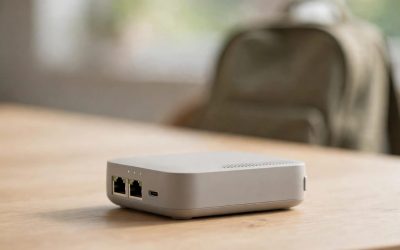
3. TP-Link Archer BE600 — Best Tri-Band Value with 10G
Best for: Homes that want a 10 Gbps port and tri-band Wi-Fi 7 at the lowest honest price.
On paper the BE600 beats the BE550 and costs less. It is a tri-band BE9700 router with a 10 Gbps WAN/LAN port, four more 2.5 Gbps ports, a USB 3.0 port, and EasyMesh expansion. Coverage is rated at 2,600 sq ft, up from the BE550’s 2,000. The VPN suite is the full set as both client and server.
The list is $249.99 — exactly $0.01 under budget. But November reads are split: $189.99 in one roundup, $189.98 in a deal tracker, $249.99 in the catalog. The honest budget is $190–$250; at $189.99 it is the best tri-band value here by a wide margin, and at $249.99 it is still the cheapest way to a 10G port — the real argument for it, since every other pick caps your WAN at 2.5G.
Caveats: TP-Link publishes no VPN throughput figure for the BE600, and we found no independent test — the tunnel speed is unproven. Advanced HomeShield features need a paid subscription. The BE550 Pro, covered below, is nearly the same router at $229.99 — buy whichever is cheaper.
Specs: Wi-Fi 7 BE9700 tri-band, 6 GHz; WireGuard, OpenVPN, PPTP, L2TP client and server; 1x 10G port, 4x 2.5G ports, USB 3.0; EasyMesh; up to 2,600 sq ft.
Pros: 10G port at the lowest honest price; tri-band with 6 GHz; full VPN suite.
Cons: Fits by $0.01 at list; no published or tested VPN speed; HomeShield Pro is paid.
Best for: A home with multi-gig fiber above 2.5 Gbps that wants Wi-Fi 7 and a real VPN.
Check price on Amazon — TP-Link Archer BE600
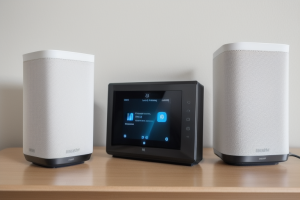
4. TP-Link Deco BE23 (2-Pack) — Best Mesh VPN
Best for: Large homes that need two rooms of Wi-Fi 7 behind one VPN tunnel.
The Deco BE23 is the first mesh pick in this family, and the price is what makes it possible: the 2-pack lists at $179.99 and reads $154.99 in November 2026, with a low of $119.99 on record — the honest budget is $120–$180. Two units cover up to 4,500 sq ft with a single network name. Each unit is a dual-band BE3600 router with two 2.5 Gbps ports and wired backhaul.
The Deco app runs the VPN client and server on the main unit — WireGuard, OpenVPN, PPTP, and L2TP — and the satellite forwards traffic to it. TP-Link’s FAQ confirms the VPN works when enabled on the main Deco even if a satellite does not support it. Devices on either unit share the same tunnel, and the main unit’s CPU is the speed limit — TP-Link publishes no VPN throughput figure for the BE23, so treat the tunnel as unproven above a 200–500 Mbps plan. The 3-pack, at $179.99–$204.99, covers 6,500 sq ft and also fits.
Caveats: no 6 GHz radio; no published VPN speed; no USB port.
Specs: Wi-Fi 7 BE3600 dual-band mesh, 2-pack; WireGuard, OpenVPN, PPTP, L2TP client and server (main unit); 2x 2.5G ports per unit, wired backhaul; up to 4,500 sq ft.
Pros: Whole-home Wi-Fi 7 with VPN for $154.99; VPN client and server on the main unit; wired backhaul.
Cons: No 6 GHz radio; no published VPN speed; app-only management; no USB port.
Best for: A two-storey or large home where one router cannot cover every room behind one tunnel.
Check price on Amazon — TP-Link Deco BE23 2-Pack
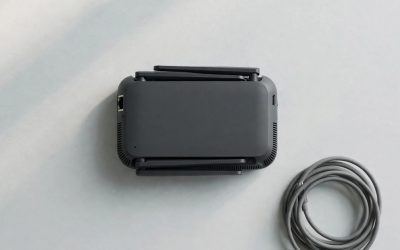
5. TP-Link ER707-M2 — Best Wired-Only Pick
Best for: A home office that already has Wi-Fi and needs a serious wired VPN gateway.
This pick carries over from the $200 guide unchanged, because at $250 nothing wired beats it for the money. It is an Omada VPN gateway with two 2.5 Gbps ports, four gigabit ports, and up to six WAN connections. TP-Link’s own figures put WireGuard at 343 Mbps, IPsec at around 650 Mbps, and OpenVPN at a hard ceiling of 135 Mbps. At $99.99–$104.99 it costs about $45 more than the ER605 V2 and delivers roughly four times its WireGuard speed.
The catches are the whole point: no Wi-Fi in this box — buy it alone and you have no wireless network. The Omada app and cloud access need a controller — the free software controller or a hardware unit such as the OC200. Pair it with a Deco BE23 unit as the access point and you have a wired gateway plus mesh Wi-Fi for about $245 all in.
Specs: Wired multi-gigabit VPN gateway; WireGuard 343 Mbps, IPsec ~650 Mbps, OpenVPN 135 Mbps (TP-Link figures); 2x 2.5G ports, 4x Gigabit, 1x SFP; up to 6 WAN.
Pros: Four times the ER605 V2’s WireGuard speed; fastest IPsec here; multi-WAN and 2.5G at $104.99.
Cons: No Wi-Fi at all; OpenVPN capped at 135 Mbps; Omada app needs a controller.
Best for: A wired home office where Wi-Fi already exists and the VPN job is remote workers or a second site.
Check price on Amazon — TP-Link ER707-M2
What to Avoid
Do not buy the TP-Link Archer BE550 Pro when the BE600 is cheaper. The BE550 Pro is nearly the same router as the BE600 — same BE9700 class, 10G port, and VPN suite — at $229.99 list, with Amazon reads at $199.99. The BE600 reads $189.99 on deal.
Do not pay list price for the TP-Link Archer BE550. The BE550 is the tri-band BE9300 step down — five 2.5G ports, no 10G port — at $249.99 list, with November reads at $199–$238.99. At list it is the worst buy of the three BE-series routers here.
The ASUS RT-BE92U still does not fit. The tri-band Wi-Fi 7 answer with 6 GHz, a 10G port, and four 2.5G ports costs $263.02–$285.99 new in November 2026 — at least $13 over budget — with the same 300 Mbps WireGuard figure as the RT-BE58U. Refurbished units exist at $166.99 with a 90-day warranty.
Do not buy the Netgear Nighthawk RS200 for its VPN. At $229.99 its VPN story is vague: remote access plus an Armor subscription, with no WireGuard client documented.
Do not pay $199.99 for the same Flint 2 under another name. A listing under the name GL.iNet Fortify carries the same GL-MT6000 model number and reads $199.99 — $30 more for the same hardware. The verified street price is $169.99.
Three traps from the cheaper guides still apply. “VPN passthrough” is not a VPN router — it only means the router does not block VPN traffic. The plain Archer AX55 looks identical to the AX55 Pro, but only the Pro has native WireGuard and 2.5G ports — the plain AX55 runs OpenVPN at roughly 60–85 Mbps. And the GL.iNet Opal ($39.99) is rated at 65 Mbps WireGuard and 12 Mbps OpenVPN — unusable as a household tunnel.
FAQ
Do I still need a VPN subscription if my router has VPN?
Yes. None of these routers includes a VPN service. You still pay a provider — NordVPN, Surfshark, Mullvad, or Proton VPN — $60–$140 a year.
Does the extra $50 over $200 buy a faster VPN?
No. The fastest tunnel under $250 is the same Flint 2 that led the $200 guide, at 888–899 Mbps tested. The extra $50 buys Wi-Fi 7, a 10 Gbps port, or a second mesh unit — real upgrades, just not VPN speed.
Does the VPN work on every mesh node?
Yes, through the main unit. The VPN client runs on the main Deco, AiMesh router, or Flint 3 — the satellites forward traffic to it, and every device shares the same tunnel.
Flint 3 or Flint 2 — which one should I buy?
Buy the Flint 2 if VPN speed is the job: 900 Mbps against 680 Mbps, for $40 less. Buy the Flint 3 if your devices are Wi-Fi 7 and you want 6 GHz, five 2.5G ports, and mesh.
Will a VPN router slow down my internet?
Yes, always — the question is how much. A gigabit line delivers roughly 900 Mbps through the Flint 2’s tunnel and about 680 Mbps through the Flint 3’s.
Verdict
The GL.iNet Flint 2 at $169.99 is still the best router with VPN under $250: a tested 888–899 Mbps WireGuard tunnel, dual 2.5G ports, OpenWrt with 30+ providers, and AdGuard Home built in — $80 under budget.
Wi-Fi 7 and 6 GHz: the Flint 3 at $199.99–$209.99, accepting the 680 Mbps tunnel. Multi-gig fiber above 2.5 Gbps: the TP-Link Archer BE600 — only at the $189.99 deal price, never at list. Large home: the TP-Link Deco BE23 2-pack at $154.99. Wired VPN job: the TP-Link ER707-M2 at $99.99–$104.99. Deepest VPN toolkit: the ASUS RT-BE58U at $135–$149.99, from the $150 guide.
As an Amazon Associate, we earn from qualifying purchases.
Suggested internal links:
– /best-wifi-7-router-under-200/
– /best-wifi-6-router-under-100/
– /best-mesh-wifi-6-system-under-300/
More from Amazon
Programs that pair well with the guide above. Offers and eligibility are set by Amazon and may change.
Free shipping on eligible items, Prime Video and more. Eligible new members can start with a free trial.
Start a Prime free trialAd-free music streaming. Eligible new subscribers can start with a free trial.
Try Music Unlimited freeA Prime membership for ages 18-24 with a trial period. Eligibility is set by Amazon.
See Prime for Young AdultsAudiobooks and podcasts to listen to on the go. Eligible new members can start with a free trial.
Try Audible freeAs an Amazon Associate we earn from qualifying purchases.