Key takeaways
- Netgear A6150 (AC1200 Dual Band USB Adapter): a compact stick that plugs straight into a port, with internal antennas. Small and unobtrusive, aimed at laptops and light use.
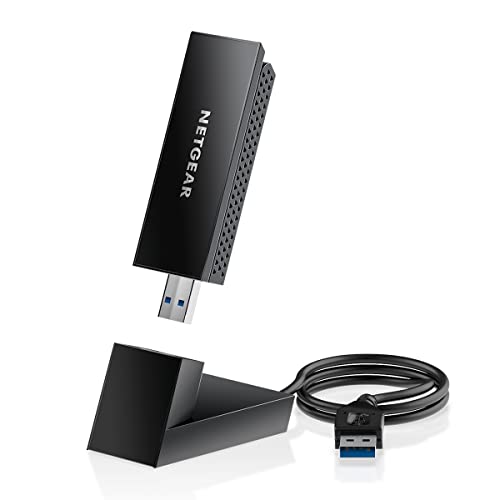
- Netgear A6210 (AC1200 High Gain USB 3.0 Adapter): larger, with a fold-up external antenna for better reception and a desk cradle so you can move it away from the back of a PC case.
- Netgear Nighthawk A7000 (AC1900 USB 3.0 Adapter): the higher-end Wi-Fi 5 model, with a magnetic cradle and an extension cable for positioning it on a desk or the side of a metal case.
A Netgear AC1200 Wi-Fi USB adapter is a reasonable, inexpensive way to add dual-band Wi-Fi 5 to a desktop PC or replace a weak laptop card, and the high-gain A6210 version is the one to pick if you can use a USB 3.0 port; the Nighthawk AC1900 (A7000) is faster only when you sit close to a strong router and your internet plan is above roughly 300 Mbps. In 2026 both are older Wi-Fi 5 designs, so they make the most sense for budget upgrades rather than as a long-term buy for a new gigabit connection.
Our top picks



As an Amazon Associate we earn from qualifying purchases at no extra cost to you. Ratings are shown as listed on Amazon.
The Models Behind the Names
Netgear has sold more than one adapter under the AC1200 label, which causes a lot of confusion. These are the ones most people mean:
- Netgear A6150 (AC1200 Dual Band USB Adapter): a compact stick that plugs straight into a port, with internal antennas. Small and unobtrusive, aimed at laptops and light use.
- Netgear A6210 (AC1200 High Gain USB 3.0 Adapter): larger, with a fold-up external antenna for better reception and a desk cradle so you can move it away from the back of a PC case.
- Netgear Nighthawk A7000 (AC1900 USB 3.0 Adapter): the higher-end Wi-Fi 5 model, with a magnetic cradle and an extension cable for positioning it on a desk or the side of a metal case.
Spec Comparison
| Spec | A6150 (AC1200) | A6210 (AC1200 High Gain) | A7000 Nighthawk (AC1900) |
|---|---|---|---|
| Wi-Fi standard | Wi-Fi 5 (802.11ac) | Wi-Fi 5 (802.11ac) | Wi-Fi 5 (802.11ac) |
| 2.4 GHz max link rate | 300 Mbps | 300 Mbps | 600 Mbps |
| 5 GHz max link rate | 867 Mbps | 867 Mbps | 1300 Mbps |
| Antenna | Internal | Fold-up external | Internal, larger body |
| Interface | USB, compact stick | USB 3.0, with cradle | USB 3.0, with magnetic cradle |
| Typical price range | $25 to $40 | $30 to $50 | $50 to $80 |
Link rates are the theoretical maximum negotiated with the router. Actual throughput is usually 40 to 60 percent of that figure at close range and drops further through walls.
Worked Example: What Speed Will You Actually See?
Assume a Wi-Fi 5 or Wi-Fi 6 router in the next room and a 500 Mbps internet plan.
- AC1200 adapter on 5 GHz: 867 Mbps link x roughly 50 percent efficiency = about 400 to 430 Mbps close by. One wall away, expect roughly 200 to 350 Mbps. That covers 4K streaming, gaming and large downloads comfortably, but will not fully use a 500 Mbps plan.
- AC1900 adapter on 5 GHz: 1300 Mbps link x 50 percent = about 600 Mbps under ideal conditions, which can saturate a 500 Mbps plan. The catch is that it needs a router that supports three spatial streams to reach that rate; on a typical 2×2 router it behaves much like an AC1200 adapter, often with a modest gain from its better antenna design.
- Any adapter in a USB 2.0 port: USB 2.0 tops out at about 280 to 320 Mbps in practice, so it becomes the bottleneck regardless of Wi-Fi speed. Always use a blue (or otherwise marked) USB 3.0 or newer port.
Placement Matters More Than the Spec Sheet
The single biggest real-world improvement with a USB adapter comes from where it sits. Plugging an adapter directly into the rear ports of a desktop puts it behind a steel case, often near the floor, which can cut signal noticeably.
- Use the included cradle or a USB 3.0 extension cable to bring the adapter onto the desk.
- Keep it at least a foot from the PC case and from monitors, speakers and other USB 3.0 devices, which can create 2.4 GHz interference.
- Give it a line of sight toward the router where possible; on the A6210, raise the antenna fully.
- Connect to the 5 GHz network if you are within two or three rooms of the router; use 2.4 GHz only for long range through many walls.
Driver and Operating System Realities
Driver support is where older adapters show their age, so it deserves attention before buying.
- Windows: these adapters are primarily Windows devices. Download the driver for your exact model and Windows version from Netgear’s support site rather than relying on the disc or an old installer, and remove any previous Wi-Fi utility first.
- macOS: do not count on current macOS support for these models.
- Linux: the A6210 uses a MediaTek MT7612U chipset that is supported by the in-kernel mt76 driver on most modern distributions, which makes it a common pick for Linux desktops. The A7000 uses a Realtek RTL8814AU chipset that has historically needed a third-party driver.
- Power saving: if the connection drops after the PC sleeps, disable USB selective suspend in Windows power settings and turn off “allow the computer to turn off this device to save power” for the adapter in Device Manager.
Which One Should You Buy?
| Situation | Best pick | Reason |
|---|---|---|
| Laptop with a failing internal card, light use | A6150 | Small enough to leave plugged in |
| Desktop PC, router a few rooms away | A6210 | External antenna and cradle help most with distance |
| Linux desktop or Raspberry Pi-style projects | A6210 | Well-supported chipset in the Linux kernel |
| Internet plan over 400 Mbps, router nearby with 3×3 support | A7000 Nighthawk | Only model here that can exceed about 450 Mbps |
| New gigabit plan or Wi-Fi 6/6E router | Skip these; consider a Wi-Fi 6E adapter such as the Nighthawk A8000 or an internal PCIe card | Wi-Fi 5 caps the benefit of a modern router |
USB Adapter vs Internal PCIe Card
For desktops, a PCIe Wi-Fi card with external antennas usually outperforms any USB adapter and supports newer standards for a similar price, often $25 to $60 for Wi-Fi 6 or 6E cards. It needs a free PCIe slot and a few minutes inside the case. A USB adapter wins when you cannot open the PC, need to move the adapter between computers, or are fixing a laptop. If you only need a stable connection for a stationary desktop near the router, a long Ethernet cable or a powerline or MoCA adapter can be even more reliable.
Bottom Line
The Netgear AC1200 adapters are solid budget fixes in 2026: the A6150 for convenience, the A6210 for reach and Linux compatibility. The Nighthawk AC1900 A7000 earns its higher price only with a capable router and a fast plan. If your router and plan are recent, step up to a Wi-Fi 6 or 6E adapter so the adapter is not the slowest link in your network.