Key takeaways
- Desktop PC under load: 250-450W
- 27-inch monitor: 30-60W
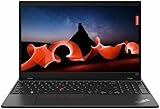
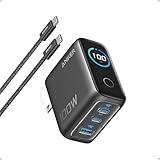
- Laptop charging: 45-90W
- Router + external SSD: 15-25W
- Desk lamp LED: 8-12W
The best extension lead with surge protection for most home offices in 2026 is a 4 to 6-gang 13A lead with 600 to 1,000 joules of protection, a 2m cable, and widely spaced sockets. For a TV setup, choose a longer 3m lead with 1,000 to 2,000 joules and coaxial protection, while for workshop tools you need a heavy-duty rubber cable lead with a high 13A / 3,120W capacity rather than a slim indoor strip.
As an Amazon Associate we earn from qualifying purchases at no extra cost to you.



Best extension leads with surge protection compared
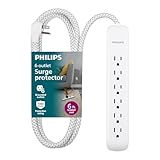
All leads below are UK-type 230V, 13A fused models commonly sold for PC and AV use. Joule rating determines how much surge energy the metal-oxide varistors (MOVs) can absorb before wearing out, not how strong a single lightning strike they can stop.
| Type / Example brand | Sockets | Cable length | Joule rating | Clamping voltage | Socket spacing | Max load |
|---|---|---|---|---|---|---|
| Belkin compact surge strip for desk PCs | 4-way | 2m, 1.0mm2 PVC | 525 joules | ~600V | 45mm standard | 13A / 3,120W |
| APC SurgeArrest Essential for home office | 5-way | 1.8m, 1.25mm2 PVC | 918 joules | ~600V | 55mm wide, 1x block gap | 13A / 3,120W |
| Masterplug surge 6-gang for TV and console | 6-way | 3m, 1.25mm2 PVC | 1,050 joules | ~650V | 50mm, 2x transformer gaps | 13A / 3,120W |
| Brennenstuhl Premium Protect for AV and NAS | 6-way | 3m, 1.5mm2 PVC | 19,500A / ~2,000 joules equivalent | ~600V | 60mm angled, block-friendly | 13A / 3,680W peak* |
| Heavy-duty workshop surge box, 2-gang | 2-way rubber box | 10m, 1.5mm2 rubber H07RN-F | 625 joules | ~700V | 70mm+ industrial | 13A / 3,120W |
*UK nominal voltage is now harmonised at 230V, giving 2,990W at 13A, but many manufacturers still label 240V / 3,120W. Treat 3,000W as your practical ceiling.
How much surge protection do you actually need?
For PC gadgets, joule rating is about longevity, not invincibility. A surge protector diverts excess voltage to earth and absorbs heat in its MOVs. Small daily spikes from fridge compressors, central heating pumps and distant grid switching gradually use up that capacity.
A 500-700 joule lead is enough for a basic desk with a laptop, monitor and phone charger if your house has modern wiring. A 900-1,200 joule lead lasts roughly twice as long under the same conditions and is a better pick for a desktop PC, external drives and a router you leave on 24/7. Above 1,500 joules makes sense mainly for expensive always-on gear like an OLED TV, AV receiver and NAS in the same strip.
Look for two features over a big joule number alone: a protection indicator light that goes out when the MOVs are spent, and a 13A BS1362 fuse plus shuttered sockets to BS 1363. Without the indicator, you cannot tell when a surge lead has become just an ordinary extension.
Quick load check for a home office
UK load in watts = volts x amps. Use 230V for calculation. A typical desk draws far less than people expect:
- Desktop PC under load: 250-450W
- 27-inch monitor: 30-60W
- Laptop charging: 45-90W
- Router + external SSD: 15-25W
- Desk lamp LED: 8-12W
Total example: 350 + 45 + 65 + 20 + 10 = 490W, or about 2.1A. Well within a 13A lead. Problems start when you add a 2,000W fan heater, 1,800W vacuum or 2,200W workshop saw to the same strip. Keep heating and motor tools on a separate wall socket or a dedicated heavy-duty reel fully unwound.
Pick by your situation
| If you have… | Choose… | Why |
|---|---|---|
| Small desk, laptop + 1 monitor, lead behind desk | 4-way, 2m, 500-900 joules, flat plug | Short cable avoids coil heat, flat plug fits behind furniture |
| Gaming PC + dual monitors + router, need always-on | 5 to 6-way, 1.8-2m, 900-1,200 joules, 55mm+ spacing | Space for plug-in power bricks, higher joule life for 24/7 gear |
| TV wall, soundbar, PS5/Xbox, Sky box, 3m from socket | 6 to 8-way, 3m, 1,000+ joules, 2 block gaps | Long reach without daisy-chaining, room for transformers |
| Garage, shed or site tools, cold and damp | 2-way rubber box, 10m H07RN-F, 600+ joules, IP54 lid | PVC cracks in cold, rubber and raised sockets survive knocks |
| Rented flat with one wall socket and tight budget | 4-way, 2m, wall-mountable, protection light | Cheapest safe upgrade, typically in the £15 to £30 market range |
Cable length and socket spacing matter more than looks
Length adds resistance and trip hazard. A 1.8m to 2m lead is ideal for desks. Choose 3m only if the wall socket is across the room for a TV. Avoid 5m+ PVC strips indoors unless necessary, and never daisy-chain two surge leads to gain length, as it can overload the first fuse and voids the surge coordination.
Measure spacing with your largest plug. Standard UK plugs need about 45mm centre-to-centre, but laptop bricks, Apple and Dell adapters, and smart plugs need 55-65mm or a rotated end socket. Angled 45-degree gangs from brands like Brennenstuhl and Masterplug fit more bricks than straight in-line strips.
Cable thickness is marked on the sheath: 1.0mm2 is light-duty and fine for AV, 1.25mm2 is the best balance for PCs, 1.5mm2 stays cooler for longer runs and workshops. Rubber H07RN-F is tougher than PVC and stays flexible below 0C.
Durability and ownership: what actually wears out
Surge leads do not last forever. The first thing to fail is usually the MOV module after repeated small surges, followed by the illuminated switch and the cable strain relief where the cord enters the housing.
- Protection light off or flickering means replace the whole lead. MOVs are not user-replaceable in sealed strips.
- Warm plug or brown marks around a socket mean loose contacts. Stop using it, especially with heaters or tumble dryers.
- Stiff or cracked PVC after 5-7 years in a sunny window or cold garage means the insulation is ageing. Rubber-box types last longer outdoors.
- Do not cover a coiled extension with a duvet or run it under carpet. Heat cannot escape and the thermal cutout may trip repeatedly.
To extend life, switch off the strip switch when the PC and TV are fully shut down during storms, keep workshop leads uncoiled in use, and vacuum dust from shuttered sockets once a year. Dust plus damp is a common cause of tracking marks on cheap unshuttered cubes.
A common mistake is using a surge lead as lightning insurance. No plug-in strip can absorb a direct lightning strike. For high-risk areas, a Type 2 surge protection device in the consumer unit installed by an electrician plus a plug-in Type 3 strip at the PC gives layered protection.
Which should you buy in 2026?
If you want one safe default for a PC desk, get a 5-way 1.8m to 2m model with around 900 joules, a protection indicator, individual spacing for at least one power brick, and a wall-mount option. Typical general market range is £18 to £35.
For living-room AV, pay a little more for a 6-way 3m model with 1,000 joules or higher and widely angled sockets. For workshops, prioritise a short or medium rubber H07RN-F lead with an IP-rated lidded box and thermal overload reset over a high joule number.
Replace any surge lead older than 7-10 years, any lead without a working indicator, and any lead that has taken a known major surge that tripped the house breaker. The surge module likely sacrificed itself to save your PC.