Key takeaways
- Stall force: The amount of pressure needed to stop the motor. Below 30 lbs, the device will stall on glutes, hamstrings, and quads when you apply meaningful pressure. 40-60 lbs is the sweet spot for deep tissue work without needing pro-level strength.
- Amplitude: How far the head travels. 12-16mm provides the deeper reach most people associate with deep tissue. Shorter 10-11mm strokes feel more vibratory and are better for sensitive areas or warm-ups.
- Speed (PPM): Measured in percussions per minute. Lower speeds (1200-1800 PPM) feel more percussive and intense for targeted spots. Higher speeds (2400-3200 PPM) feel smoother and work better for flushing larger areas.
- Weight and ergonomics: A 1.5 lb gun is easy to hold at awkward angles for your own shoulders. A 2.8 lb gun gives more passive pressure on legs but tires your wrist quickly during self-massage.
- Noise: Above 70 dB, you will not comfortably use it while watching TV or talking. Brushless motors in newer designs typically stay in the 55-65 dB range even at higher speeds.
The best deep tissue massagers for targeted relief balance high stall force with controllable speed ranges, and the right choice depends on whether you need aggressive work on large muscle groups or precise, quieter treatment for sensitive areas.
For most people seeking deep tissue work at home, stall force between 40 and 60 lbs, at least three speed settings, and a weight under 2.5 lbs covers everything from calves and glutes to neck and forearms without fatiguing your arm. Heavier, higher-stall-force pro models excel on dense muscles but are harder to maneuver for self-use on the back and shoulders.
Our top picks
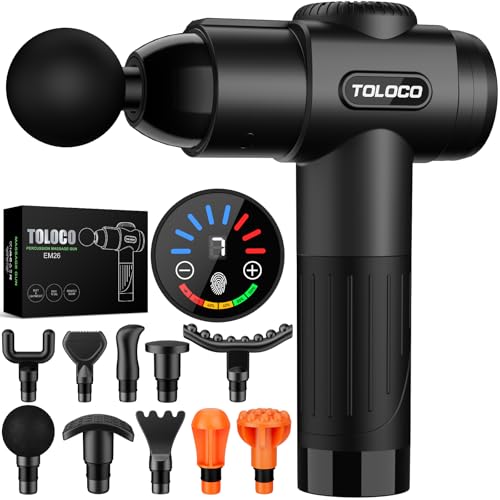
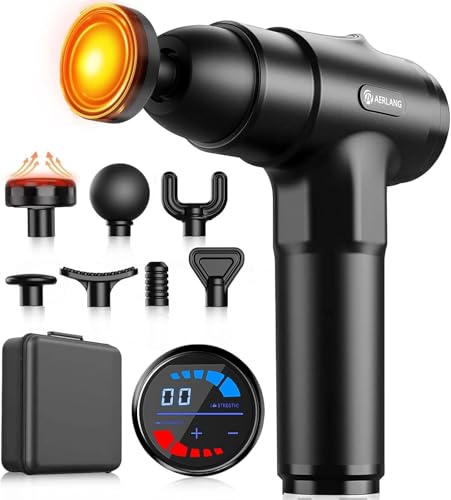


As an Amazon Associate we earn from qualifying purchases at no extra cost to you. Ratings are shown as listed on Amazon.
What Defines a True Deep Tissue Massager
Not all percussion massagers deliver deep tissue pressure. Marketing often emphasizes amplitude and percussions per minute, but stall force is the deciding factor for whether a device can maintain pressure when you lean into a knot.
- Stall force: The amount of pressure needed to stop the motor. Below 30 lbs, the device will stall on glutes, hamstrings, and quads when you apply meaningful pressure. 40-60 lbs is the sweet spot for deep tissue work without needing pro-level strength.
- Amplitude: How far the head travels. 12-16mm provides the deeper reach most people associate with deep tissue. Shorter 10-11mm strokes feel more vibratory and are better for sensitive areas or warm-ups.
- Speed (PPM): Measured in percussions per minute. Lower speeds (1200-1800 PPM) feel more percussive and intense for targeted spots. Higher speeds (2400-3200 PPM) feel smoother and work better for flushing larger areas.
- Weight and ergonomics: A 1.5 lb gun is easy to hold at awkward angles for your own shoulders. A 2.8 lb gun gives more passive pressure on legs but tires your wrist quickly during self-massage.
- Noise: Above 70 dB, you will not comfortably use it while watching TV or talking. Brushless motors in newer designs typically stay in the 55-65 dB range even at higher speeds.
Spec Comparison: Leading Deep Tissue Models in 2026
These models represent the current mainstream categories from full-size pro to compact. Specs are based on manufacturer data for current generation devices.
| Model | Stall Force | Amplitude | Speed Settings (PPM) | Weight | Noise (approx.) | Attachments Included | Battery Life |
|---|---|---|---|---|---|---|---|
| Therabody Theragun PRO (6th Gen) | 60 lbs | 16mm | 5 settings: 1750-2400 PPM | 2.65 lbs / 1.2 kg | 60-65 dB | 6 (dampener, standard ball, wedge, thumb, cone, micro-point) | 150 mins (swappable battery) |
| Hyperice Hypervolt 2 Pro | 60 lbs | 14mm | 5 settings: 1700-2700 PPM | 2.6 lbs / 1.18 kg | 60-68 dB | 5 (flat, bullet, fork, round, cushion) | 180 mins |
| Ekrin Athletics B37S | 56 lbs | 12mm | 5 settings: 1400-3200 PPM | 2.2 lbs / 1.0 kg | 55-62 dB | 4 (round, flat, bullet, fork) | 480 mins (8 hours) |
| Therabody Theragun Elite | 40 lbs | 16mm | 5 settings: 1750-2400 PPM | 2.2 lbs / 0.99 kg | 60-65 dB | 5 (dampener, standard ball, wedge, thumb, cone) | 120 mins |
| Hyperice Hypervolt Go 2 | 30 lbs | 11mm | 3 settings: 2200-3100 PPM | 1.5 lbs / 0.68 kg | 55-60 dB | 2 (flat, bullet) | 180 mins |
Takeaway: 16mm amplitude models like the Theragun PRO and Elite feel deeper per stroke than 11-12mm devices, even at similar stall forces. If you primarily work dense tissue like glutes and hamstrings, prioritize 40+ lbs stall force and 14mm+ amplitude. For travel or precise neck and forearm work, the lighter Go-class devices trade stall force for control and portability.
Attachment Options and What They Actually Do for Targeted Relief
More attachments is not automatically better. Shape matters more than count for targeting specific muscle groups.
- Standard ball / round: General use for large groups. Best for quads, glutes, hamstrings, and back when you want even pressure distribution.
- Dampener / cushioned flat: Softer foam reduces intensity. Useful around bony areas like shins, Achilles, or for people sensitive to direct percussion. Ideal for beginners.
- Flat head (hard plastic): Delivers more focused pressure than a ball without the pinpoint of a bullet. Good for chest, quads, and IT band work where you want broad but firm contact.
- Bullet / cone: Pinpoint pressure for hands, feet, and trigger points around the shoulder blade. Use for 15-30 seconds per spot at low speed. Avoid directly on bone or tendons.
- Wedge: Angled edge works well for scraping-like strokes along calves and for shoulder blades where a ball would slip.
- Fork / U-shape: Designed to straddle the spine or Achilles tendon. It avoids pressing on bone while treating the muscles on either side. Only useful if you regularly work paraspinals or calves.
- Thumb: Mimics a thumb for lower back and glute trigger points. More precise than a ball but less aggressive than a bullet.
If you only get two attachments, a standard ball plus a bullet or cone covers 90% of targeted deep tissue needs. Fork and thumb attachments are situational and often stay in the case unless you specifically need them.
Matching a Massager to Your Muscle Groups and Habits
Use this decision matrix to map your primary use case to the right spec profile.
| Your Situation | Priority Specs | Best Fit Type | Why |
|---|---|---|---|
| Large, dense muscles (glutes, hamstrings, quads) and you are over 180 lbs or very active | 55-60 lbs stall force, 14-16mm amplitude, 2.5+ lbs weight helps with passive pressure | Full-size pro: Theragun PRO, Hypervolt 2 Pro | Prevents stalling when you lean in and delivers depth without you having to push hard |
| Self-massage for back, neck, and shoulders | Under 2.3 lbs, ergonomic handle, 55-65 dB, 40+ lbs stall force still useful | Mid-weight: Ekrin B37S, Theragun Elite | Lighter weight reduces arm fatigue when reaching behind you; adjustable arm helps angle |
| Sensitive areas, first-time user, or need quiet use at home/office | 30-40 lbs stall force, dampener attachment, low end under 1800 PPM, <62 dB | Quiet mid-range or premium compact | Lower speed and softer head give you control to stay comfortable and learn pressure limits |
| Travel, gym bag, or frequent short sessions | Under 1.8 lbs, 120+ min battery, 30 lbs stall force is enough | Compact: Hypervolt Go 2 class | Portability matters more than max force; still effective for maintenance between deeper sessions |
| Targeted foot, hand, or forearm work (runners, lifters, desk workers) | Bullet/cone included, 1400-1800 PPM low speed option | Any with bullet and true low speed | Low speed plus pinpoint head lets you stay on small knots without skating off |
Noise, Weight, and Real-World Use
Spec sheets do not capture how these factors feel after five minutes of self-use.
Noise: Manufacturers quote the lowest setting in a soundproof room. In practice, pressing hard against muscle increases noise by 5-10 dB. Brushless motor models from Therabody, Hyperice, and Ekrin all test similarly around 60 dB at mid speed, which is conversation level. If you plan to use it while on calls or with family nearby, avoid older brushed-motor budget models that often exceed 70 dB.
Weight trade-off: Weight acts as assistance. On your quads, a 2.6 lb head does half the work for you. On your rear delts while reaching across your body, that same weight becomes a penalty and your hand will shake before the muscle releases. People who primarily self-treat their back and shoulders consistently prefer 2.0-2.3 lbs as the balance point.
Speed control: Five speeds are more useful than three if you do targeted work. The difference between 1750 and 1900 PPM is subtle on paper but noticeable on a tender calf. Three-speed compacts tend to jump from 2200 to 3100 PPM, which leaves no true low-and-slow option for pinpoint work.
Durability and Ownership Realities
Percussion massagers are simple mechanically, but a few parts determine how long they actually last.
- What wears first: The attachment collar and the foam on ball/dampener heads. Foam compresses and hardens after 12-18 months of regular use, making the massage feel harsher. Replacement heads typically cost $15-$35 depending on brand.
- Battery: Lithium-ion packs degrade if left fully charged for weeks. For longest life, store at 40-60% charge if you will not use it for a month. Swappable battery models like the Theragun PRO let you replace the battery for around $50-$80 instead of replacing the whole device. Sealed-battery models require service.
- Motor strain: Consistently stalling the motor by pressing at max force shortens motor life. If the motor stalls, you are pressing too hard. Reduce pressure and let the amplitude do the work, or move to a higher stall-force model.
- Cleaning: Wipe heads with mild soap and water after skin contact, especially after using lotion or sweat. Do not submerge the device or spray cleaner into the vents. Hair and dust collect around the stroke shaft; clear it with a dry cloth monthly to prevent grinding.
- Common mistakes: Running directly on bone, holding on one spot longer than 60 seconds, and using the bullet at high speed on the neck. Keep sessions to 30 seconds per spot and up to 2 minutes per muscle group, and keep the device moving.
General market pricing in 2026 places compact models around $130-$200, mid-range full-size models around $250-$400, and pro-grade models with swappable batteries and higher stall force around $400-$600. Extended warranties of two years are worth considering for pro models used daily, as motor issues typically appear after the first year if they will appear at all.
How to Choose in 5 Minutes
Follow this sequence to avoid overbuying or underpowering.
Step 1: Identify your hardest muscle to reach. If it is glutes and hamstrings, filter for 55+ lbs stall force and 14mm+ amplitude. If it is neck and upper back, filter for weight under 2.3 lbs and an adjustable or angled handle first.
Step 2: Check the low speed. If the lowest setting is above 2000 PPM, you will not have a gentle option for sensitive spots. Look for a low end of 1700 PPM or lower.
Step 3: Count attachments you will actually use. You need a round ball and one pinpoint option. Fork and wedge are bonuses, not requirements, unless you treat around the spine or Achilles regularly.
Step 4: Decide on weight vs. power. Can you hold 2.6 lbs behind your back for 90 seconds comfortably? If not, a 2.2 lb model at 40-56 lbs stall force will serve you better than a heavier 60 lb model you avoid using.
Step 5: Fact-check battery and noise in context. 120 minutes is enough for 10-14 full sessions. Longer battery life matters only if you share the device or forget to charge. For noise, look for independent reviews measuring dB at mid-speed under load, not just idle.
Frequently Asked Questions
How much stall force do I actually need for deep tissue work?
For most adults, 40-50 lbs is enough to work all major muscle groups without stalling during self-massage. 60 lbs is beneficial if you are heavier, very muscular, or work with a partner who can apply strong pressure to your glutes and hamstrings. Below 30 lbs, expect stalling when you apply firm pressure to large muscles.
Is higher amplitude always better?
Not necessarily. 16mm amplitude reaches deeper and feels more intense, which is ideal for quads and glutes. For the neck, forearms, and around joints, 11-12mm amplitude with a dampener often feels more controllable and comfortable. Many people prefer 14mm as a versatile middle ground.
Can a deep tissue massager replace stretching or professional care?
Percussion massagers are general wellness tools for temporary relief of muscle tension and soreness. They do not treat underlying injuries, correct posture, or replace stretching, strength work, or care from a physical therapist or other healthcare professional. If you have persistent pain, numbness, or a recent injury, consult a professional before using vigorous pressure.
Why does my massager feel weaker over time?
Three common causes: foam heads hardening, battery voltage dropping, or dust buildup around the shaft increasing friction. Replace compressed heads, charge fully and test again, and clean the shaft area. If the motor stalls much easier than when new, the motor or battery may need service.