Our Top Picks
 Pony Jorgensen 27091 Medium Duty Woodworker's VisePack 116.25 x 8.25 x 6 inches11.8 poundsCheck on Amazon
As an Amazon Associate we earn from qualifying purchases.
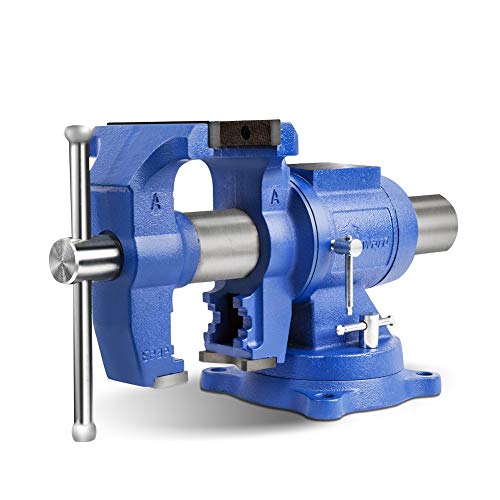
A bench vise is the third hand every workshop, garage and home bench needs. It holds stock steady while you saw, file, drill, thread, glue or bend it, and it keeps your fingers away from the cutting edge while it does so. The five vises below cover the main jobs a home bench sees: a compact general-purpose vise for everyday clamping, a stronger 5-inch model with a proper anvil, a 6-inch workshop vise for bigger stock, a combination vise with dedicated pipe jaws, and a face-mounted woodworking vise for boards and panels.

Disclosure: This article contains affiliate links. If you make a purchase through these links, we may earn a commission at no extra cost to you.
How to Choose a Bench Vise
Jaw width, jaw opening and throat depth are three different numbers. Jaw width is the side-to-side width of the jaw faces, and it decides how much contact area you get on a workpiece. Jaw opening is how far the jaws separate, and it decides the thickest stock the vise can swallow. Throat depth is the distance from the top of the jaws down to the slide, and it decides how tall a piece can sit in the jaws before the slide gets in the way. A vise can have wide jaws but a modest opening, so check all three figures against the stock you actually handle.
Read clamping force figures with care. Every clamping force number in this guide is a figure published by the maker, produced under the maker’s own test conditions. There is no shared lab standard across brands, so treat the numbers as a rough guide to a vise’s duty class rather than a precise head-to-head measurement. In practice, the grip you get also depends on the workpiece material, how much of it sits between the jaw faces, and how solidly the vise itself is mounted. A mid-duty vise through-bolted to a heavy bench will out-hold a stronger vise sitting on a wobbly top.
Iron type matters for hammer work. Traditional gray cast iron is rigid and fine for clamping, but it is comparatively brittle under shock loads. Ductile iron flexes more before it fails, which is why heavier-duty vises use it for the body. Either way, the small anvil flat behind the front jaw is meant for light shaping, straightening and tapping work, not for sustained heavy forging.
Swivel bases add positioning freedom, with a catch. A swivel base lets you rotate the vise instead of walking around the bench, which helps with filing, sawing at angles and working on long pieces. The trade-off is that the base is one more joint that must stay locked. Look for positive lockdown handles, keep the mating surfaces clean, and re-check the lock before leaning on a workpiece. A base that creeps under load is worse than no swivel at all.
Jaw faces and pipe jaws shape what the vise can hold. Serrated steel faces bite into metal and hold it fast, but they will mark soft wood and finished surfaces, so use pads or liners for delicate work. Replaceable faces are worth having because the serrations are the part that wears. Pipe jaws are a separate V-shaped gripping area, usually below or behind the main jaws, that cradles round stock so it cannot roll while you cut or thread it.
Mounting is not optional, and bolts are often not included. A bench vise does its work through its mounting. Most of the vises below ship without mounting bolts, because the maker cannot know your bench thickness. Through-bolts with large washers or a backing plate spread the load far better than short screws into a thin top. Buy hardware that suits your bench, and remember that the bench itself is part of the system: a strong vise on a light bench just moves the whole bench.
The 5 Best Bench Vises
1. Yost LV-4 Homeowner’s Vise — Compact General-Purpose Pick
The Yost LV-4 is the classic home-bench starting point: a small cast iron vise sized for the clamping jobs that come up around a house and garage. Its 4.5-inch jaw width is wide enough for sharpening mower blades, holding small assemblies for gluing, gripping hardware while you file or cut it, and steadying stock for drilling. The 3-inch jaw opening is the honest limit of the design, so thick posts and large pipe are beyond it, but for flat stock, small parts and hobby work it covers a lot of ground.
Yost builds the body from gray cast iron with a maker-stated tensile strength of 30,000 PSI, and the steel jaw faces are replaceable when the serrations wear down. The base swivels 240 degrees rather than a full circle, which still covers the angles most bench work needs, and it locks down for sawing and filing. A small anvil flat and built-in pipe jaws below the main jaws add utility that many vises this size skip. At roughly ten and a half pounds it is easy to position during installation, but mounting hardware is not in the box, so plan on sourcing bolts that match your bench top.
Specs
- Jaw width: 4.5 in
- Jaw opening: 3 in
- Throat depth: 2.6 in
- Body material: gray cast iron, 30,000 PSI tensile strength (maker-stated)
- Swivel base: 240 degrees with lockdown
- Pipe jaws: built in, for stock from 0.6 in to 1.85 in in diameter
- Anvil: flat anvil area behind the front jaw
- Jaw faces: replaceable steel, serrated
- Weight: about 10.6 lb
- Mounting hardware: not included
2. Forward DT08125A 5-Inch Heavy Duty Bench Vise — Stronger Body, Real Anvil
The Forward DT08125A steps up in both size and material. The body is ductile iron with a maker-stated tensile strength of 60,000 PSI, roughly double the figure quoted for gray iron vises, and Forward lists a clamping force of 5,500 pounds. As with every figure in this guide, that is the maker’s own number rather than an independent measurement, but the heavier casting and 33-pound weight back up the heavier-duty intent. This is the pick for regular metalwork: cutting and threading pipe, bending brackets, pressing small bearings and other jobs where a light vise starts to feel strained.
Both the base and the head rotate a full 360 degrees, so you can swing the vise around and then tilt the jaw assembly to meet awkward work instead of re-clamping it. The anvil measures 3.2 by 2.6 inches, large enough for straightening and shaping small parts, and built-in pipe jaws handle round stock from about 0.6 to 2.5 inches in diameter, with V-jaws for smaller pieces. Four 9/16-inch mounting holes anchor the base, and unusually for this group, the listing’s included components mention bolts. Confirm what arrives against your bench thickness before relying on them, and upgrade to through-bolts if the supplied hardware is short.
Specs
- Jaw width: 5 in
- Jaw opening: 5 in
- Throat depth: 2-5/8 in
- Body material: ductile iron, 60,000 PSI tensile strength (maker-stated)
- Clamping force: 5,500 lb (maker-listed)
- Swivel base: 360 degrees; head also rotates 360 degrees
- Pipe jaws: built in, about 0.6 in to 2.5 in diameter, plus V-jaws
- Anvil: 3.2 in x 2.6 in
- Mounting: four 9/16 in holes; bolts listed among included components
- Weight: 33 lb
See the Forward DT08125A on Amazon
3. IRWIN Heavy-Duty Workshop Vise, 6-Inch (226306ZR) — The Big-Jaw Workshop Option
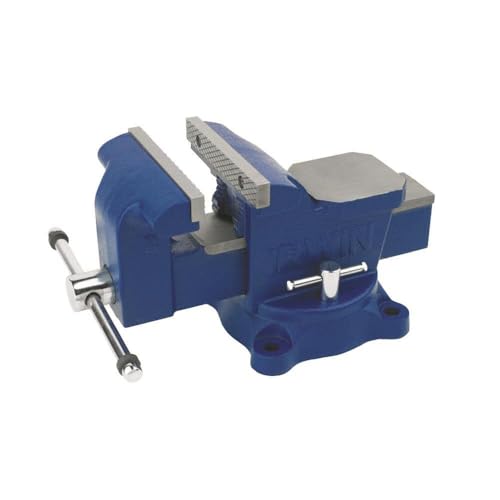
When the work itself gets bigger, jaw width starts to matter more than anything else, and this IRWIN is the wide-jaw option in the group. The 6-inch jaws give a broad contact patch on wide stock, long pieces sit more stably, and the 5-inch opening swallows material that would never fit the smaller vises above. IRWIN describes it as a heavy-duty workshop vise in cast iron, with aggressive steel jaw faces for bite and a captured safety jaw design that keeps the slide from dropping out when the vise is fully opened and handled.
IRWIN lists clamping pressure above 3,000 pounds for this model. That figure is lower than the Forward’s headline number despite the larger frame, which is a good reminder that maker figures come from different test setups and are best used to sort vises into duty classes, not to declare a winner on paper. What the IRWIN offers instead is size, a full 360-degree swivel base for positioning long work, and an anvil and pipe jaws incorporated into the casting for the occasional round stock. At a little over 30 pounds it needs a bench that can take both the weight and the leverage, and as with most vises here, mounting bolts are a separate purchase matched to your bench.
Specs
- Jaw width: 6 in
- Jaw opening: 5 in
- Throat depth: 3 in
- Body material: cast iron
- Clamping pressure: 3,000+ lb (maker-stated)
- Swivel base: 360 degrees
- Jaw faces: steel with aggressive serrations; captured safety jaw design
- Anvil and pipe jaws: incorporated into the casting
- Weight: about 32 lb
- Mounting hardware: not included
See the IRWIN 226306ZR on Amazon
4. Yost 445 Combination Pipe and Bench Vise — Built for Round Stock

Most bench vises treat pipe jaws as a small notch under the main jaws. The Yost 445 is a combination vise designed the other way around: it pairs conventional flat jaws with a permanent set of cast iron pipe jaws sized for pipe from 1/8 inch up to 2 inches in diameter. If your bench regularly sees plumbing repairs, threaded rod, conduit or sprinkler work, that dedicated pipe capacity is the reason to pick this model over a general-purpose vise of similar size.
The flat side is still a proper vise: 4.5-inch jaws that open 4 inches, with replaceable hardened steel top jaw faces, a large flat anvil area, and a body of 30,000 PSI gray cast iron built around a steel U-channel bar. The main screw runs inside that channel, shielded from chips and grinding dust, which helps the action stay smooth. The base rotates a full 360 degrees on two lockdowns, and published figures put clamping force at about 3,080 pounds, a maker-listed number in line with its light-to-medium duty class. The throat depth of just over 2.6 inches is the main compromise, so tall workpieces sit close to the slide.
Specs
- Jaw width: 4.5 in
- Jaw opening: 4 in
- Throat depth: 2.625 in
- Pipe capacity: 1/8 in to 2 in diameter in permanent cast iron pipe jaws
- Clamping force: about 3,080 lb (maker-listed)
- Body material: gray cast iron, 30,000 PSI tensile strength (maker-stated), with steel U-channel bar
- Swivel base: 360 degrees with two lockdowns
- Top jaw faces: replaceable hardened steel, serrated
- Anvil: large flat anvil area
- Weight: about 18 lb
5. Pony Jorgensen 27091 Medium Duty Woodworker’s Vise — The Front Vise for Boards
A woodworking front vise is a different tool from the bench vises above. Instead of sitting on top of the bench, the Pony 27091 mounts to the front face of a wood workbench, with the screw mechanism tucked underneath, so its jaws close flush with the bench edge and hold boards vertically for planing, sawing and routing. The 7-inch jaw width and 9-inch maximum opening suit cabinet parts, drawer sides and panel work, and the smooth jaw faces are kind to wood, especially when you add shop-made wooden liners as most woodworkers do.
The main screw uses an Acme thread and runs with twin plated steel guide bars, which keeps the moving jaw tracking straight instead of racking when only one corner of a board is gripped. A solid steel dog in the front jaw works with a bench stop so long boards can be held flat on the bench top for sanding and planing. The castings are gray iron under an orange baked enamel finish. Pony positions it as a medium-duty vise for home, shop and professional use, which is the right expectation: it is built for wood, not for hammering metal, and mounting screws suited to your bench are on you.
Specs
- Jaw width: 7 in
- Maximum jaw opening: 9 in
- Mounting style: face mount on the front of a wood workbench
- Main screw: Acme thread with twin plated steel guide bars
- Bench dog: solid steel dog in the front jaw, for use with a bench stop
- Castings: gray iron with orange baked enamel finish
- Jaw faces: smooth steel, suited to shop-made wood liners
- Weight: about 12 lb
- Mounting hardware: not included
See the Pony Jorgensen 27091 on Amazon
Frequently Asked Questions
What size bench vise do most home workshops need?
For most home benches, a jaw width between 4 and 5 inches with an opening of at least 4 inches covers the bulk of repair, hobby and maintenance work. Go to a 6-inch vise if you regularly clamp wide stock or long pieces that need the extra contact area, and choose a woodworking front vise instead if nearly everything you hold is boards and panels.
Why do clamping force numbers vary so much between brands?
Each maker measures clamping force under its own conditions, and there is no shared standard test, so the published figures are not directly comparable across brands. Use them to place a vise in a light, medium or heavy duty class, then weigh the casting material, the vise’s weight and the strength of your bench and mounting, which decide how much of that force you can actually use.
Do these vises include the bolts needed to mount them?
Usually not. Most makers leave mounting hardware out because the right bolt length depends on your bench top thickness, and the Forward listing is a partial exception that mentions bolts among its included components. Through-bolts with washers or a backing plate are the strongest choice; short screws into a thin top can pull out under load.
Can I hammer on the anvil of a bench vise?
Light work, yes: straightening a bent bracket, flattening small parts, setting rivets and similar tapping jobs are what the anvil flat is for. Sustained heavy hammering is different. Gray cast iron in particular can crack under repeated shock, and even ductile iron anvils on vises are small surfaces meant for occasional shaping, not a substitute for a standalone anvil.
Conclusion: Which Vise Fits Your Bench?
Match the vise to the work you do most. For everyday clamping in a home garage, the Yost LV-4 covers the basics in a compact footprint, provided you supply your own mounting bolts. For regular metalwork and pipe jobs that need a stronger body and a usable anvil, step up to the Forward DT08125A and its ductile iron casting. If your stock runs wide and long, the IRWIN 226306ZR brings the jaw width and opening to match. Plumbers and anyone who cuts and threads pipe often will get the most from the Yost 445, whose permanent pipe jaws are the point of the design. And if your bench is a woodworking bench first, the Pony Jorgensen 27091 belongs on its front face, holding boards the way the other four cannot. Whichever you choose, spend as much thought on the bench and bolts as on the vise itself, because the mounting is what turns clamping force on paper into a workpiece that does not move.
More from Amazon
Programs that pair well with the guide above. Offers and eligibility are set by Amazon and may change.
Free shipping on eligible items, Prime Video and more. Eligible new members can start with a free trial.
Start a Prime free trialAd-free music streaming. Eligible new subscribers can start with a free trial.
Try Music Unlimited freeA Prime membership for ages 18-24 with a trial period. Eligibility is set by Amazon.
See Prime for Young AdultsAudiobooks and podcasts to listen to on the go. Eligible new members can start with a free trial.
Try Audible freeAs an Amazon Associate we earn from qualifying purchases.