Key takeaways
- It must be a Thunderbolt port. Plain USB-C ports, such as on the 12 in MacBook or on many Windows laptops and tablets, will not run a Thunderbolt 2 device through this adapter.
- Cost adds up. The Thunderbolt 3 to 2 adapter usually sells for around $40–$60 new. Combined with the Ethernet adapter, the chain costs more than most USB-C gigabit adapters.
- More connectors, more failure points. Two short dongles hanging off a laptop are easy to strain or knock loose.
- It makes sense if you already own both adapters, for example because you use the Thunderbolt 3 to 2 adapter for an older Thunderbolt 2 drive or display.
The Apple Thunderbolt to Gigabit Ethernet Adapter (model MD463) adds a wired 10/100/1000 Mbps network port to Macs with the original Thunderbolt or Thunderbolt 2 port, the Mini DisplayPort-shaped connector found on Macs from roughly 2011 to 2016. It plugs straight into those older Macs and needs no driver on macOS. On newer USB-C Macs it only works through a Thunderbolt 3 to Thunderbolt 2 adapter, and in that case a modern USB-C Ethernet adapter is almost always the cheaper, simpler choice. This guide explains which Macs it fits, how adapter chains behave, and what to buy instead when it is the wrong tool.
Our top picks


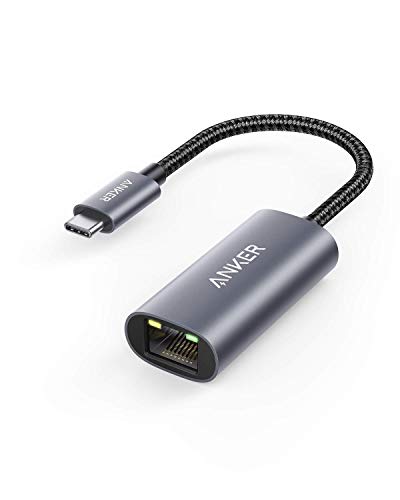

As an Amazon Associate we earn from qualifying purchases at no extra cost to you. Ratings are shown as listed on Amazon.
Key Specifications
| Spec | Detail |
|---|---|
| Model | Apple MD463 (Thunderbolt to Gigabit Ethernet Adapter) |
| Host connector | Thunderbolt 1/2 (Mini DisplayPort shape) |
| Network port | RJ-45, 10/100/1000BASE-T |
| Real-world throughput | Up to about 940 Mbps on a gigabit network |
| Power | Bus-powered, no external supply |
| Thunderbolt pass-through | None; it must be the last device in a chain |
| Driver | Built into macOS; Broadcom-based controller |
| Typical price today | Usually $15–$35, mostly as remaining stock or used units |
Because the adapter has no second Thunderbolt port, it cannot sit between a Mac and another Thunderbolt device. If you use a Thunderbolt 2 display or drive with a pass-through port, plug the adapter into the end of that chain or into a separate Thunderbolt port on the Mac.
Which Macs It Works With Directly
| Mac family | Thunderbolt 1/2 years (approx.) | Direct fit | Notes |
|---|---|---|---|
| MacBook Air 11 and 13 in | 2011–2017 | Yes | No built-in Ethernet, a common reason to buy this adapter |
| MacBook Pro 13 and 15 in | 2011–2015 | Yes | Retina models dropped built-in Ethernet |
| iMac | 2011–2015 | Yes | Has built-in gigabit Ethernet; adapter useful for a second network |
| Mac mini | 2011–2014 | Yes | Built-in Ethernet also present |
| Mac Pro (cylinder) | 2013 | Yes | Already has two gigabit ports |
| 12 in MacBook | 2015–2017 | No | USB-C only, not Thunderbolt |
| Macs with Thunderbolt 3, 4 or 5 (USB-C) | 2016 onward | Only via adapter | See the chain section below |
Years overlap between product refreshes, so the reliable check is the port itself: a Thunderbolt 1 or 2 port is a small rectangle with a lightning-bolt icon beside it. A port with a monitor icon instead is Mini DisplayPort only and will not run this adapter.
Using It on a USB-C Mac: How the Adapter Chain Works
To connect the MD463 to a Mac with Thunderbolt 3 or later, you need Apple’s Thunderbolt 3 (USB-C) to Thunderbolt 2 Adapter. The chain looks like this:
- Mac Thunderbolt 3/4/5 USB-C port
- Apple Thunderbolt 3 (USB-C) to Thunderbolt 2 Adapter
- Apple Thunderbolt to Gigabit Ethernet Adapter
- Ethernet cable to your router or switch
This works because Thunderbolt 3 and newer ports are backward compatible with Thunderbolt 2 devices through Apple’s adapter, and macOS includes the driver for the Ethernet adapter. Points to keep in mind:
- It must be a Thunderbolt port. Plain USB-C ports, such as on the 12 in MacBook or on many Windows laptops and tablets, will not run a Thunderbolt 2 device through this adapter.
- Cost adds up. The Thunderbolt 3 to 2 adapter usually sells for around $40–$60 new. Combined with the Ethernet adapter, the chain costs more than most USB-C gigabit adapters.
- More connectors, more failure points. Two short dongles hanging off a laptop are easy to strain or knock loose.
- It makes sense if you already own both adapters, for example because you use the Thunderbolt 3 to 2 adapter for an older Thunderbolt 2 drive or display.
Better Alternatives by Situation
| Your Mac and need | Better option | Speed | Typical price |
|---|---|---|---|
| USB-C Mac, normal home network | USB-C to Gigabit Ethernet adapter (Belkin, Anker and similar) | 1 Gbps | Usually $15–$30 |
| USB-C Mac, multi-gig router or NAS | USB-C 2.5GbE adapter | 2.5 Gbps | Usually $25–$45 |
| Thunderbolt 3+ Mac, 10GbE NAS or editing server | Thunderbolt 10GbE adapter (OWC, Sonnet) | 10 Gbps | Usually $150–$250 |
| Laptop needing Ethernet plus displays and charging | Thunderbolt or USB-C dock with Ethernet | 1–2.5 Gbps typical | Usually $100–$350 |
| 2012–2015 Mac with USB-A 3.0 ports | USB 3.0 to Gigabit Ethernet adapter | 1 Gbps (close to the Thunderbolt version in practice) | Usually $12–$25 |
| 2011–2015 Mac, want the cleanest native option | Apple MD463 directly | 1 Gbps | Usually $15–$35 |
Desktop Apple silicon Macs such as the Mac mini and Mac Studio include built-in Ethernet, with 10GbE available on some configurations, so they rarely need any adapter at all.
Setup and Troubleshooting
- Plug it in before or after startup. Thunderbolt is hot-pluggable; the adapter appears as “Thunderbolt Ethernet” in macOS network settings.
- If it does not appear, open Network settings and add a new service for the Thunderbolt Ethernet interface, then apply.
- Set service order so the wired connection is preferred over Wi-Fi if both are active.
- Check link speed in System Information under Network or Ethernet. If it reports 100 Mbps, try a different cable; a damaged Cat5e cable or one with only four wires connected falls back to Fast Ethernet.
- Through a chain, reseat both adapters fully and avoid putting cable weight on the joint between them.
Durability and Buying Used
Because Apple no longer centers its lineup on Thunderbolt 2, many units on the market today are used or old stock. What tends to wear:
- The strain relief where the cable meets the Thunderbolt plug, especially if it has been wrapped tightly.
- The RJ-45 latch area after years of repeated plugging.
- Counterfeits and look-alikes. Genuine units carry Apple model markings and are white with a short attached cable; generic Mini DisplayPort-shaped “Ethernet” adapters without Thunderbolt support will not work.
Before buying used, ask for a photo showing the model number and confirm it is the Thunderbolt version rather than Apple’s older USB Ethernet Adapter, which is a different, slower 10/100 product.
Bottom Line
If your Mac has a Thunderbolt 1 or 2 port and no Ethernet, the MD463 is still a tidy, driver-free way to get a full gigabit wired connection. If your Mac has USB-C, skip the adapter chain unless you already own the parts, and buy a USB-C gigabit or 2.5GbE adapter instead.