Key takeaways
- AC750 = about 300 Mbps on 2.4 GHz (Wi-Fi 4, two streams) + 433 Mbps on 5 GHz (Wi-Fi 5, one stream at 80 MHz).
- AC1200 = 300 Mbps on 2.4 GHz + 867 Mbps on 5 GHz (Wi-Fi 5, two streams).
- AX1500 = 300 Mbps on 2.4 GHz + 1,201 Mbps on 5 GHz (Wi-Fi 6, two streams).
- AX1800 = 574 Mbps on 2.4 GHz + 1,201 Mbps on 5 GHz (Wi-Fi 6 on both bands).
An AC750 wireless dual band router is only a sensible buy in 2026 for small spaces with internet plans of about 100 Mbps or less, because its single-stream 5 GHz radio and, on many models, 10/100 Ethernet ports cap real-world speeds well below what most modern plans deliver. For a few dollars more, an AC1200 with gigabit ports is noticeably better, and an entry-level Wi-Fi 6 router (AX1500 or AX1800) usually costs only slightly more again while adding WPA3, better handling of many devices and longer firmware support. Here is what the numbers on the box really mean and where each class still fits.
Our top picks



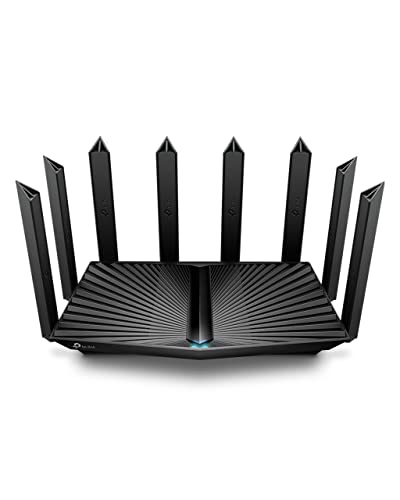
As an Amazon Associate we earn from qualifying purchases at no extra cost to you. Ratings are shown as listed on Amazon.
What “AC750” Actually Means
The AC number is the sum of the maximum link rates of both bands, rounded. It is not a speed you will see on a speed test.
- AC750 = about 300 Mbps on 2.4 GHz (Wi-Fi 4, two streams) + 433 Mbps on 5 GHz (Wi-Fi 5, one stream at 80 MHz).
- AC1200 = 300 Mbps on 2.4 GHz + 867 Mbps on 5 GHz (Wi-Fi 5, two streams).
- AX1500 = 300 Mbps on 2.4 GHz + 1,201 Mbps on 5 GHz (Wi-Fi 6, two streams).
- AX1800 = 574 Mbps on 2.4 GHz + 1,201 Mbps on 5 GHz (Wi-Fi 6 on both bands).
Real throughput over Wi-Fi is typically around half of the link rate in good conditions, and less through walls. The other bottleneck many buyers miss is the Ethernet port speed: a router with 10/100 ports cannot pass more than about 94 Mbps from the modem, regardless of its Wi-Fi rating.
Spec Comparison: AC750 vs AC1200 vs Entry Wi-Fi 6
| Spec | AC750 class | AC1200 class | AX1500 / AX1800 class |
|---|---|---|---|
| Wi-Fi standard | Wi-Fi 5 (802.11ac) | Wi-Fi 5 (802.11ac) | Wi-Fi 6 (802.11ax) |
| 5 GHz streams | 1×1 | 2×2 | 2×2 |
| 5 GHz max link rate | 433 Mbps | 867 Mbps | 1,201 Mbps |
| Typical real 5 GHz speed, same room | 150–250 Mbps | 300–500 Mbps | 400–700 Mbps |
| Ethernet ports | Often 10/100 | 10/100 on cheapest, gigabit on most | Gigabit |
| Max internet plan it can pass | About 94 Mbps on 10/100 models | About 94 Mbps or around 400–500 Mbps over Wi-Fi with gigabit ports | Gigabit-class plans over wired; 500+ Mbps over Wi-Fi close up |
| WPA3 | Rare | Some models via firmware | Standard on current models |
| Comfortable device count | Up to ~10–15 | ~15–25 | ~25–40 |
| Typical price | Usually $20–$35 | Usually $30–$60 | Usually $50–$90 |
Device counts are rough guides for typical phones, laptops and smart-home gadgets; a few 4K streams or large downloads at once will strain any of these classes earlier.
Real Examples You Will See
The TP-Link Archer C20 is a well-known AC750 router: 300 Mbps plus 433 Mbps, with 10/100 Ethernet ports. It is simple to set up and inexpensive, but its wired ports set a hard ceiling of under 100 Mbps.
In the AC1200 class, the TP-Link Archer C6 pairs 300 plus 867 Mbps Wi-Fi with gigabit Ethernet ports and MU-MIMO, which makes it a much more future-tolerant choice. ASUS has sold several RT-AC1200 variants; some use 10/100 ports and others are gigabit, so look at the WAN and LAN port specification of the exact version before buying if your plan is above 100 Mbps.
For entry Wi-Fi 6, the TP-Link Archer AX21 (AX1800) and Archer AX10 (AX1500) are widely sold examples with gigabit ports, OFDMA and WPA3 support, typically priced not far above good AC1200 routers.
Decision Matrix: Which Class Fits You
| Your situation | Recommended class | Why |
|---|---|---|
| Studio or one-bedroom, plan 50–100 Mbps, under 10 devices | AC750 is acceptable | Ports and Wi-Fi both exceed the plan; cheapest option |
| Plan 100–300 Mbps, 10–25 devices | AC1200 with gigabit ports | Avoids the 94 Mbps wired cap; 2×2 5 GHz keeps up |
| Plan 300 Mbps–1 Gbps | AX1800 or better | Only Wi-Fi 6 at this tier gets close to the plan wirelessly |
| Many smart-home devices or video calls on several devices | Wi-Fi 6 (AX1500/AX1800) | OFDMA handles many small transmissions more efficiently |
| Secondary access point, garage or guest room | AC750 or AC1200 in access point mode | Low cost for basic coverage extension |
| Larger home, 2,000+ sq ft or multiple floors | Mesh system | A single budget router of any class will leave dead spots |
A Worked Example: Is AC750 Holding You Back?
Suppose you pay for a 300 Mbps plan and use an AC750 router with 10/100 ports. The modem can deliver 300 Mbps, but the router’s WAN port tops out at about 94 Mbps after overhead. Every device in the house shares that 94 Mbps, so you are using roughly 31 percent of the bandwidth you pay for. If the plan costs $60 a month, about $41 of it is effectively unused. An AC1200 with gigabit ports in the $30–$60 range would pay for itself in a month or two in recovered value; a Wi-Fi 6 model would add more headroom for future upgrades.
Check your own situation by running a speed test on a laptop plugged directly into the modem, then through the router’s Ethernet port. If the second result stops near 90–95 Mbps, the router’s ports are the limit.
Coverage and the 2.4 GHz vs 5 GHz Trade-Off
Dual band means two radios. The 2.4 GHz band travels further and through more walls but is slower and crowded in apartments. The 5 GHz band is faster but drops off sooner. On an AC750, the 5 GHz radio has only one stream, so its advantage over 2.4 GHz is smaller than on AC1200 and Wi-Fi 6 routers. Expect usable 5 GHz coverage of roughly one or two rooms from the router through standard interior walls, with 2.4 GHz covering a typical small apartment.
- Place the router centrally and raised, not in a cabinet or on the floor.
- Use the 5 GHz network for laptops, consoles and TVs near the router.
- Leave older smart-home gadgets on 2.4 GHz; many do not support 5 GHz at all.
Security and Lifespan Realities
Older budget routers tend to receive fewer firmware updates, and some AC750 models were released many years ago. Before buying, check the manufacturer’s support page for recent firmware releases for that exact hardware version. After setup:
- Change the default admin password and Wi-Fi password.
- Use WPA2-AES (or WPA3 if supported); avoid WEP and TKIP.
- Disable WPS and remote management if you do not need them.
- Update firmware, then check for updates every few months.
If the model you are considering has had no firmware update in several years, treat that as a reason to choose a newer Wi-Fi 6 router instead.
Bottom Line
AC750 routers still work for small, low-speed setups or as a spare access point. For most households in 2026, an AC1200 with gigabit ports is the minimum worth buying, and an entry Wi-Fi 6 router is the better value when the price gap is small.