Our Short List of 3

- Best for: security, patrol and vehicle-kit users who want programmable, glove-friendly controls.
- Max output: 1,000 lumens
- Beam distance: 330 metres
- Power: two CR123A lithium batteries (included) or SL-B26 rechargeable pack (sold separately)
- Switch: tactical tail cap, momentary or constant on
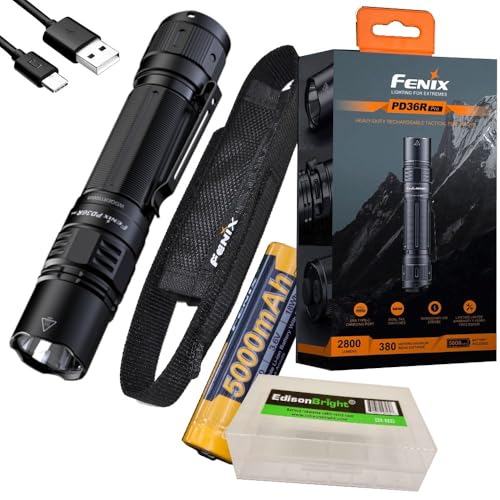
- Best for: commuters, inspectors and campers who want one USB-C light for everything.
- Max output: 2,800 lumens
- Beam distance: 380 metres
- LED: Luminus SFT70
- Power: included 5,000 mAh 21700 rechargeable battery

- Best for: everyday carriers who want maximum output in a wallet-friendly shape.
- Max output: 3,100 lumens
- Beam distance: 333 yards
- LED: NiteLab UHi 20
- Power: built-in 1,700 mAh rechargeable battery
All 5 Picks at a Glance
| Product | Specs | Action |
|---|---|---|
| Streamlight ProTac HL-X |
| Check price on Amazon |
| Fenix PD36R Pro |
| Check price on Amazon |
| Nitecore EDC27 UHi |
| Check price on Amazon |
 OLIGHT Baton 3 Pro Max |
| Check price on Amazon |
 Maglite ML300L 3-Cell D |
| Check price on Amazon |
Key takeaways
- Compare five flashlights for pocket carry, duty use and home emergencies, from a flat 3,100-lumen EDC light to a D-cell Maglite, with beams and runtimes.
A flashlight purchase looks simple until you compare the numbers that actually decide usefulness: how far the beam reaches, how long the battery lasts on the mode you will really use, and whether the light still works after a drop onto concrete. Pocket lights, duty lights and household lights solve different problems, and a headline lumen figure alone tells you almost none of that.
This guide is for three kinds of buyers: everyday carriers who want a slim light that disappears into a pocket, workers and homeowners who need a dependable duty or vehicle light, and anyone stocking an emergency drawer. Every pick below was chosen from its Amazon listing details, with output, beam distance, battery type and water resistance taken straight from the stated specifications.
Quick Picks
As an Amazon Associate we earn from qualifying purchases
| Product | Best for | Key spec from title |
|---|---|---|
| Streamlight ProTac HL-X | Duty belts and vehicle kits | 1,000 lumens, multi-fuel power |
| Fenix PD36R Pro | A rechargeable daily workhorse | 2,800 lumens, USB-C charging |
| Nitecore EDC27 UHi | Flat pocket carry | 3,100 lumens, OLED display |
| OLIGHT Baton 3 Pro Max | The smallest serious EDC | 2,500 lumens, magnetic charging |
| Maglite ML300L 3-Cell D | Home emergency drawers | 625 lumens, 3 D-cell batteries |
How to Choose
Match the beam to the distance you actually cover
Beam distance and candela matter more than raw lumens once you step outdoors. A focused duty light like the ProTac HL-X throws its 1,000 lumens 330 metres because its reflector concentrates the beam, while a floodier pocket light spreads similar output across a yard or room. Decide the longest distance you genuinely need to light, a driveway, a fence line or a trail junction, then pick a rated throw comfortably beyond it, since weather and darkness eat into the laboratory figure.
Choose a battery system you will maintain
Disposable CR123A and D-cell lights sit ready for months and suit glove boxes and emergency drawers, but heavy users burn through cells quickly. Built-in or removable rechargeable packs cut running costs and usually add higher output, at the price of remembering to charge them. Multi-fuel designs hedge both ways. Think about where the light will live: a drawer light should wake up after a year untouched, while a nightly dog-walking light should recharge from the same cable as your phone.
Read the runtime on the mode you will use most
Turbo figures grab headlines, yet most handheld lights hold maximum output only briefly before heat forces a step-down. The honest comparison is the mid-level mode: how many lumens it sustains and for how many hours. A light that holds a few hundred lumens all evening beats one that flashes a huge number for a minute and then fades. Check the stated runtime table for the level you would realistically run during a power cut, a shift or a long walk back to camp.
Weigh size, switch style and water resistance
A light you leave at home helps nobody, so pocket lights should stay slim, light and snag-free, with a clip that holds fabric securely. Tail switches give fast, gloved access to full output, while side switches suit casual around-the-house use. Finally, match the rating to the environment: IPX4 shrugs off rain splashes, IPX7 survives a short dunking, and IPX8 handles full submersion, which matters for boat kits, fishing and storm work where the light will get properly wet.
The 5 Best Options
Streamlight ProTac HL-X
- Best for: security, patrol and vehicle-kit users who want programmable, glove-friendly controls.
- Max output: 1,000 lumens
- Beam distance: 330 metres
- Power: two CR123A lithium batteries (included) or SL-B26 rechargeable pack (sold separately)
- Switch: tactical tail cap, momentary or constant on
security, patrol and vehicle-kit users who want programmable, glove-friendly controls.
the rechargeable SL-B26 pack is a separate purchase, so budget for it if you dislike buying CR123A cells.
The ProTac HL-X is the pick for buyers who treat a flashlight as work equipment rather than a gadget. Its TEN-TAP programming lets you lock in the mode order you prefer, from high-only simplicity to a high, strobe and low sequence, and the tactical tail switch gives momentary or constant light with a gloved thumb. Multi-fuel power is the real draw: it runs on the two included CR123A cells today and accepts Streamlight’s SL-B26 USB rechargeable pack later, so it fits both a duty belt and a truck console without forcing a battery decision up front.
Fenix PD36R Pro
- Best for: commuters, inspectors and campers who want one USB-C light for everything.
- Max output: 2,800 lumens
- Beam distance: 380 metres
- LED: Luminus SFT70
- Power: included 5,000 mAh 21700 rechargeable battery
commuters, inspectors and campers who want one USB-C light for everything.
this listing is a bundle with an EdisonBright charging cable and carry case, so confirm the bundle contents match the listing before ordering.
The PD36R Pro suits users who want one rechargeable light to cover workdays, night walks and weekend trips without swapping batteries. Dual rear switches separate on-off from mode changes, so output adjustments happen by feel, and the USB-C port refills the included high-capacity cell from the same charger as a phone or laptop. Output is serious for its size, with enough throw to check a far fence line, while the low eco setting stretches runtime across days of intermittent use during outages or multi-night camping.
Nitecore EDC27 UHi
- Best for: everyday carriers who want maximum output in a wallet-friendly shape.
- Max output: 3,100 lumens
- Beam distance: 333 yards
- LED: NiteLab UHi 20
- Power: built-in 1,700 mAh rechargeable battery
everyday carriers who want maximum output in a wallet-friendly shape.
the battery is built in rather than replaceable, so the light’s service life depends on that internal cell.
The EDC27 UHi is built for people who skip carrying a light because round tubes print through pockets and roll off desks. Its flat body slides beside a wallet, stays put on flat surfaces, and still delivers the highest output in this roundup for short bursts. The OLED display is more than decoration: it shows the current brightness level and remaining battery in real numbers, removing the guesswork of coloured indicator dots. A built-in cell and USB-C charging keep it simple, with no loose batteries to track or chargers to carry.
OLIGHT Baton 3 Pro Max
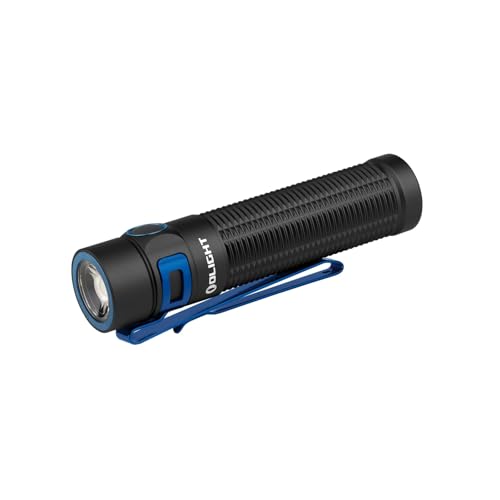
- Best for: minimalists who want a tiny light that still handles trail and campsite work.
- Max output: 2,500 lumens
- Power: customised 5,000 mAh 21700 rechargeable battery
- Charging: MCC3 magnetic charging cable
- Sensor: proximity sensor dims output near obstacles
minimalists who want a tiny light that still handles trail and campsite work.
charging needs Olight’s magnetic cable rather than a bare USB-C plug, so keep the cable somewhere you will find it.
The Baton 3 Pro Max fits buyers who want serious output from the smallest body here. It drops into a coin pocket or clips inside a bag, then charges through Olight’s magnetic tail cable, which snaps on without opening a port cover. A proximity sensor automatically dims the beam when it detects a nearby surface, protecting pockets and upholstery from a hot lens if the light turns on accidentally. The shake-to-check battery indicator is a thoughtful touch for a light that may sit in a jacket for weeks between uses.
Maglite ML300L 3-Cell D
- Best for: home emergency kits, garages and vehicles where size does not matter.
- Max output: 625 lumens
- Beam distance: 406 metres
- Peak beam intensity: 41,200 candela
- Runtime: 16 hours high, 77 hours low, 117 hours eco
home emergency kits, garages and vehicles where size does not matter.
batteries are not included, and alkaline D-cells left inside for years can leak, so check them on a schedule.
The ML300L is the traditional answer to the household flashlight question: a heavy aluminium tube that lives in a drawer or truck cab and works every time you grab it. Three D-cells trade pocketability for enormous standby life and long runtimes, including an eco mode rated past a hundred hours for extended blackouts. The focusing head twists between a wide flood for close work and a tight spot for checking the far end of a property, and the simple function sets keep operation obvious for any family member in the dark.
Which One Fits Your Situation
You carry a light every single day
Pick the Nitecore EDC27 UHi if pocket comfort decides whether the light comes along, or the OLIGHT Baton 3 Pro Max if you prefer the smallest possible cylinder. Both recharge over a cable, both disappear into clothing, and both offer far more output than a phone light for finding keyholes, reading labels in dark storerooms or walking from a late train.
You need a light for work or a vehicle kit
The Streamlight ProTac HL-X is the duty-minded choice, with programmable modes, a glove-friendly tail switch and the option to run disposable or rechargeable power. The Fenix PD36R Pro is the alternative when USB-C charging and longer reach matter more than battery flexibility, for example for inspectors, delivery drivers and anyone whose light works a full shift outdoors.
You are stocking a home emergency drawer
The Maglite ML300L is designed for exactly this drawer. D-cells store well, the eco mode stretches through long outages, and the twist focus covers everything from a fuse box to the back fence. Keep spare batteries beside it rather than inside a second device, and it will be ready whenever the power drops without warning at night.
You camp, hike or fish after dark
Choose between the PD36R Pro for maximum reach on trails and the Baton 3 Pro Max when pack weight is tight. Both are sealed well beyond rain ratings, both recharge from a power bank, and both offer low modes gentle enough for tent use without blinding your companions or draining the cell before morning.
Common Mistakes
- Judging a light by turbo lumens alone, then discovering the sustained mid-level output is what you actually live with.
- Buying a rechargeable light with a proprietary cable and losing the cable within the first month.
- Storing a drawer light with ageing alkaline batteries inside until they leak and ruin the contacts.
- Choosing a pocket light so large or heavy that it stays home, defeating the point of everyday carry.
- Ignoring the water-resistance rating on a light destined for a boat, a fishing bag or storm clean-up work.
Frequently Asked Questions
How many lumens do I really need for everyday use?
For indoor tasks, keyholes and walking lit streets, a few hundred lumens is plenty and preserves battery life. Outdoor work at distance, checking a yard, a trail or a worksite, benefits from 1,000 lumens or more with a focused beam. Treat the highest figure as a short burst mode, and compare the sustained mid-level output when deciding between two lights.
Is USB-C charging better than replaceable batteries?
It depends on the light’s job. Rechargeable lights cost less to run and suit daily carriers who can top up weekly. Replaceable cells suit emergency and vehicle lights that may sit unused for a year and must work immediately. Multi-fuel lights such as the ProTac HL-X accept both, which removes the dilemma if you are willing to buy the rechargeable pack later.
What does an IPX8 rating actually protect against?
IPX8 means the light survives continuous immersion beyond one metre, under conditions the manufacturer specifies, so rain, puddles and brief drops into water are non-events. IPX7 covers immersion to one metre for thirty minutes, while IPX4 only resists splashing. For fishing, boating or storm work, choose IPX7 or IPX8; for a kitchen-drawer light, IPX4 is acceptable.
Why does my flashlight get dimmer after a minute on turbo?
Heat. High-output LEDs generate more warmth than a small aluminium body can shed, so the driver reduces output automatically to protect the emitter and battery. This step-down is normal behaviour across brands, and it is why rated turbo runtimes look short. For long tasks, run a mid-level mode, which quality lights sustain steadily for hours.
More from Amazon
Programs that pair well with the guide above. Offers and eligibility are set by Amazon and may change.
Free shipping on eligible items, Prime Video and more. Eligible new members can start with a free trial.
Start a Prime free trialAd-free music streaming. Eligible new subscribers can start with a free trial.
Try Music Unlimited freeA Prime membership for ages 18-24 with a trial period. Eligibility is set by Amazon.
See Prime for Young AdultsAudiobooks and podcasts to listen to on the go. Eligible new members can start with a free trial.
Try Audible freeAs an Amazon Associate we earn from qualifying purchases.