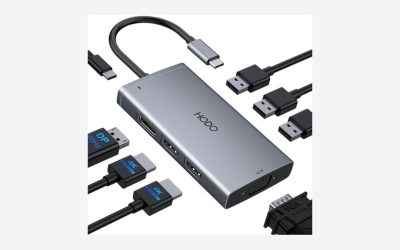
A docking station is the single accessory that determines whether your desk setup feels like a workspace or a cable management nightmare. The problem is deceptively simple: you open a laptop, plug in one cable, and expect everything to work — monitors, peripherals, ethernet, charging — without hunting for drivers or fighting resolution caps. Yet the market is littered with docks that either fail on one front (limited video output, no power delivery above 65W, missing ethernet) or overpromise on another (dual 4K at 144Hz that only works with specific GPU configurations).
StarTech has carved out a niche by shipping docks that prioritize driverless operation and broad OS compatibility, which matters enormously for anyone rotating between MacBooks, Windows machines, and even legacy USB-A laptops. The company’s 2026 lineup spans from under $90 to just over $250, with meaningful differences in video bandwidth, power delivery ceiling, and port count. What separates a good StarTech dock from a bad fit for your particular setup comes down to three things: how many monitors you actually drive, whether your laptop supports the dock’s native protocol, and how much wattage you need at the cable.
Our top picks
 StarTech USB-C Triple 4K Dock with 100W
- USB-C docking station for Windows/Chrome OS, featuring up…
- DISPLAYPORT 1.4 WITH DSC: Triple monitor USB-C docking…
- Power and charge Windows-based USB-C/Thunderbolt 3 workstation laptops,…
 StarTech Universal USB-C Triple 4K Dock
- High-performance dock works with all major operating systems…
- Bypass GPU limitations for multi-monitor setups, maximize ROI,…
- Connect up to three 4K monitors through a…
 StarTech Driverless USB4 Dock
- USB4 is natively supported on M4 / M5…
- Install quickly with true driverless plug-and-play performance across…
- Support up to dual 4K 144Hz or single…
| Product | Key specs | |
|---|---|---|
| StarTech USB-C Triple 4K Dock with 100W | USB-C docking station for Windows/Chrome OS, featuring up… DISPLAYPORT 1.4 WITH DSC: Triple monitor USB-C docking… Power and charge Windows-based USB-C/Thunderbolt 3 workstation laptops,… | Check price |
| StarTech Universal USB-C Triple 4K Dock | High-performance dock works with all major operating systems… Bypass GPU limitations for multi-monitor setups, maximize ROI,… Connect up to three 4K monitors through a… | Check price |
| StarTech Driverless USB4 Dock | USB4 is natively supported on M4 / M5… Install quickly with true driverless plug-and-play performance across… Support up to dual 4K 144Hz or single… | Check price |
 StarTech USB-C Quad 4K Dock StarTech USB-C Quad 4K Dock | USB Type-C dock supports up to four (4K… Supports Windows, macOS, ChromeOS, Linux and hardware platforms… DisplayLink Certified dock with 4-port USB hub includes… | Check price |
 StarTech Hybrid USB-A & USB-C Dual 4K StarTech Hybrid USB-A & USB-C Dual 4K | This USB-C USB-A dock offers the same functionality… Universal USB 3.0 docking station works w/ USB-C… This 4K 60Hz USB-C or USB-A docking station… | Check price |
 StarTech Triple 4K 60Hz USB-C DisplayLink Dock StarTech Triple 4K 60Hz USB-C DisplayLink Dock | Supports triple 4K 60Hz displays and delivers up… Streamline deployment across diverse environments with DisplayLink-based HDMI… 2.5G ETHERNET FOR HIGH-SPEED NETWORKING: Transfer large files… | Check price |
 StarTech.com USB-C & USB-A Dock StarTech.com USB-C & USB-A Dock | DUAL 4K 60Hz HYBRID USB-C & USB-A DOCK:… This dual 4K 60Hz universal laptop docking station… Hybrid USB C dock has a built-in 6-port… | Check price |
 StarTech.com USB-C Dock StarTech.com USB-C Dock | Offers dual screen 1080p HDMI video, 3x USB-A,… Supports Windows, macOS, ChromeOS, Linux and hardware platforms… This USB-C dock supports all major operating systems… | Check price |
As an Amazon Associate we earn from qualifying purchases at no extra cost to you.
Quick Picks
| Product | Best for | Price |
|---|---|---|
| StarTech USB-C Triple 4K Dock with 100W PD | Value-conscious triple-monitor setups | $123.86 |
| StarTech Universal USB-C Triple 4K Dock | Mixed MacBook and Windows offices | $188.99 |
| StarTech Driverless USB4 Dock | High-refresh dual 4K for Mac and Windows | $139.99 |
| StarTech USB-C Quad 4K Dock | Maximum monitor count on Apple Silicon | $256.24 |
| StarTech Hybrid USB-A & USB-C Dual 4K Dock | Legacy laptop compatibility at low cost | $87.99 |
| StarTech Triple 4K USB-C DisplayLink Dock | Triple 4K plus 140W charging and TAA compliance | $225.15 |
| StarTech DK30A2DH Hybrid Dock | USB-A and USB-C offices needing dual 4K | $88 |
| StarTech DK30CHHPD Dock | Simple dual 1080p with power delivery | $106.41 |
How We Picked
We evaluated each StarTech docking station against four criteria that consistently drive owner satisfaction or frustration: native video protocol support (USB4, DP 1.4 DSC, DisplayLink) versus fallback modes that tax your CPU; power delivery ceiling and whether it matches modern laptop chargers; port topology including USB-A versus USB-C mix and whether a dedicated ethernet port is present; and real-world compatibility breadth across macOS and Windows without driver conflicts. Price-to-capability ratio weighted heavily because the spread between $88 and $256 must be justified by tangible bandwidth or feature gains.
The 8 Best Startech Docking Station in 2026
StarTech USB-C Triple 4K Dock with 100W PD
This dock delivers triple 4K output over a single USB-C cable with DP 1.4 DSC compression, making it the most bandwidth-efficient option for anyone driving three displays from a laptop with DisplayPort Alt Mode. Owner feedback highlights the six-port 10Gbps USB hub as a genuine upgrade over cheaper docks stuck at 5Gbps, and the 100W power delivery handles most ultrabooks without a separate charger.
- Pros: Triple 4K via DP 1.4 DSC; six 10Gbps USB ports on a single cable.
- Con: DSC compression means it requires a laptop GPU that supports the standard, limiting compatibility with older Intel generations.
Skip it if your laptop lacks DisplayPort Alt Mode or if you need four monitors — look at the Quad 4K option instead.
StarTech Universal USB-C Triple 4K Dock, MacBook Pro Air & Windows
Positioned as a cross-platform triple-display solution with both HDMI and DisplayPort outputs, this dock removes the format-matching headache of connecting mixed monitor sets. At $188.99 it costs more than the DSC-based model above, but the HDMI/DP combo on the physical ports means you can plug any monitor without adapters. Owners with Apple Silicon Macs appreciate the driverless experience, and Windows users report fewer handshake issues than DisplayLink alternatives.
- Pros: Dual output formats (HDMI + DisplayPort) on every port; broad MacBook and Windows compatibility.
- Con: Noticeably pricier than the first pick while offering similar triple-4K capability.
Not the best choice if you exclusively use DisplayPort monitors and want to save money.
StarTech Driverless USB4 Dock, Dual 4K 144Hz
This is the rare dock that genuinely supports dual 4K at 144Hz without drivers on both Mac and Windows, thanks to native USB4 bandwidth. At $139.99, it undercuts the Universal triple-4K dock while delivering higher refresh rates on fewer screens — a trade-off that benefits anyone who prioritizes fluid cursor motion or color-calibrated work over screen real estate. 100W power delivery keeps modern laptops charged through the same cable.
- Pros: 144Hz at 4K on two displays; fully driverless on macOS and Windows.
- Con: Limited to two monitors, and requires a USB4-equipped laptop to realize the high-refresh spec.
Skip it if you need three or four screens or if your laptop only supports USB-C without USB4.
StarTech USB-C Quad 4K Dock, MacBook Pro/Air M1-M4 & Windows
Four 4K displays from one dock is a demanding requirement, and this StarTech option meets it with 100W power delivery and combined DisplayPort/HDMI outputs. It is explicitly designed for Apple Silicon MacBooks through the M4 generation, where native multi-monitor support has historically been a pain point. At $256.24 it carries the highest price in this lineup, but the quad-display capability justifies the premium for creative professionals and finance desks.
- Pros: Drives four 4K monitors; targeted Apple Silicon compatibility across M1-M4.
- Con: Highest cost; quad-display setups consume power delivery headroom, so expect less than 100W actual passthrough under full load.
Overkill if two monitors suffice — save $50-100 with a dual or triple option.
StarTech Hybrid USB-A & USB-C Dual 4K Dock
At $87.99, this is the entry point for dual 4K without sacrificing ethernet or port count. The hybrid USB-A and USB-C input means it works with older ThinkPads, Dell Latitudes, and any laptop still stuck on USB-A connectivity. Six USB 5Gbps ports plus gigabit ethernet make it a full desk hub rather than just a video splitter. Owner reviews consistently call it the most cost-effective StarTech dock for corporate fleets with mixed hardware generations.
- Pros: Lowest price in the lineup; hybrid input covers USB-A and USB-C laptops.
- Con: 5Gbps USB ports are half the speed of 10Gbps options; no power delivery passthrough.
Skip it if you need to charge your laptop through the dock or want high-speed external SSD connections.
StarTech Triple 4K 60Hz USB-C DisplayLink Dock
DisplayLink technology compresses video over USB, which means this dock drives triple 4K even on laptops without DisplayPort Alt Mode — a critical workaround for older Intel MacBooks and some Windows machines. At 140W power delivery, it also provides the highest charging output in this group, suitable for gaming laptops and mobile workstations. TAA compliance adds government procurement eligibility. The $225.15 price reflects DisplayLink silicon and the 2.5GbE networking port.
- Pros: Works without DP Alt Mode; 140W charging; 2.5GbE ethernet; TAA certified.
- Con: DisplayLink requires software drivers running continuously, adding CPU overhead and occasional update conflicts on Windows.
Avoid it if your laptop natively supports DP Alt Mode — a driverless dock will run cooler and with lower latency.
StarTech DK30A2DH Hybrid USB-A & USB-C Dock
The DK30A2DH is the classic dual-monitor dock that has been a StarTech staple for years, still relevant in 2026 for shops upgrading USB-A machines to dual displays without replacing the entire cable infrastructure. It outputs 4K 60Hz over DisplayPort and HDMI simultaneously, offers six USB-A ports and gigabit ethernet, and costs $88. The build quality and port layout have proven durable across firmware revisions and OS updates, earning strong long-term owner loyalty.
- Pros: Proven reliability; hybrid input; six USB-A ports with gigabit ethernet.
- Con: USB 3.1 Gen 1 (5Gbps) only; no power delivery passthrough.
Skip it for any laptop you need to charge via the dock — the hybrid model above covers the same use case without charging, and the Universal dock handles both.
StarTech DK30CHHPD USB-C Dock
For anyone whose dual-monitor need is 1080p rather than 4K — think stock tickers, code editors, or spreadsheet windows — the DK30CHHPD delivers two HDMI outputs with 65W power delivery at $106.41. It is lighter on features (one USB-C port, three USB-A, one ethernet) but perfectly calibrated for setups where monitor resolution is not a bottleneck. Owner feedback praises its simplicity and compact footprint on small desks.
- Pros: 65W power delivery; simple dual HDMI; compact design.
- Con: Limited to 1080p per display; fewer USB ports than siblings at similar prices.
Not suitable if your monitors are 4K or if you need more than three USB-A connections.
Buying Guide
Native Protocol vs. DisplayLink
The single most important decision is whether your laptop supports DisplayPort Alt Mode or USB4 natively. If it does, a driverless dock (like the USB4 model or the Triple 4K DSC dock) will deliver lower CPU usage, no software conflicts, and cleaner sleep/wake behavior. If your laptop is older or uses a chipset without DP Alt Mode, DisplayLink docks are the only way to drive multiple high-resolution displays — accept the CPU cost and driver updates in exchange for compatibility.
Power Delivery Headroom
A dock rated at 100W or 140W does not always deliver that full wattage to your laptop. Quad-display docks consume internal power for the video controller, often leaving 60-80W for passthrough. If your laptop requires 96W (common for 16-inch machines), only the DisplayLink triple-4K dock with its 140W rating guarantees sufficient headroom. For ultrabooks needing 60-65W, almost any dock here works fine.
Port Count and USB-A vs. USB-C
Count your peripherals before choosing. Six USB-A ports serve legacy mice, keyboards, and flash drives well, but if you use USB-C accessories (external SSDs, headsets, capture cards), a dock with only USB-A outputs forces adapter clutter. The 10Gbps USB-C ports on the Triple 4K DSC dock are meaningfully faster than the 5Gbps ports on hybrid models — relevant if you run NVMe enclosures through the dock daily.
Our Verdict
Our top pick is the StarTech USB-C Triple 4K Dock with 100W PD at $123.86 — it balances monitor count, bandwidth, charging power, and price better than any other option in the lineup for modern laptops with DP Alt Mode support.
The budget pick is the StarTech Hybrid USB-A & USB-C Dual 4K Dock at $87.99, which covers mixed-fleet environments without any feature compromise that matters at this tier.
One condition changes the ranking: if your laptop lacks DisplayPort Alt Mode entirely (older Intel MacBooks, some budget Windows machines), the Triple 4K DisplayLink Dock at $225.15 wins because it is the only option here that guarantees triple-display output regardless of native GPU capabilities.
FAQ
Do StarTech docking stations work with Apple Silicon Macs?
Yes, most models in this lineup are driverless and work out of the box with M1 through M4 MacBooks. The Quad 4K Dock explicitly lists Apple Silicon support, and the USB4 Dock handles dual 4K 144Hz without additional software on macOS.
Can I use a USB-A laptop with a USB-C StarTech dock?
Only the hybrid models (the Dual 4K Dock at $87.99 and the DK30A2DH at $88) accept USB-A input via an adapter or dedicated port. USB-C-only docks require a USB-C port with DisplayPort Alt Mode on your laptop.
Why do DisplayLink docks cost more than native alternatives?
DisplayLink docks include a dedicated GPU chip that encodes video over USB, which adds manufacturing cost. You are paying for compatibility with machines that lack native DP Alt Mode, so if your laptop already supports DisplayPort over USB-C, a cheaper native dock will perform identically or better.
Is gigabit ethernet enough or do I need 2.5GbE?
For general office work and most home setups, gigabit ethernet is more than sufficient. 2.5GbE matters if you regularly transfer large files over a local network or have a NAS with 2.5G or faster NICs — the DisplayLink triple-4K dock is the only option here with 2.5GbE built in.