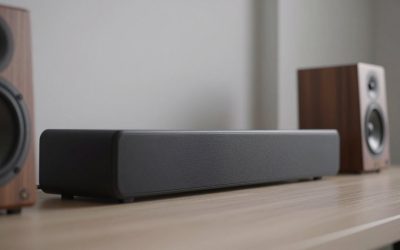
The best class AB amplifiers for clean, warm sound are the Yamaha A-S501 for value and power, the Audiolab 6000A for compact all-round connectivity, the Cambridge Audio CXA81 for larger rooms, the Marantz PM6007 for relaxed two-channel listening, and the Rega Brio for a small, focused analog system.
Our top picks
 Pioneer GM-A6704 1000W Max Class AB Bridgeable
- 4-Channel Class A/B Amp - Upgrade your car…
- Maximum Power Output
- Efficiency
 DS18 SXE-1200.4/RD Car Amplifier Stereo Full-Range Class
- DS18’s SXE series of amps was designed for…
- The SXE series of amplifier gives users the…
- As a Class A/B amplifier, the SXE series…
 Pioneer GM-A3702 500W Max Class AB Bridgeable
- 2-Channel Class A/B Amp
- Maximum Power Output
- Efficiency
| Product | Key specs | |
|---|---|---|
| Pioneer GM-A6704 1000W Max Class AB Bridgeable | 4-Channel Class A/B Amp - Upgrade your car… Maximum Power Output Efficiency | Check price |
| DS18 SXE-1200.4/RD Car Amplifier Stereo Full-Range Class | DS18’s SXE series of amps was designed for… The SXE series of amplifier gives users the… As a Class A/B amplifier, the SXE series… | Check price |
| Pioneer GM-A3702 500W Max Class AB Bridgeable | 2-Channel Class A/B Amp Maximum Power Output Efficiency | Check price |
 Audiobank P1601 Monoblock Car Audio Amplifier | Audiobank P1601 monoblock car audio amplifier delivers up… Class AB amplifier topology combines strong musical output… Included remote subwoofer level control lets the driver… | Check price |
As an Amazon Associate we earn from qualifying purchases at no extra cost to you.
Best Class AB Amplifiers at a Glance
| Amplifier | Continuous power | Impedance support | Digital connectivity | Approx. size (W × H × D) | Weight | Best suited to |
|---|---|---|---|---|---|---|
| Yamaha A-S501 | 85 W per channel at 8 ohms | 4–8 ohms | Optical, coaxial | 435 × 151 × 387 mm | 10.3 kg | Power-conscious buyers and medium rooms |
| Audiolab 6000A | 50 W per channel at 8 ohms | 4–8 ohms | Optical, coaxial, USB, Bluetooth | 445 × 65 × 300 mm | 7.8 kg | Compact systems and mixed sources |
| Cambridge Audio CXA81 | 80 W per channel at 8 ohms | 4–8 ohms | Optical, coaxial, USB, Bluetooth | 430 × 114 × 340 mm | 8.7 kg | Large bookshelf or floorstanding speakers |
| Marantz PM6007 | 45 W per channel at 8 ohms | 4–8 ohms | Optical, coaxial | 440 × 105 × 370 mm | 7.8 kg | Small rooms and easy-to-drive speakers |
| Rega Brio | 50 W per channel at 8 ohms | 4–8 ohms | None built in | 345 × 78 × 345 mm | 6.8 kg | Minimal analog systems and vinyl |
Power figures above are continuous RMS ratings, generally measured with both channels driven over a specified frequency range. They are more useful than a short peak-power number when estimating how an amplifier will behave during sustained music playback. Exact measurements and included features can vary by region and production revision, so check the manufacturer’s current specification sheet before buying.
Our Picks by Listening Situation
Best value and headroom: Yamaha A-S501
The Yamaha A-S501 is the strongest choice when clean power matters more than a slim chassis. Its 85-watt-per-channel rating gives it useful headroom with conventional bookshelf and floorstanding speakers, while its optical and coaxial inputs accommodate a television, CD transport, or network streamer. The amplifier also includes a subwoofer output and a switchable loudness control.
Its large 435 × 151 × 387 mm enclosure needs a sturdy shelf with ventilation above it. The relatively high weight is not a guarantee of superior sound, but it reflects a substantial power supply and chassis. Choose it for a medium-sized room, speakers with roughly 86–91 dB sensitivity, or listening that regularly reaches higher volumes.
Best compact all-rounder: Audiolab 6000A
The Audiolab 6000A combines a 50-watt Class AB power stage with a DAC, Bluetooth, multiple digital inputs, a phono stage, and a preamp output. Its 65 mm height makes it easier to place in a media cabinet than the Yamaha or Cambridge models, although it still requires open space for heat to escape.
This is a particularly sensible option for someone replacing several separate boxes. It supports both a turntable with a moving-magnet cartridge and digital sources, but it is not the best choice for unusually difficult speakers whose impedance falls well below 4 ohms. Its balanced inputs can also be useful with a suitable source, though balanced connection does not automatically improve every system.
Best for a larger or less efficient speaker: Cambridge Audio CXA81
The CXA81 offers 80 watts per channel into 8 ohms and substantially more available output into lower nominal impedances. That makes it a better fit than many 40–50 watt integrated amplifiers for larger rooms, speakers with modest sensitivity, or listeners who want convincing dynamic peaks without operating close to clipping.
It includes optical, coaxial, USB, and Bluetooth connectivity, but no built-in phono stage. Add a separate phono preamp for a turntable. The 430 × 114 × 340 mm chassis is neither unusually large nor especially compact, and its ventilation needs should be considered when installing it inside furniture.
Best for a simple, relaxed system: Marantz PM6007
The Marantz PM6007 supplies 45 watts per channel and is designed for straightforward two-channel systems. It includes optical and coaxial digital inputs, a moving-magnet phono input, and a subwoofer output. With easy-to-drive speakers in a small or medium room, its continuous power is usually sufficient.
It is less appropriate for low-sensitivity floorstanders, large listening rooms, or speakers with a demanding impedance curve. The PM6007 makes more sense when the system will be used at moderate levels and simplicity is more valuable than maximum output.
Best analog-focused option: Rega Brio
The Rega Brio is a compact 50-watt-per-channel Class AB integrated amplifier with a built-in moving-magnet phono stage and several line-level inputs. It has no digital inputs, Bluetooth, or network features, so a television or streamer needs an external DAC or suitable analog output.
Its small 345 × 78 × 345 mm chassis suits a minimalist rack, but do not place another heat-producing component directly on top. The Brio is a strong match for listeners who already have a digital source solution and want the amplifier to concentrate on analog playback.
How to Match Class AB Power to Your Speakers
Do not match amplifiers by wattage alone. Check three speaker specifications: sensitivity, nominal impedance, and minimum impedance. Sensitivity indicates how loudly a speaker plays from a given amount of power; impedance shows how demanding its electrical load can become.
- Speakers rated around 88–92 dB sensitivity are generally easier partners for 45–60 watt amplifiers.
- Speakers around 84–87 dB sensitivity benefit from more power and a capable power supply, particularly in a large room.
- A nominal 4-ohm speaker is not automatically unsafe, but the amplifier should explicitly support 4-ohm operation and have adequate ventilation.
- Speakers whose impedance drops below 4 ohms deserve extra care; consult both the speaker and amplifier manuals before purchasing.
As a rough calculation, doubling amplifier power increases theoretical maximum level by about 3 dB. Moving from 50 watts to 100 watts therefore adds useful headroom, but it does not make music twice as loud. Speaker sensitivity, listening distance, room size, and bass demands often matter more.
Decision Matrix
| Your situation | Recommended direction | Why |
|---|---|---|
| Budget-conscious buyer with 6–8 ohm speakers | Yamaha A-S501 | High continuous power, useful digital inputs, and broad speaker compatibility |
| Small cabinet or desk-adjacent setup | Audiolab 6000A | Low-profile chassis and extensive source connectivity |
| Large room or inefficient floorstanding speakers | Cambridge Audio CXA81 | More headroom and a stronger lower-impedance capability |
| Moderate-volume listening with a turntable | Marantz PM6007 | Built-in phono stage and sensible power for easy loads |
| Experienced analog listener with an external DAC | Rega Brio | Compact, focused design without paying for unwanted digital features |
Connectivity: Pay for the Sources You Actually Use
A built-in DAC is valuable when connecting a television, computer, CD transport, or streamer directly. Optical input is often convenient for a television because it avoids ground-loop noise. USB is more useful for a computer or dedicated digital source. Bluetooth is convenient for casual playback, but it is not a substitute for a full network streamer if you need multi-room control, high-resolution library management, or uninterrupted home-network playback.
A phono input is only useful if it supports the cartridge type installed on your turntable. The amplifiers above generally provide moving-magnet support; moving-coil cartridges normally require a separate phono stage unless the amplifier specifically states otherwise.
Thermal Design, Placement, and Ownership
Class AB amplifiers are efficient enough for home use but produce heat, especially when driving low-impedance speakers at high levels. Leave several centimetres of open space above the case, keep ventilation openings clear, and avoid stacking a streamer or other heat source directly on top. A closed cabinet can raise internal temperature and shorten component life.
Dust is the most common maintenance issue. Switch the amplifier off, unplug it, and use a soft dry brush or low-pressure air around ventilation slots. Do not spray cleaner into controls or vents. If a channel becomes intermittent, clean external cable contacts and test another source before assuming the amplifier has failed.
Potential wear points include input selectors, volume controls, speaker-relay contacts, and aging electrolytic capacitors. Mechanical controls may become noisy after years of use, while repeated overheating can accelerate failures. Avoid connecting or disconnecting speaker cables with the amplifier powered, and check for stray wire strands that could short the terminals.
Bottom Line
Choose the Yamaha A-S501 when continuous power and value are priorities, the Audiolab 6000A when space and connectivity matter, and the Cambridge Audio CXA81 when your speakers or room demand more headroom. The Marantz PM6007 is the safer fit for modest systems with vinyl, while the Rega Brio is the specialist choice for compact analog setups. In every case, confirm the speaker’s minimum impedance, allow proper ventilation, and select features based on your actual sources rather than a longer specification list.
More from Amazon
Programs that pair well with the guide above. Offers and eligibility are set by Amazon and may change.
Free shipping on eligible items, Prime Video and more. Eligible new members can start with a free trial.
Start a Prime free trialAd-free music streaming. Eligible new subscribers can start with a free trial.
Try Music Unlimited freeA Prime membership for ages 18-24 with a trial period. Eligibility is set by Amazon.
See Prime for Young AdultsAudiobooks and podcasts to listen to on the go. Eligible new members can start with a free trial.
Try Audible freeAs an Amazon Associate we earn from qualifying purchases.