Our Short List of 3
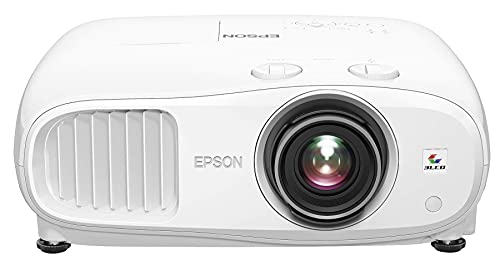
- Best for: Dedicated theater rooms that need lens shift and strong color brightness.
- 4K PRO-UHD pixel-shifting projection technology
- True 3-chip 3LCD design
- 3,000 lumens of color brightness and 3,000 lumens of white brightness
- Contrast ratio up to 100,000:1
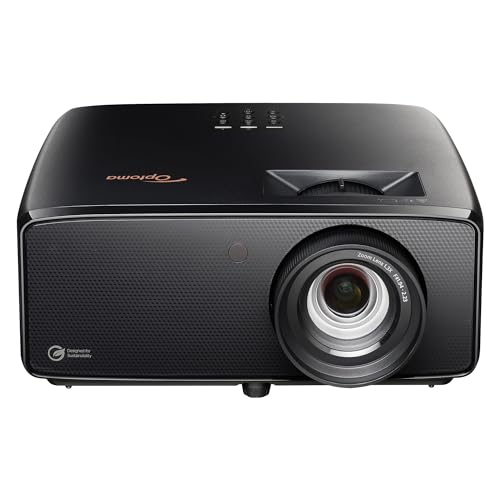
- Best for: Living rooms and dens that need a bright, true 4K laser picture.
- True 4K UHD resolution, 3840 x 2160
- DuraCore laser light source
- 3,500 lumens brightness
- 1,500,000:1 contrast ratio

- Best for: Mixed rooms where movie nights and console sessions share one screen.
- 4K UHD 3840 x 2160 on-screen resolution
- Laser light source rated up to 20,000 hours
- 3,200 ANSI lumens brightness
- 600,000:1 dynamic contrast ratio
All 5 Picks at a Glance
| Product | Specs | Action |
|---|---|---|
| Epson Home Cinema 3800 |
| Check price on Amazon |
| Optoma UHZ36 |
| Check price on Amazon |
| BenQ TK710 |
| Check price on Amazon |
 Epson Home Cinema 2350 |
| Check price on Amazon |
 XGIMI HORIZON Ultra |
| Check price on Amazon |
Key takeaways
- Compare five 4K projectors for home theater and gaming, from Epson 3LCD and Optoma laser picks to a Dolby Vision XGIMI, on brightness and HDR.
Buying a 4K projector starts with a label problem. Some models carry a native 4K imaging chip, while others reach a 4K image by shifting a lower-resolution chip at high speed, and both wear the same 4K badge on the box. The second decision is brightness: a projector that looks rich in a blacked-out theater can wash out in a living room with lamps on, so the lumen figure and the light source behind it matter as much as the resolution claim.
This guide serves four kinds of buyers: theater builders who can mount and darken a room, living-room viewers who cannot, players who want one screen for movies and console games, and renters who need everything in one box. The five picks below were chosen from their Amazon listing titles and stated specifications, and they split along those lines rather than forming one simple ranking.
Quick Picks
As an Amazon Associate we earn from qualifying purchases
| Product | Best for | Key spec from title |
|---|---|---|
| Epson Home Cinema 3800 | Fixed theater rooms with lens shift | 4K PRO-UHD 3-chip 3LCD with HDR |
| Optoma UHZ36 | Bright rooms that need laser output | True 4K UHD laser, 3,500 lumens |
| BenQ TK710 | One screen for movies and games | 4K laser, 3,200 lumens, low input lag |
| Epson Home Cinema 2350 | Streaming without extra boxes | 4K PRO-UHD with Android TV built in |
| XGIMI HORIZON Ultra | Renters avoiding a fixed install | 4K with Dolby Vision, Dual Light |
How to Choose
Separate native 4K from pixel-shifted 4K
A native 4K projector puts all 8.3 million pixels on screen from a chip that holds them, while a pixel-shifting design flashes a smaller chip through offset positions so fast that the eye reads a full 4K image. In practice the sharpest native models hold an edge on test patterns and fine text, but a good shifter at normal seating distance looks convincingly 4K on film content. What matters is knowing which design you are paying for: the Optoma in this guide is a true 4K design, while the Epson and BenQ models shift. Check the listing wording before comparing two prices head to head.
Match brightness to the light in your room
Lumens decide whether HDR highlights survive your room. A dedicated theater with dark walls and curtains can make a 2,300-lumen projector look punchy, because nothing competes with the image. A living room with windows and ceiling lights needs output closer to 3,000 lumens or more, which is where the Epson 3800, Optoma UHZ36 and BenQ TK710 sit. Also note the measurement standard behind the number: ANSI and ISO lumens are tested figures, while unqualified marketing lumens on no-name listings are not comparable. Every pick here quotes a rated figure from its listing rather than a bare claim.
Choose a light source you can live with
Lamp projectors cost less up front and reach high brightness, but the lamp dims over a few thousand hours and replacements become a running cost, as with both Epson models here. Laser sources, like the Optoma and BenQ in this guide, hold their brightness far longer, switch on quickly and are rated in the tens of thousands of hours, so they suit ceiling mounts you do not want to service. The XGIMI takes a third route with a hybrid LED and laser Dual Light engine. Decide by how the projector will be used: occasional movie nights forgive a lamp, while a daily-driver screen rewards laser.
Measure throw distance before you buy
Throw ratio turns your room depth into a screen size. A standard-throw projector with a ratio around 1.5 needs roughly one and a half times the screen width in distance, so a wide image demands a long room or a rear shelf. Zoom range and lens shift decide how forgiving placement is: the Epson 3800 shifts its lens vertically and horizontally, so the image can be squared without tilting the body, while keystone-only models correct shape digitally and give up some sharpness. Measure from the intended shelf or mount to the wall, then check the ratio and zoom in the listing against that distance.
The 5 Best Options
Epson Home Cinema 3800
- Best for: Dedicated theater rooms that need lens shift and strong color brightness.
- 4K PRO-UHD pixel-shifting projection technology
- True 3-chip 3LCD design
- 3,000 lumens of color brightness and 3,000 lumens of white brightness
- Contrast ratio up to 100,000:1
Dedicated theater rooms that need lens shift and strong color brightness.
It is a lamp-based design with no built-in streaming apps, so plan on lamp replacements over its life and a separate streaming source.
The Home Cinema 3800 is the fixed-install anchor of this guide, built for a room where the projector stays mounted and the lights stay low. Its 3-chip 3LCD design shows the full color signal in every frame, so there is no rainbow effect of the kind single-chip designs can produce, and the listing rates it at 3,000 lumens for both color and white brightness. Precision lens shift on both axes makes it the easiest pick here to align on a screen, and full 10-bit HDR processing suits viewers whose library is mostly 4K discs and premium streaming.
Optoma UHZ36
- Best for: Living rooms and dens that need a bright, true 4K laser picture.
- True 4K UHD resolution, 3840 x 2160
- DuraCore laser light source
- 3,500 lumens brightness
- 1,500,000:1 contrast ratio
Living rooms and dens that need a bright, true 4K laser picture.
The listing leans on picture features rather than a smart platform, so expect to feed it from a console, disc player or streaming stick you already own.
The UHZ36 is the brightness-first pick, a compact laser projector that keeps its specification focused on the picture. Optoma lists true 4K UHD resolution rather than a shifted image, a 3,500-lumen DuraCore laser and a 1,500,000:1 contrast ratio, which is the strongest contrast figure in this guide. Filmmaker Mode is the distinctive extra: it holds the color temperature, colors and motion settings of the source instead of applying the usual processing, which suits film viewers who dislike motion smoothing. The small body also moves between a mount and a shelf more easily than the larger Epson designs.
BenQ TK710
- Best for: Mixed rooms where movie nights and console sessions share one screen.
- 4K UHD 3840 x 2160 on-screen resolution
- Laser light source rated up to 20,000 hours
- 3,200 ANSI lumens brightness
- 600,000:1 dynamic contrast ratio
Mixed rooms where movie nights and console sessions share one screen.
Focus and zoom are manual, and color coverage stops at Rec.709, so check the listing if wide-gamut HDR color is your priority.
The TK710 splits the difference between a movie projector and a gaming projector. Its laser light source is rated at 3,200 ANSI lumens, bright enough for a living room with some ambient light, and the listing quotes input lag of 4 milliseconds at 1080p and 240Hz, dropping to 16 milliseconds at 4K and 60Hz for console play. Color coverage is 95 percent of Rec.709, which matches broadcast and streaming content honestly rather than chasing a wider gamut. Vertical lens shift and a 1.3x zoom give it more placement flexibility than most gaming-leaning models, and eARC passes full audio to a soundbar or receiver.
Epson Home Cinema 2350
- Best for: Households that want streaming apps inside the projector and no extra boxes.
- 4K PRO-UHD pixel-shifting projection technology
- 3-chip 3LCD design
- 2,800 lumens brightness
- HDR10 and HLG support
Households that want streaming apps inside the projector and no extra boxes.
The 4K image is pixel-shifted rather than native, and the lamp light source will need replacing over time, so weigh both against the laser models here.
The Home Cinema 2350 is the streaming-first option, with Android TV built in so the projector itself runs the apps a household already uses. It is still a proper 3-chip 3LCD design with 4K PRO-UHD pixel shifting, rated at 2,800 lumens, which is enough output for a dimmed living room and casual lights-on viewing. HDR10 and HLG support covers the formats streaming services actually send, and the built-in 10 W speaker plus Bluetooth output handle audio for rooms that have not added a soundbar yet. Epson also pitches it at gamers, with a low-latency mode for console play.
XGIMI HORIZON Ultra
- Best for: Renters and shared rooms that need automatic setup and strong built-in sound.
- 4K UHD resolution with Dolby Vision
- Dual Light LED and laser hybrid light source
- 2,300 ISO lumens brightness
- ISA 3.0 intelligent screen adaptation
Renters and shared rooms that need automatic setup and strong built-in sound.
At 2,300 ISO lumens it is the dimmest pick here, so it needs a darkened room, and bundle listings circulate under other codes, so confirm the listing is the standalone unit.
The HORIZON Ultra is the pick for rooms where nothing can be mounted. Its ISA 3.0 system handles focus, keystone and screen alignment automatically, so it can sit on a side table, aim at a wall and be put away after the film. It is also the only model here with Dolby Vision, fed by a Dual Light engine that combines LED and laser sources, and its two 12 W Harman Kardon speakers are the strongest built-in audio in this guide. Android TV 11 covers streaming, and the optical zoom preserves image quality while adjusting size from a fixed spot.
Which One Fits Your Situation
You are building a fixed theater room
Start with the Epson Home Cinema 3800. A mounted room rewards its lens shift, because the image can be squared to the screen without tilting the projector or leaning on digital keystone, and its 3,000 lumens of color brightness hold up on larger screens. The Optoma UHZ36 is the alternative if you would rather never change a lamp.
Your living room never goes fully dark
Choose between the Optoma UHZ36 and the BenQ TK710. Both are lasers rated above 3,000 lumens, so sports and evening viewing survive lamps and curtains that leak light. The Optoma brings the higher contrast figure and true 4K resolution, while the BenQ adds lens shift and the faster gaming response.
One screen covers movies and console games
The BenQ TK710 is built for that split life. Its listed 16-millisecond lag at 4K keeps console play responsive, the 240Hz mode at 1080p suits fast titles, and eARC sends full-quality audio onward to a soundbar. The Epson 2350 is the fallback if built-in streaming matters more than the last word in response time.
You rent and cannot drill or mount
Take the XGIMI HORIZON Ultra. Automatic focus and screen alignment mean it works from a table or shelf with no bracket, no ladder and no holes in the wall, and the Harman Kardon speakers remove the need for a separate audio purchase on day one. Just plan viewing for a darkened room.
Common Mistakes
- Assuming every 4K badge means a native 4K chip, when several strong models reach 4K by pixel shifting and say so only in the fine print.
- Comparing lumen figures across different measurement standards, or trusting unqualified brightness claims that no ANSI or ISO figure backs up.
- Measuring the room after ordering, then finding the throw ratio cannot fill the intended screen from the only shelf or mount position available.
- Buying a projector with no smart platform and no plan for a source, leaving a new screen with nothing to play on the first night.
- Relying on a small built-in speaker for a very large image, instead of checking for eARC or Bluetooth so a soundbar can take over.
Frequently Asked Questions
Is pixel-shifted 4K as sharp as native 4K?
On film and streamed content at a normal seating distance, a good pixel-shifting projector looks very close to native 4K, because the shifting happens fast enough that the eye integrates a full-resolution image. Native 4K keeps a clearer edge on fine text, test patterns and very large screens viewed up close.
How many lumens does a 4K projector need?
It depends on the room more than the resolution. A dark, dedicated theater can look strong at around 2,000 to 2,500 rated lumens, while a living room with windows and lamps usually needs 3,000 or more. Screen size matters too: the same output spread across a bigger image looks dimmer.
Can a 4K projector handle console gaming well?
Yes, if the listing quotes a low input lag at the resolution you will play. Around 16 milliseconds at 4K and 60Hz feels responsive for most console titles, and models like the BenQ TK710 add a high-refresh 1080p mode for faster games. Check the lag figure for your exact mode before buying.
Laser or lamp: which light source is the better buy?
Laser costs more up front but holds brightness for far longer, switches on fast and removes lamp replacements, which suits mounted and daily-use setups. Lamp models are cheaper to buy and still reach high brightness, but the lamp dims with hours and becomes a recurring cost. Match the source to how often the projector will run.
More from Amazon
Programs that pair well with the guide above. Offers and eligibility are set by Amazon and may change.
Free shipping on eligible items, Prime Video and more. Eligible new members can start with a free trial.
Start a Prime free trialAd-free music streaming. Eligible new subscribers can start with a free trial.
Try Music Unlimited freeA Prime membership for ages 18-24 with a trial period. Eligibility is set by Amazon.
See Prime for Young AdultsAudiobooks and podcasts to listen to on the go. Eligible new members can start with a free trial.
Try Audible freeAs an Amazon Associate we earn from qualifying purchases.