Our Short List of 3

- Best for: Google Home households that want spoken room-by-room warnings without rewiring.
- Sensor type: split-spectrum photoelectric smoke sensor and electrochemical carbon monoxide sensor
- Power source: battery operated, six AA lithium batteries
- Connectivity: Wi-Fi 802.11 b/g/n at 2.4 GHz, 802.15.4 wireless interconnect, Bluetooth Low Energy
- Alerts: voice alerts with room location, phone notifications, heads-up early warning

- Best for: Alexa and Apple Home homes replacing a hardwired alarm in a main living space.
- Sensor type: photoelectric smoke sensor and electrochemical carbon monoxide sensor
- Power source: hardwired AC with battery backup, AC power required
- Connectivity: Wi-Fi, Apple HomeKit, Amazon Alexa built in, AirPlay 2
- Speaker: omni-directional premium home speaker with voice control
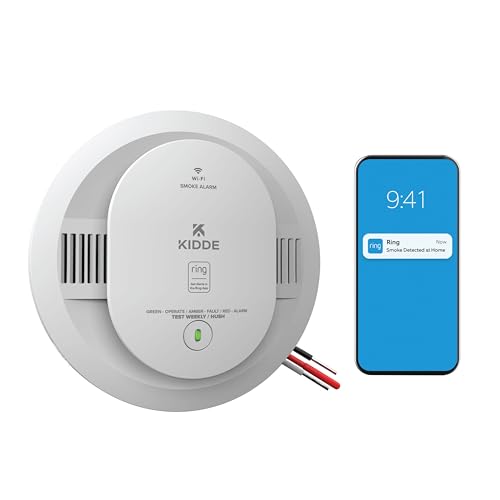
- Best for: Ring households replacing hardwired alarms who want alerts beside their camera feeds.
- Sensor type: photoelectric smoke sensor with enhanced sensing technology
- Power source: 120V AC hardwired, two AA backup batteries included
- Connectivity: 2.4 GHz Wi-Fi, Ring app for iOS and Android
- Controls: test and hush button on the unit
All 3 Picks at a Glance
| Product | Specs | Action |
|---|---|---|
| Google Nest Protect Smoke and Carbon Monoxide Alarm (Battery) |
| Check price on Amazon |
| First Alert Onelink Safe & Sound Smart Smoke and CO Alarm |
| Check price on Amazon |
| Kidde Smart Smoke Detector with Ring App, Hardwired (RGSAR-RW) |
| Check price on Amazon |
Key takeaways
- Compare the best smart smoke detectors with phone alerts, voice warnings and carbon monoxide sensing, from Nest Protect to X-Sense and Kidde Ring alarms.
A smart smoke detector earns its place by answering the question a basic alarm cannot: what is happening at home when nobody is there to hear the siren? The real decision is how the alarm reaches you, through app alerts, voice warnings that name the room, or a speaker you can talk back to, and whether it also watches for carbon monoxide. Power matters just as much, because hardwired units and battery units suit very different homes.
This guide serves five kinds of buyers: Nest and Google Home households, Apple Home and Alexa homes, renters who cannot touch wiring, families covering several rooms at once, and Ring users who want alarms inside the app they already check. Every pick below is a currently sold Amazon listing, chosen from its product title and stated specifications rather than marketing claims.
Quick Picks
As an Amazon Associate we earn from qualifying purchases
| Product | Best for | Key spec from title |
|---|---|---|
| Google Nest Protect (Battery) | Voice alerts that name the room | Split-spectrum smoke sensor with CO sensing |
| First Alert Onelink Safe & Sound | Alexa built into the alarm itself | Hardwired speaker alarm with AirPlay 2 |
| X-Sense XS01-WX | One room on a small budget | Direct 2.4 GHz Wi-Fi, no hub needed |
| X-Sense SC07-WX 3-Pack | Covering several rooms at once | Smoke and CO combo with LCD display |
| Kidde Smart Smoke Detector with Ring | Ring app households | Hardwired with AA battery backup |
How to Choose
Smoke Only or Smoke Plus Carbon Monoxide
Decide first whether the alarm needs to sense carbon monoxide as well as smoke. Homes with a gas furnace, attached garage, fireplace or fuel-burning appliance benefit from a combo unit, because CO is invisible and odourless and a smoke-only alarm stays silent through a CO event. Combo models pair a photoelectric smoke sensor with an electrochemical CO sensor in one ceiling unit, which also halves the devices you maintain. Pure smoke alarms cost less and run longer between battery changes, so they still make sense in all-electric homes where bedrooms sit far from any combustion source.
Hardwired, Battery or Plug-In Power
Power decides where an alarm can go and how much work fitting it takes. Hardwired models draw 120V AC from the ceiling box and keep a battery backup for outages, which suits houses that already have wired alarms to replace. Battery models mount with two screws almost anywhere, making them the renter-friendly route, but their cells need periodic replacement. Check what the listing includes: some hardwired alarms ship with adapter plugs for common older harnesses, while battery models differ on whether the cell is replaceable or sealed inside for the alarm’s working life.
How the Alarm Reaches Your Phone
Every smart alarm here connects over 2.4 GHz Wi-Fi, yet the app experience differs sharply. Some report into a general smart home platform, others into a dedicated safety app, and one routes everything through the Ring app. Look for real-time push notifications for smoke, CO and low battery, plus a self-test or status history you can check remotely. Interconnection matters too: linked alarms sound together, so a basement event wakes the bedrooms. Confirm whether interconnection runs over the home wiring, a wireless link between units, or only through the app.
Voice Alerts, Silence Controls and Extras
Voice alerts that announce the room and the hazard type cut through panic better than a bare siren, and several picks speak instead of only beeping. An app-based silence button or a large test and hush button helps with cooking fumes, the most common nuisance trigger. Beyond alerts, extras worth weighing include a built-in smart speaker, a night light path light, and optional professional monitoring subscriptions. None of these replace correct placement, so plan one alarm per bedroom, one outside sleeping areas and one on every level before chasing features.
The 5 Best Options
Google Nest Protect Smoke and Carbon Monoxide Alarm (Battery)
- Best for: Google Home households that want spoken room-by-room warnings without rewiring.
- Sensor type: split-spectrum photoelectric smoke sensor and electrochemical carbon monoxide sensor
- Power source: battery operated, six AA lithium batteries
- Connectivity: Wi-Fi 802.11 b/g/n at 2.4 GHz, 802.15.4 wireless interconnect, Bluetooth Low Energy
- Alerts: voice alerts with room location, phone notifications, heads-up early warning
Google Home households that want spoken room-by-room warnings without rewiring.
the battery version needs its six AA lithium cells replaced over its life, so budget for the correct lithium cells rather than alkaline spares.
The battery Nest Protect suits households that want the alarm to explain itself. It speaks a friendly early warning, names the room where it senses smoke or carbon monoxide, and sends the same information to the Nest app, so a problem in the kitchen is announced as a kitchen problem. Its split-spectrum sensor is designed to catch both fast-flaming and slow-smouldering fires, and the unit tests its own sensors and batteries. Six long-life lithium AA cells mean no wiring work, and a soft path light glows when you walk underneath at night.
Watch out for: the battery version needs its six AA lithium cells replaced over its life, so budget for the correct lithium cells rather than alkaline spares.
First Alert Onelink Safe & Sound Smart Smoke and CO Alarm
- Best for: Alexa and Apple Home homes replacing a hardwired alarm in a main living space.
- Sensor type: photoelectric smoke sensor and electrochemical carbon monoxide sensor
- Power source: hardwired AC with battery backup, AC power required
- Connectivity: Wi-Fi, Apple HomeKit, Amazon Alexa built in, AirPlay 2
- Speaker: omni-directional premium home speaker with voice control
Alexa and Apple Home homes replacing a hardwired alarm in a main living space.
it must be hardwired, so confirm a ceiling electrical box exists where you plan to fit it before ordering.
The Safe & Sound is the pick for homes that want an alarm and a smart speaker in the same ceiling fixture. Behind the grille sits an omni-directional speaker with Amazon Alexa built in, so the unit plays music, answers questions and takes voice commands between its day job of watching for smoke and carbon monoxide. It reports emergencies to the Onelink Home app with the type and location of the event, works with Apple HomeKit, and supports AirPlay 2 for audio. Adapter plugs in the box simplify swapping out older hardwired alarms.
Watch out for: it must be hardwired, so confirm a ceiling electrical box exists where you plan to fit it before ordering.
X-Sense XS01-WX Wi-Fi Smart Smoke Detector
The XS01-WX covers a single room with the least hardware and the least fuss. This compact alarm connects directly to a 2.4 GHz Wi-Fi network with no base station, then pushes real-time notifications to the X-Sense Home Security app when it senses smoke or when its battery runs low. A photoelectric sensor does the detecting, the replaceable CR123A cell is packed in the box, and screws and anchor plugs come included for a two-minute ceiling mount. It is the straightforward choice for a first smart alarm in a bedroom, hallway or home office.
Specs
- Sensor type: photoelectric smoke sensor
- Power source: one CR123A replaceable battery, included
- Connectivity: direct 2.4 GHz Wi-Fi connection, no hub required
- App: X-Sense Home Security, real-time push notifications
- Alarm volume: 85 dB
- Included: smoke alarm, battery, user manual, screws and anchor plugs
- Model: XS01-WX
Best for: renters and first-time buyers adding app alerts to one or two rooms.
Watch out for: it detects smoke only, so rooms near fuel-burning appliances still need a separate carbon monoxide alarm.
X-Sense SC07-WX Smart Smoke and Carbon Monoxide Detector Combo, 3-Pack
This three-pack suits anyone protecting several rooms in one purchase. Each SC07-WX combines a photoelectric smoke sensor with an electrochemical carbon monoxide sensor, adds a backlit LCD that shows CO readings, and connects over Wi-Fi for app notifications through the X-Sense Home Security app. Because the units run on replaceable CR123A batteries, you can place them in bedrooms and hallways without an electrician, and the shared app keeps every alarm’s status in one list. The round housing is larger than the XS01-WX, which buys the display and the second sensor.
Specs
- Sensor type: photoelectric smoke sensor and electrochemical carbon monoxide sensor
- Power source: battery powered, CR123A batteries included
- Connectivity: 2.4 GHz Wi-Fi, X-Sense Home Security app notifications
- Display: backlit LCD showing carbon monoxide level
- Dimensions: 5.7 x 5.7 x 2 inches per unit
- Pack contents: three SC07-WX alarms, six CR123A batteries, user manual
- Model: SC07-WX
Best for: families who want smoke and CO coverage in several rooms from one order.
Watch out for: the listing’s alarm is sizeable at 5.7 inches across, so check it suits smaller hallways before placing all three.
Kidde Smart Smoke Detector with Ring App, Hardwired (RGSAR-RW)
- Best for: Ring households replacing hardwired alarms who want alerts beside their camera feeds.
- Sensor type: photoelectric smoke sensor with enhanced sensing technology
- Power source: 120V AC hardwired, two AA backup batteries included
- Connectivity: 2.4 GHz Wi-Fi, Ring app for iOS and Android
- Controls: test and hush button on the unit
Ring households replacing hardwired alarms who want alerts beside their camera feeds.
Wi-Fi and smart features need the AC connection, since the AA cells are backup only and cannot run the alarm alone.
Kidde’s Ring-enabled alarm fits homes already living in the Ring app. It wires into the ceiling on 120V AC with two AA batteries as backup, then sends smoke and low-battery notifications to the Ring app with no extra Ring hardware required. A test and hush button on the face handles checks and nuisance silencing, and one smart unit can report status for a home’s other interconnected Kidde hardwired alarms. An optional Ring subscription adds round-the-clock professional smoke monitoring, but the core alerts work without it.
Watch out for: Wi-Fi and smart features need the AC connection, since the AA cells are backup only and cannot run the alarm alone.
Which One Fits Your Situation
You Rent and Cannot Touch the Wiring
Battery alarms are your route. The X-Sense XS01-WX mounts with screws and anchor plugs and needs no hub, while the SC07-WX three-pack adds carbon monoxide sensing for homes with gas appliances. The battery Nest Protect costs more but adds voice alerts and self-testing for renters who plan to take their alarms to the next home.
You Are Replacing Old Hardwired Alarms
Match the new unit to the app you already use. The Kidde RGSAR-RW reports into the Ring app, and the First Alert Safe & Sound brings Alexa and HomeKit to the ceiling. Both reuse the existing ceiling box, keep battery backup for outages, and interconnect with compatible wired alarms so the whole house sounds together.
You Want Alerts You Can Understand at 3 A.M.
Spoken alerts beat a bare siren when you are half asleep. The Nest Protect announces the room and hazard type before the full alarm, and the Safe & Sound does the same while doubling as a speaker. Either way, choose a model whose app also sends the location to your phone for nights away.
You Need Several Rooms Covered on a Budget
Start with the SC07-WX three-pack, which puts smoke and CO sensing in three rooms for one purchase and one app. Add XS01-WX units later in rooms that need smoke sensing only, such as a home office. Keeping both in the same X-Sense app avoids juggling two notification systems.
Common Mistakes
- Placing a single alarm in the hallway and assuming the whole home is covered, when bedrooms and every level each need their own unit.
- Fitting a smoke-only alarm near a gas furnace or attached garage and leaving carbon monoxide completely unmonitored.
- Connecting the alarm to a 5 GHz Wi-Fi network when the listing specifies 2.4 GHz, then blaming the device for failed setup.
- Silencing repeated nuisance alarms from cooking steam instead of moving the unit slightly farther from the kitchen or bathroom door.
- Forgetting that hardwired smart features stop working on battery backup alone, so a tripped breaker can quietly disable app alerts.
Frequently Asked Questions
Do smart smoke detectors work when the internet goes down?
Yes, the alarm itself still sounds locally at full volume, because sensing and the siren run on the device. What stops during an outage is the remote part: phone notifications, app status checks and voice assistant features pause until the Wi-Fi connection returns. Hardwired models also fall back to battery backup during a power cut.
How often do the batteries need changing?
It depends on the model. Alarms with replaceable CR123A cells, such as the X-Sense units, typically run a few years per cell and warn you through the app before they run flat. The Kidde Ring alarm uses two AA backup cells, while the battery Nest Protect uses six lithium AA cells designed for multi-year service.
Can one smart alarm alert me about the other alarms in the house?
Often, yes. Interconnected alarms sound together when one triggers, and some hardwired smart models report the status of linked non-smart alarms from the same brand through the app. Wireless interconnect between battery units varies by brand, so check the listing for the exact model rather than assuming every unit in a range links the same way.
Where should a smart smoke detector be installed?
Fit one inside every bedroom, one outside each sleeping area and one on every level of the home, mounted on the ceiling or high on a wall away from corners. Keep alarms a sensible distance from kitchens and bathrooms to reduce steam and cooking nuisance triggers, and add CO sensing wherever fuel-burning appliances run.
More from Amazon
Programs that pair well with the guide above. Offers and eligibility are set by Amazon and may change.
Free shipping on eligible items, Prime Video and more. Eligible new members can start with a free trial.
Start a Prime free trialAd-free music streaming. Eligible new subscribers can start with a free trial.
Try Music Unlimited freeA Prime membership for ages 18-24 with a trial period. Eligibility is set by Amazon.
See Prime for Young AdultsAudiobooks and podcasts to listen to on the go. Eligible new members can start with a free trial.
Try Audible freeAs an Amazon Associate we earn from qualifying purchases.