Our Short List of 3

- Best for: Households adding a first real screen to a living room or media corner.
- 100-inch diagonal viewing area, 49.2 x 87.4 inches
- 16:9 aspect ratio
- MaxWhite 2 screen material, 1.1 gain
- 180-degree viewing angle

- Best for: Dedicated theater rooms that can give up a wall permanently.
- 120-inch diagonal viewing area, 16:9 aspect ratio
- White vinyl material, 1.1 gain
- 160-degree viewing angle
- Extruded aluminum frame wrapped in light-absorbing black velvet
- Best for: Multi-use rooms where the screen must hide away at the touch of a control.
- 100-inch diagonal viewing area
- 16:9 aspect ratio
- Electric motorized drop-down operation
- Multi aspect ratio function with adjustable vertical position
All 5 Picks at a Glance
| Product | Specs | Action |
|---|---|---|
| Elite Screens Manual B 100-Inch Pull-Down Screen, M100H |
| Check price on Amazon |
| Silver Ticket Products STR Series 120-Inch Fixed Frame Screen, STR-169120 |
| Check price on Amazon |
| Elite Screens Spectrum 100-Inch Electric Motorized Screen, ELECTRIC100H |
| Check price on Amazon |
 Elite Screens Yard Master 2 100-Inch Outdoor Screen, OMS100H2 |
| Check price on Amazon |
 VIVOHOME 120-Inch 1:1 Pull-Down Projector Screen |
| Check price on Amazon |
Key takeaways
- Compare the best projector screens for home theater, living room and backyard setups, covering pull-down, motorized and fixed-frame picks, sizes and gain.
A projector throws light, but the screen decides what that light becomes. Projecting onto a painted wall softens detail, shifts colors and washes out dark scenes, while a proper screen surface gives the image a flat, reflective base with defined borders. The real decision is how the screen lives in your room: fixed to the wall, rolled away after movie night, or carried out to the backyard.
This guide serves dedicated theater rooms, living rooms that double as cinemas on weekends, and outdoor movie setups. Each pick below was chosen from its Amazon listing title and stated specifications, covering the main mounting styles and the sizes most buyers actually install. Between them they span manual, motorized, fixed and freestanding designs in the two aspect ratios that cover nearly every projector in home use today.
Quick Picks
As an Amazon Associate we earn from qualifying purchases
| Product | Best for | Key spec from title |
|---|---|---|
| Elite Screens Manual B 100-Inch | Everyday living-room viewing | 100-inch 16:9 MaxWhite 2 pull-down |
| Silver Ticket STR Series 120-Inch | Dedicated theater rooms | 120-inch 16:9 fixed frame, 1.1 gain white vinyl |
| Elite Screens Spectrum 100-Inch | Clean, hidden installs | 100-inch 16:9 electric motorized drop-down |
| Elite Screens Yard Master 2 100-Inch | Backyard movie nights | 100-inch 16:9 freestanding CineWhite UHD-B |
| VIVOHOME 120-Inch Pull Down | Presentations and mixed content | 120-inch 1:1 manual screen with auto locking |
How to Choose
Pick the mounting style that matches the room
Fixed-frame screens stay tensioned and flat, which suits a wall that belongs to the projector full time. Pull-down models roll into a ceiling or wall case and free the wall for art or a television between viewings. Motorized screens add a remote and a cleaner drop. Freestanding and tripod designs need no installation at all, so renters and backyard hosts usually start there. Think about how often the screen moves, because a style that fights your routine ends up left down, left up, or left in its box.
Match diagonal size to seating distance and throw
A screen that is too small makes a bright projector feel ordinary, while one that is too large outruns the projector’s brightness and your field of view. Measure the wall first, then confirm the projector can fill the chosen diagonal from its mounting position using the maker’s throw chart. For most living rooms, 100 to 120 inches diagonal in 16:9 covers seating rows without overwhelming the wall. Remember that the case or frame adds width beyond the viewing area, so measure the hardware as well as the picture.
Choose the aspect ratio for what you watch
Most movies, streaming shows and games are mastered in widescreen, so 16:9 is the default choice for home viewing. A 1:1 square screen shows a smaller widescreen image inside a taller surface, which suits slides, older 4:3 content and classroom material. A 2.35:1 cinema-format screen exists for dedicated rooms, but it demands a projector and lens setup that can use the extra width. Match the ratio to the content you show most, not the content you might show once a year.
Read gain and material before chasing brightness
Gain describes how much light the surface returns to the audience. A matte white surface near 1.1 gain spreads light across a wide seating area and keeps colors neutral. Higher-gain and grey materials can help in rooms with ambient light, but they may narrow the viewing angle or shift contrast. Black backing matters too, because it stops light passing through the surface and dulling the picture. If your seats spread wide across the room, viewing angle deserves as much attention as the gain figure itself.
The 5 Best Options
Elite Screens Manual B 100-Inch Pull-Down Screen, M100H
- Best for: Households adding a first real screen to a living room or media corner.
- 100-inch diagonal viewing area, 49.2 x 87.4 inches
- 16:9 aspect ratio
- MaxWhite 2 screen material, 1.1 gain
- 180-degree viewing angle
Households adding a first real screen to a living room or media corner.
Measure the full case width before ordering, since the housing runs wider than the viewing area and needs clear wall or ceiling space.
The Manual B fits the most common projector setup: a living room or den where the screen comes down for movies and rolls away afterward. Its MaxWhite 2 surface is rated for 4K and 8K content, and the wide viewing angle keeps the picture even for viewers seated off to the sides. The auto-locking mechanism holds the screen at set intervals, so you can stop the drop at the height your projector’s image needs.
Silver Ticket Products STR Series 120-Inch Fixed Frame Screen, STR-169120
- Best for: Dedicated theater rooms that can give up a wall permanently.
- 120-inch diagonal viewing area, 16:9 aspect ratio
- White vinyl material, 1.1 gain
- 160-degree viewing angle
- Extruded aluminum frame wrapped in light-absorbing black velvet
Dedicated theater rooms that can give up a wall permanently.
Assembly takes floor space and patience, and the listing notes there is no option for legs or stands, so plan on wall mounting from the start.
A fixed frame is the choice when the wall is permanently the theater. The STR Series stretches its white vinyl over an extruded aluminum frame with a tension rod system, which keeps the surface flat with no waves at the edges. The frame is wrapped in black velvet that absorbs stray projected light, sharpening the border around the image. At 120 inches diagonal, it suits rooms where the seating sits farther back and the projector has the brightness to fill a larger area.
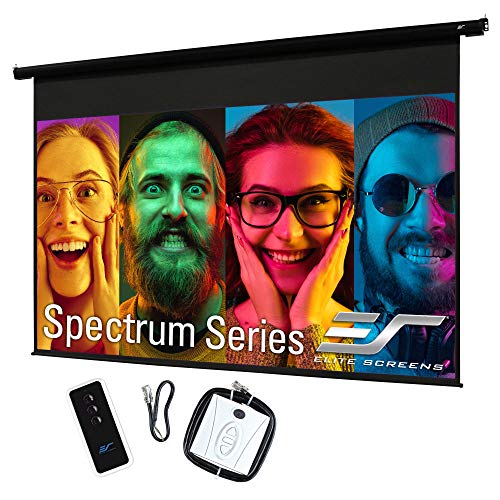
Elite Screens Spectrum 100-Inch Electric Motorized Screen, ELECTRIC100H
- Best for: Multi-use rooms where the screen must hide away at the touch of a control.
- 100-inch diagonal viewing area
- 16:9 aspect ratio
- Electric motorized drop-down operation
- Multi aspect ratio function with adjustable vertical position
Multi-use rooms where the screen must hide away at the touch of a control.
Confirm a power outlet sits within cord reach of the case position, and note the series is intended for standard throw projectors rather than ultra short throw models.
The Spectrum answers a specific frustration: a screen that should disappear completely when the room goes back to daily use. Its tubular motor lowers and raises the surface on command, and the multi aspect ratio function lets the drop stop at different heights for different content formats. It mounts to the wall or ceiling in homes and offices, and the 100-inch 16:9 surface is rated ready for 4K and 8K projection.
Elite Screens Yard Master 2 100-Inch Outdoor Screen, OMS100H2
- Best for: Backyard movie nights, community events and temporary setups.
- 100-inch diagonal viewing area, 16:9 aspect ratio
- CineWhite UHD-B tensioned matte white material
- Snap-on screen with folding aluminum frame and detachable legs
- Freestanding indoor and outdoor use
Backyard movie nights, community events and temporary setups.
Freestanding frames catch wind, so stake the legs and rigging on breezy evenings and bring the screen in when the weather turns.
The Yard Master 2 is built for the backyard rather than the media room. Its CineWhite UHD-B surface snaps onto a lightweight folding frame with detachable legs, so the whole screen stands on a lawn or patio without touching a wall. The tensioned material stays flat in a way loose hanging sheets never manage, and the kit packs down into a carrying bag for storage between movie nights. It also works indoors for events where a temporary large screen is needed.
VIVOHOME 120-Inch 1:1 Pull-Down Projector Screen
- Best for: Offices, classrooms and homes that mix presentations with movie nights.
- 120-inch diagonal display area, 84 x 84 inches
- 1:1 aspect ratio
- Manual pull-down with auto-locking mechanism
- Matte screen surface
Offices, classrooms and homes that mix presentations with movie nights.
A 1:1 screen shows widescreen films smaller than the headline diagonal suggests, so check the 16:9 image size against your seating before choosing it for a theater-first room.
This VIVOHOME screen trades the widescreen format for a tall 1:1 surface, which makes it the flexible pick for mixed content. Slides, documents, older square-format video and classroom material use the full height, while widescreen films sit inside the surface with room to spare. The manual retractable design self-locks at any height, so you can pull down only as much surface as the content needs. It mounts on a wall or ceiling at home, at school or in an office.
Which One Fits Your Situation
You are building a dedicated theater room
Choose the Silver Ticket STR Series fixed frame. A permanently tensioned surface gives the flattest image of any style here, the velvet-wrapped frame cleans up the picture edges, and the 120-inch size rewards a room where seating and projector placement were planned around the screen from the beginning.
Your living room doubles as the cinema
Pick the Elite Screens Manual B if you are comfortable walking to the screen, or the Spectrum if you want the drop handled by a motor. Both roll away into a case, both cover 100 inches in 16:9, and both leave the wall free for ordinary living room duty between viewings.
Movie night happens outside
Take the Yard Master 2. Its snap-together frame and detachable legs stand on grass or paving without fixings, the tensioned surface stays flat outdoors, and the whole kit travels in its bag. Just plan around wind and store it indoors between uses to keep the surface clean.
You present as often as you watch
The VIVOHOME 1:1 screen earns its place when slides, spreadsheets and training videos share the wall with films. The tall format shows documents at full height, and the auto-locking pull lets you match the exposed surface to each kind of content instead of showing a mostly empty screen.
Common Mistakes
- Ordering by diagonal alone and discovering the case or frame is wider than the wall space available.
- Pairing a screen size with a projector that cannot fill it brightly from the planned mounting distance.
- Choosing a 1:1 or 4:3 screen for a movie-first room, then watching every film in a small window of the surface.
- Hanging a pull-down screen where a door, fan or light fitting crosses the drop path.
- Leaving a freestanding outdoor screen set up in wind or rain instead of packing it away after the showing.
Frequently Asked Questions
What size projector screen should I buy for my room?
Start from your seating distance and the projector’s throw range rather than the biggest size that fits the wall. Most living rooms land between 100 and 120 inches diagonal in 16:9. Confirm with the projector maker’s throw chart that your mounting position can fill the diagonal before you order the screen.
Is a fixed frame screen better than a pull-down screen?
A fixed frame holds its surface under constant tension, so it stays flatter and avoids the edge curl that pull-down fabrics can develop over time. A pull-down wins when the wall has another job between viewings. The better choice depends on whether the room is a permanent theater or a shared space.
What does screen gain mean, and how much do I need?
Gain measures how strongly the surface reflects light back toward the audience compared with a plain white reference. A gain near 1.1 on matte white suits most dark or dim rooms and wide seating. Brighter rooms sometimes use grey or higher-gain materials, which trade viewing angle and color neutrality for punch.
Can I use an outdoor screen inside, or an indoor screen outside?
Outdoor screens like the Yard Master 2 work indoors anywhere their frame fits, and they are handy for events. Indoor pull-down and fixed screens are not built for weather, so rain, dew and wind will shorten their life outside. Keep indoor models inside and let freestanding outdoor designs handle the backyard.
More from Amazon
Programs that pair well with the guide above. Offers and eligibility are set by Amazon and may change.
Free shipping on eligible items, Prime Video and more. Eligible new members can start with a free trial.
Start a Prime free trialAd-free music streaming. Eligible new subscribers can start with a free trial.
Try Music Unlimited freeA Prime membership for ages 18-24 with a trial period. Eligibility is set by Amazon.
See Prime for Young AdultsAudiobooks and podcasts to listen to on the go. Eligible new members can start with a free trial.
Try Audible freeAs an Amazon Associate we earn from qualifying purchases.