Our Short List of 3

- Best for: Listeners who want LDAC streaming into a quality amplifier.
- Bluetooth 5.3
- Codecs: LDAC, aptX HD, aptX Low Latency, aptX, AAC
- DAC: ES9018K2M SABRE32
- Outputs: stereo RCA and optical digital

- Best for: A shared living-room system that needs every output type.
- Bluetooth 5.3
- Codecs: LDAC, aptX HD, aptX Low Latency, AAC, SBC
- LDAC streaming up to 24bit/96kHz at 990 kbps
- DAC: ES9018K2M

- Best for: Compact setups and second systems with limited shelf space.
- Bluetooth 6.0
- Codec: LDAC decoding up to 24bit/96kHz
- Hi-Res Audio Gold Label certification
- Connectivity: 3.5mm and RCA
All 5 Picks at a Glance
| Product | Specs | Action |
|---|---|---|
| 1Mii DS200Pro HiFi Bluetooth Receiver |
| Check price on Amazon |
| 1Mii B06Ultra Bluetooth Receiver |
| Check price on Amazon |
| UGREEN Bluetooth 6.0 Receiver |
| Check price on Amazon |
 1Mii DS220 HiFi Bluetooth Receiver |
| Check price on Amazon |
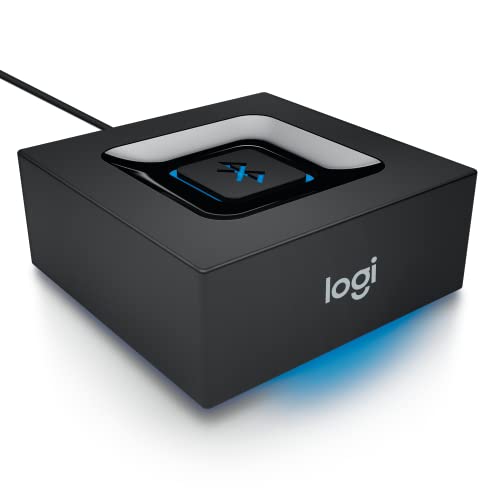 Logitech Bluetooth Audio Adapter |
| Check price on Amazon |
Key takeaways
- Stream music to an older stereo with the best Bluetooth audio receivers, compared by codec support, DAC quality, outputs and range for home systems.
A capable stereo or AV receiver from a few years ago still sounds excellent, yet it cannot play the music stored on your phone without a cable run across the room. A Bluetooth audio receiver closes that gap: it takes the wireless stream from a phone, tablet or laptop and feeds it into the amplifier you already own through RCA or digital inputs, so the system you like becomes a streaming system in minutes.
The five models below all do that job, but they differ in codec support, DAC quality, output choice and range. Newer designs add LDAC or aptX HD for higher-resolution streams, while simpler adapters focus on easy pairing and a small footprint on the shelf. The sections below sort out which of those differences actually matter for a home system.
Quick Picks
As an Amazon Associate we earn from qualifying purchases.
| Product | Best for | Key spec from title |
|---|---|---|
| 1Mii DS200Pro | Hi-res streaming to a main stereo | LDAC with ES9018K2M SABRE32 DAC |
| 1Mii B06Ultra | The widest output choice | Optical, coaxial, RCA and 3.5mm outputs |
| UGREEN Bluetooth 6.0 Receiver | The newest Bluetooth version | Bluetooth 6.0 with LDAC decoding |
| 1Mii DS220 | EQ control and a status display | OLED display with 7 EQ modes |
| Logitech Bluetooth Audio Adapter | Simple pairing for two devices | Multipoint pairing, RCA and 3.5mm outputs |
How to Choose
Match the codec to your phone
The codec decides how much musical detail survives the wireless link. Android phones commonly support LDAC and the aptX family, which carry higher bitrates than the basic SBC codec every Bluetooth device falls back on. Apple devices use AAC, so an AAC-capable receiver suits an iPhone household. Check which codecs your phone actually sends before paying for a receiver that advertises formats nothing in your home can transmit, and remember that both ends of the link must agree on a codec before it is used.
Check the outputs against your amplifier
A receiver with stereo RCA outputs plugs into almost any amplifier made in the last four decades, and its built-in DAC does the conversion work. Optical and coaxial outputs hand the digital signal to your amplifier or external DAC instead, which suits systems with a converter you already trust. Look at the back panel of your amplifier first, note which inputs are free, and buy the receiver whose outputs match them, rather than planning around adapters and extra cables later.
Think about range and placement
Published range figures assume open space, and walls, floors and metal shelving all shorten the real distance. Receivers with external antennas hold a steadier connection across a room or between floors than pocket-sized dongles tucked behind an amplifier. Place the receiver where it has a reasonably clear path to where you sit with your phone, and treat headline range numbers as a best case rather than a promise for a crowded equipment rack tucked inside a closed cabinet.
Decide which controls you will actually use
Some receivers are plain boxes that pair once and disappear behind the stereo. Others add a volume knob, an OLED status display, EQ presets or a USB input, which helps when the amplifier remote is across the room or you switch sources often. Automatic reconnection matters more than most extras: a receiver that rejoins your phone on its own every morning removes the one chore that makes people stop using these devices altogether.
The 5 Best Options
1Mii DS200Pro HiFi Bluetooth Receiver
- Best for: Listeners who want LDAC streaming into a quality amplifier.
- Bluetooth 5.3
- Codecs: LDAC, aptX HD, aptX Low Latency, aptX, AAC
- DAC: ES9018K2M SABRE32
- Outputs: stereo RCA and optical digital
Listeners who want LDAC streaming into a quality amplifier.
There is no coaxial output, so an amplifier with only a coaxial digital input free needs a different pick.
The DS200Pro is built for a main listening system rather than a bedside speaker. It pairs Bluetooth 5.3 with the codec set that matters for high-resolution streaming, including LDAC and aptX HD, and converts the signal through an ES9018K2M SABRE32 DAC before sending it out over RCA or optical. That combination suits listeners who keep their music on an Android phone or a computer and want the wireless link to stay transparent. The housing is compact enough to sit beside an amplifier without crowding the rack, and the included cables cover both output types.
1Mii B06Ultra Bluetooth Receiver
- Best for: A shared living-room system that needs every output type.
- Bluetooth 5.3
- Codecs: LDAC, aptX HD, aptX Low Latency, AAC, SBC
- LDAC streaming up to 24bit/96kHz at 990 kbps
- DAC: ES9018K2M
A shared living-room system that needs every output type.
The surround mode is a processing effect some listeners will leave switched off for music.
The B06Ultra covers the widest range of amplifier inputs in this group, offering optical, coaxial, RCA and 3.5mm outputs on one box, so it can move between systems without new cables. It supports LDAC at up to 24bit/96kHz alongside aptX HD and aptX Low Latency, decodes through an ES9018K2M DAC, and adds a volume knob plus a 3D surround mode on the front panel. That makes it a practical choice for a living-room receiver that also serves a television, where low latency keeps dialogue closer to the picture.
UGREEN Bluetooth 6.0 Receiver
- Best for: Compact setups and second systems with limited shelf space.
- Bluetooth 6.0
- Codec: LDAC decoding up to 24bit/96kHz
- Hi-Res Audio Gold Label certification
- Connectivity: 3.5mm and RCA
Compact setups and second systems with limited shelf space.
There is no optical output, so it cannot feed a digital-only input on an amplifier or DAC.
UGREEN’s receiver is the compact option here, a small USB-powered unit built around Bluetooth 6.0 with LDAC decoding. It carries a Hi-Res Audio Gold Label certification, decodes LDAC streams at up to 24bit/96kHz, and connects to a stereo through 3.5mm or RCA, with support for two connected devices. Because it draws power from USB, it can run from a spare port on many amplifiers and televisions, which keeps the cable count low. It suits a second system, a desktop setup or powered speakers where a full-size box would be in the way.
1Mii DS220 HiFi Bluetooth Receiver
- Best for: Listeners who want visible status and EQ adjustment at the receiver.
- Bluetooth 5.3
- Codecs: LDAC, aptX HD, aptX Low Latency, AAC
- DAC: ES9018K2M
- OLED status display
Listeners who want visible status and EQ adjustment at the receiver.
The EQ presets shape every source the same way, which may not suit varied listening.
The DS220 adds feedback and control that most receivers skip: an OLED display shows the connection state, and seven EQ modes let you adjust the sound at the receiver instead of walking to the amplifier. Underneath, it runs Bluetooth 5.3 with LDAC and aptX HD decoding through an ES9018K2M DAC, and it offers RCA, optical and AUX outputs plus a USB input. It reconnects automatically to known devices and shuts down after a period without a connection. This is the pick for listeners who tweak settings often and want confirmation of what the receiver is doing.
Logitech Bluetooth Audio Adapter
- Best for: An easy upgrade for a secondary stereo or powered speakers.
- Model: 980-000910
- Outputs: RCA and 3.5mm
- Multipoint pairing: smartphone and tablet simultaneously
- One-button pairing with automatic re-pairing
An easy upgrade for a secondary stereo or powered speakers.
Codec support stops at standard Bluetooth audio, so high-resolution streaming is off the table.
Logitech’s adapter is the simplest device in this group and the one most likely to be set up in a couple of minutes. It outputs over RCA or 3.5mm, pairs with a single button press, and keeps a smartphone and a tablet connected at the same time through multipoint pairing, re-pairing automatically when you come back into range. There are no high-resolution codecs and no display, which is precisely the appeal for a kitchen system, a workshop stereo or an older receiver in a spare room where reliability matters more than resolution.
Which One Fits Your Situation
Your amplifier has a free optical input
Choose the DS200Pro or the B06Ultra and run the optical cable, letting the digital signal travel untouched until it reaches the converter stage you already own. Between them, the DS200Pro is the tidier fit for a music-first system, while the B06Ultra adds coaxial and a volume knob for a shared entertainment setup.
Two people share one stereo
The Logitech adapter keeps a phone and a tablet paired at once, so nobody has to disconnect before the other can play music. The UGREEN receiver also supports two connected devices in a smaller box. Either removes the pairing shuffle that makes shared systems annoying to live with day after day.
You are adding Bluetooth to a second room
A bedroom, garage or office system rarely needs the full codec list. The UGREEN unit runs from USB power and takes little space, while the Logitech adapter trades resolution for the simplest setup of the group. Both turn an unused amplifier and speakers into a streaming setup without buying new hardware.
You like adjusting the sound
The DS220 is the only pick here with EQ modes and a display, so it fits listeners who change tone settings by genre or by room. Its seven presets will not replace a full equalizer, but they cover the common corrections, and the screen confirms the active codec and connection at a glance.
Common Mistakes
- Buying for a codec your phone cannot send, such as paying for LDAC in an all-Apple household that only uses AAC.
- Assuming a receiver also transmits; most of these devices only receive, and sending audio to Bluetooth headphones needs a transmitter instead.
- Burying the receiver behind a metal amplifier or inside a closed cabinet, which shortens range and causes dropouts.
- Forgetting to check which inputs are actually free on the amplifier before choosing between RCA, optical and coaxial models.
- Leaving the receiver on an always-on USB port without checking whether it reconnects cleanly after the amplifier powers down.
Frequently Asked Questions
Will a Bluetooth receiver work with my old amplifier?
Almost certainly, provided the amplifier has a spare line-level input. RCA inputs cover most amplifiers and receivers from the last several decades, and powered speakers with a 3.5mm or RCA input work as well. The receiver behaves like any other source component once connected, so no special setting on the amplifier is needed beyond selecting that input.
Is LDAC noticeably better than standard Bluetooth audio?
LDAC carries more data than the basic SBC codec, up to 990 kbps, and preserves more detail from high-quality files and streaming tiers. The difference is easiest to hear on a revealing system with good source material. On small speakers or with heavily compressed streams, the gap narrows, and connection stability matters more than the codec badge.
Can one receiver stay connected to two phones at once?
Some models can. The Logitech adapter pairs a smartphone and a tablet simultaneously, and the UGREEN receiver supports two connected devices. Most larger receivers remember several paired devices but hold an active connection to one at a time, reconnecting automatically when that device comes back into range. Check the multipoint specification if two-person households will share the system.
Does a Bluetooth receiver improve sound compared with a cable?
It trades a small amount of quality for convenience. Even the best codec here compresses the signal, while a cable carries it unchanged. In practice, a good DAC inside the receiver, such as the ES9018K2M units above, keeps the loss modest, and most listeners accept the trade for wireless control from the couch.
More from Amazon
Programs that pair well with the guide above. Offers and eligibility are set by Amazon and may change.
Free shipping on eligible items, Prime Video and more. Eligible new members can start with a free trial.
Start a Prime free trialAd-free music streaming. Eligible new subscribers can start with a free trial.
Try Music Unlimited freeA Prime membership for ages 18-24 with a trial period. Eligibility is set by Amazon.
See Prime for Young AdultsAudiobooks and podcasts to listen to on the go. Eligible new members can start with a free trial.
Try Audible freeAs an Amazon Associate we earn from qualifying purchases.