Key takeaways
- Pro: Dries two full pairs in one cycle with heat plus fan for faster turnaround.
- Pro: Low noise level makes it suitable for indoor or shared living spaces.
- Con: Bulkier footprint than travel-focused units; not ideal for a small apartment.
Every skier who has pulled on frozen, damp boots at the lodge knows the problem. Wet liner material left overnight breeds odor, degrades foam, and ruins the next morning on the mountain. A ski boot dryer solves this by pushing warm air through the liner, evaporating moisture before it becomes a hygiene or comfort issue. The category is simple enough in concept, but unit quality varies wildly in output, noise, durability, and how well the design actually fits a ski boot’s narrow profile.
What separates a good dryer from a mediocre one comes down to three things: airflow adequacy for dense boot liners, heat control that avoids melting glue or warping plastic shells, and build quality that survives being thrown in a car trunk between resort weekends. Prices span from under $35 to just under $120 in this roundup, and the difference is rarely about raw wattage alone. Below, we compare published specs, owner feedback, and feature sets across eight models to help you pick the best ski boot dryers for your situation in 2026.
As an Amazon Associate we earn from qualifying purchases at no extra cost to you. Product prices and availability are accurate as of the date shown and are subject to change.



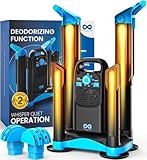


Quick Picks
| Product | Best for | Price |
|---|---|---|
| DryGuy 4-Port Heat + Fan | Large families or shared gear rooms | $73.40 |
| DryGuy Travel Dry DX | Minimalist packers and hotel use | $38.38 |
| XCMAN Portable | Travelers needing 12V car compatibility | $46.99 |
| SOTHING Extendable Hose | Tall boots and adjustable timing | $49.99 |
| DryGuy 2-Port Heat + Fan | Couples or solo skiers on a budget | $40.20 |
| Upgraded Ozone Deodorizer | Persistent odor and multi-gear drying | $119.99 |
| POPCHOSE 4-Head Ozone | Gyms, gear lockers, and odor control | $79.99 |
| Snowpea Portable | Compact travel and glove drying | $35.00 |
How We Picked
We narrowed this category by weighing four criteria: whether the unit produces enough airflow and heat to dry dense ski boot liners rather than just surface-warm them, whether the physical hose or nozzle geometry fits a boot’s narrow shaft without adapters, how well the product handles odor at the source rather than masking it, and whether published specs and verified owner reports align on durability. Units that dry sneakers adequately but underperform on ski liners were filtered out regardless of price.
The 8 Best Ski Boot Dryers in 2026
DryGuy 4-Port Heat + Fan
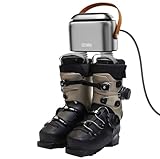
This is the workhorse for households with multiple pair of boots or a gear room at a second home. The four-port design handles two pairs simultaneously with both heat and a dedicated fan, cutting dry time to one or three hours depending on saturation. Owners consistently praise the energy-efficient motor and the fact that it runs quietly enough for a garage or mudroom without becoming a nuisance. The odor-eliminating design works through sustained airflow rather than chemicals.
- Pro: Dries two full pairs in one cycle with heat plus fan for faster turnaround.
- Pro: Low noise level makes it suitable for indoor or shared living spaces.
- Con: Bulkier footprint than travel-focused units; not ideal for a small apartment.
Skip this if you only dry one pair occasionally and have limited storage space.
DryGuy Travel Dry DX
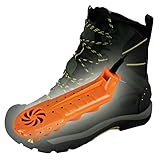
Designed for skiers who pack light, the Travel Dry DX collapses into a compact form that slips into a duffel without adding noticeable weight. Owners report it handles ski boot liners adequately over a longer cycle, though the smaller motor means you are trading speed for portability. The orange and black housing is durable enough for repeated packing, and the price makes it a low-risk entry point. No fan component means slightly slower evaporation than heat-and-fan siblings.
- Pro: Extremely compact and light; disappears into luggage.
- Pro: Budget-friendly at just over $38.
- Con: Longer drying times without active fan assistance.
Skip this if you need boots dry within a few hours or have thicker liner materials.
XCMAN Portable
The XCMAN targets the niche where travel and versatility collide: it ships with an integrated fan and heater, runs on both 12V DC and AC power, and handles ski boot liners, work boots, rain boots, and tennis shoes. The ultra-silent rating is a real differentiator for hotel rooms or shared cabins. Owners note the 12V adapter is useful for road trips between resorts. Build quality is solid but the hose material feels less rigid than premium options.
- Pro: Dual power input makes it usable in cars and outlets alike.
- Pro: Near-silent operation suits overnight use in tight quarters.
- Con: Hose flexibility can make it awkward to position inside narrow ski boots.
Skip this if you primarily dry at home and never need vehicle power.
SOTHING Extendable Hose
With 11.8-inch extendable hoses, three heat levels, and a 1-to-9-hour timer, the SOTHING gives users granular control over the drying process. That hose length accommodates tall backcountry boots and high-top work boots without stretching the unit beyond its geometry. The timer prevents overnight waste if you fall asleep before boots are fully dry. Owners report it runs warm and effective, though the three heat settings mean you need to dial in the right level for sensitive liner materials.
- Pro: Timer and adjustable heat provide precise cycle control.
- Pro: Long hoses fit tall boots without forcing or kinking.
- Con: Slightly louder than fan-free competitors at higher heat settings.
Skip this if you want set-and-forget simplicity without fiddling with timer settings.
DryGuy 2-Port Heat + Fan
This is essentially the smaller sibling of the four-port model, delivering the same heat-plus-fan drying technology in a two-port footprint at roughly half the price. For couples or solo skiers with one pair of boots and one pair of gloves to rotate, it dries effectively within the 1-to-3-hour window. The odor-eliminating design and energy-efficient motor carry over from the larger unit. Owners confirm it handles standard alpine ski boots without issue.
- Pro: Same proven DryGuy drying technology at a lower entry cost.
- Pro: Compact enough for a closet shelf or apartment corner.
- Con: Limited to one pair per cycle; slower for busy households.
Skip this if you regularly need to dry more than two items simultaneously.
Upgraded Boot Dryer with Ozone Deodorizer
Priced at the top of this roundup, the Upgraded model earns its premium through an integrated ozone deodorizer that attacks bacteria at the source rather than simply evaporating moisture. The adjustable tube design accommodates boots, sneakers, and gloves simultaneously, and the two-pair capacity means it handles a family rotation. Owners praise the compact footprint relative to its four-tube output. Ozone cycles require ventilation awareness, which adds a minor operational step.
- Pro: Ozone deodorizing addresses odor chemically, not just airflow-based.
- Pro: Handles two pairs plus accessories in a compact unit.
- Con: Highest price in this comparison at $119.99.
Skip this if your boots rarely develop persistent odor and you want a straightforward dryer.
POPCHOSE 4-Head with Ozone
The POPCHOSE sits between the DryGuy workhorse and the premium ozone unit in both price and capability. Four heads handle two pairs of boots or a mixed load of ski gear, and the ozone deodorizer provides a sanitizing option for gym bags or shared family equipment. Owners report it works well in locker rooms and entryways where odor accumulates. The design is functional rather than sleek, with a utilitarian look that suits a garage.
- Pro: Four heads plus ozone at mid-range pricing.
- Pro: Handles diverse gear types without switching between units.
- Con: Bulkier and less travel-friendly than compact alternatives.
Skip this if portability matters more than multi-gear capacity.
Snowpea Portable
At the lowest price point, the Snowpea is a straightforward forced-air dryer rated to 140 degrees Fahrenheit, aimed squarely at travelers who want something small enough for carry-on luggage. It handles boots and gloves adequately for occasional trips. Owners note it is louder than premium units and lacks advanced features, but for the asking price it solves the immediate problem of damp gear in a hotel room. No timer or heat-level adjustment means you monitor it manually.
- Pro: Lowest price in the roundup; genuine travel size.
- Pro: Forced-air design dries faster than passive heat-only units at similar cost.
- Con: No timer or adjustable heat; requires manual shut-off.
Skip this if you need automated cycles or want to dry thick ski boot liners quickly.
Buying Guide
Airflow vs. Heat: Which Matters More
Heat accelerates evaporation, but airflow is what carries moisture away from the liner. A unit with both, like the DryGuy models, will dry thick ski boot liners noticeably faster than a heat-only device. If your boots are moderately damp, heat alone can suffice overnight. For saturated liners after a full day in slush, prioritize forced-air designs with at least a 120-degree output.
Hose Diameter and Boot Compatibility
Ski boot shafts are narrow and angled, unlike the wide openings of rain boots or sneakers. Hose diameter under 1.5 inches can struggle to fit into alpine or touring boot liners without bending or kinking. Extendable or flexible hose designs, like the SOTHING’s, solve this. Check whether the product listing specifies boot compatibility, not just shoe compatibility, before purchasing.
Odor Control: Ozone vs. Airflow Only
Standard drying removes moisture, which indirectly reduces bacterial growth. Ozone-equipped units add a chemical sanitizing step that kills odor-causing organisms directly. If you ski daily during a trip or share gear among family members, ozone cycles are worth the premium. For occasional weekend use with well-maintained liners, consistent airflow alone will keep odor manageable.
Our Verdict
Our top pick is the DryGuy 4-Port Heat + Fan at $73.40. It balances proven drying speed, quiet operation, multi-pair capacity, and reasonable energy use in a single unit that handles ski liners without complaint. The budget pick goes to the DryGuy 2-Port Heat + Fan at $40.20, which delivers the same technology for one pair at half the footprint and price. If persistent odor is your primary frustration, the Upgraded Ozone Deodorizer wins despite the higher cost, because airflow alone cannot eliminate bacterial smell at the source.
FAQ
Will a ski boot dryer damage my boots?
Units rated above 140 degrees Fahrenheit sustained over many cycles can soften adhesives in boot construction. Stick to models with temperature controls or heat levels at or below that threshold, and avoid running them overnight on high settings unless the product explicitly supports it.
Can I dry ski boot liners separately from the shells?
Yes, and many owners do this to speed up drying significantly since liners hold the most moisture. Most dryers in this roundup include both long and short nozzles or hoses, allowing you to target the liner directly without forcing it into the rigid shell.
Do ozone boot dryers need special ventilation?
Ozone is an irritant at elevated concentrations, so most manufacturers recommend running ozone cycles in a ventilated room or garage rather than a sealed bedroom. Standard airflow-only drying cycles do not require this precaution.
How long should I expect drying to take for ski boots?
With heat and fan combined, expect one to three hours for moderately damp liners. Heat-only or compact travel units may require six to nine hours, especially if you leave boots on for overnight cycles without active airflow assistance.