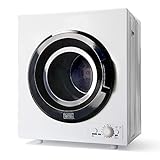
Key takeaways
- Generous 7.0 cu. ft. capacity for a front-load footprint
- Low reported noise during normal and high-heat cycles
- Premium pricing above functionally similar competitors
A gas dryer earns its place in a laundry room by doing one thing consistently: pulling moisture out of a full load fast enough that the cycle ends before you have moved on with your evening. That sounds simple, but the gap between a machine that finishes a king-size sheet set in under an hour and one that leaves the center damp after two cycles comes down to airflow design, drum capacity, and how well the unit manages heat at the exhaust. Front-load and top-load options each bring trade-offs, and the venting requirements that look identical on a spec sheet can translate into very different installation headaches once you are on your hands and knees behind a cabinet.
This roundup narrows the field to the dryers and essential gas-line accessories that owners in the 2026 market keep recommending. The two Kenmore units at the top share a chassis but differ sharply in retail price, while the GE models add longer venting tolerance and reversible doors. Below the dryers sit four flex gas-line kits, each with a different combination of length, fitting size, and price. We compared published specs, current listed prices, and recurring themes in owner feedback to sort signal from noise.
As an Amazon Associate we earn from qualifying purchases at no extra cost to you. Product prices and availability are accurate as of the date shown and are subject to change.



![Puxyblue [2026 NEW] 48" Flexible Gas Line Kit for Dryer Stove Range Flexible Stainless Steel Gas Dryer Kit - 5/8" OD(1/2" ID) Dryer Gas Line with Connector 3/4" FIP & 1/2" MIP & 3/4" MIP Fitting](https://m.media-amazon.com/images/I/51fMihuuAvL._SL160_.jpg)


Quick Picks
| Product | Best for | Price |
|---|---|---|
| Kenmore 7.0 cu. ft. Front Load (White) | Feature-rich front-load at standard retail | $1060.54 |
| Kenmore 7.0 cu. ft. Front Load (White) | Same drum, lower street price | $899.99 |
| GE 7.2 cu. ft. Gas Dryer | Long vent runs and reversible door flexibility | $678.99 |
| GE GTD48GASWWB 7.2 cu. ft. | Extended tumble cycle, budget top-load | $699.99 |
| 48″ Flex Gas Line Connector Kit | Replacing a damaged or undersized existing line | $23.74 |
| Puxyblue 48″ Flexible Gas Line Kit | New installs needing multiple fitting sizes | $24.99 |
| KAINGA 72″ Gas Line Hose | Extra reach where the gas stub sits far from the dryer | $22.99 |
| TTFLEX 36″ Gas Flex Line | Compact spaces and tight clearances | $28.99 |
How We Picked
For dryers, we weighed drum capacity against cycle time claims, checked venting compatibility, and flagged whether the door could be reversed for awkward laundry-room layouts. For the gas-line kits, fitting thread sizes and total length were the decisive specs because an incompatible connector turns a thirty-minute swap into a plumbing call. Owner feedback confirmed which units lived up to their published numbers and which generated recurring complaints about noise, uneven drying, or leaking fittings.
The 8 Best Home Gas Dryers in 2026
Kenmore 7.0 cu. ft. Front Load Gas Dryer – White ($1060.54)
This is the premium listing of the two identical Kenmore front-loaders, aimed at shoppers who want the brand’s sensor-dry cycle and steam-refresh option without hunting for a deal. The 7.0 cubic foot drum handles a full family load in a single pass, and the front-access door suits stacked setups or rooms where overhead clearance is tight. Owners praise the quiet motor mount and the even heat distribution across thick items like hoodies and towels. The main drawback is price: at this street level you are paying more than the GE top-loaders for a comparable capacity, and the sensor system occasionally needs recalibration after heavy lint buildup.
- Generous 7.0 cu. ft. capacity for a front-load footprint
- Low reported noise during normal and high-heat cycles
- Premium pricing above functionally similar competitors
Skip this listing if the lower-priced identical unit below is in stock; you are buying the same dryer for an extra $160.
Kenmore 7.0 cu. ft. Front Load Gas Dryer – White ($899.99)
Same drum, same cycles, same front-load chassis as the unit above, but closer to a fair-market street price. This is the pick for anyone who wants a Kenmore front-load without the markup and is willing to shop around for the better listing. Capacity and cycle programming match the premium version exactly, so owners report identical drying performance. The one caveat that applies to both: front-load dryers demand a level floor, and the unit’s weight makes repositioning a two-person job once it is plumbed in.
- Identical performance to the higher-priced listing
- Sensor-dry and steam options included at a more reasonable cost
- Heavy chassis complicates placement on upper floors or uneven subfloors
Choose this over the $1060 listing whenever both are available; there is no functional difference.
GE 7.2 cu. ft. Gas Dryer with Up to 120 ft. Venting and Reversible Door ($678.99)
The standout here is the 120-foot venting tolerance, which solves a very specific problem: laundry rooms buried in the center of a house where the exhaust duct must snake through framing, around corners, and up a floor before exiting. Owners with these layouts report that other dryers overheat or trip their high-limit thermostat on long runs; this GE keeps airflow steady. The reversible door is a welcome touch for rooms where the hinge swings into a sink or stairwell. At $678.99 it is the cheapest large-capacity dryer on this list.
- Handles long vent runs up to 120 ft without performance loss
- Door swings either direction for tight layouts
- Basic control panel lacks the cycle variety of front-load siblings
Skip it if your vent path is under twenty feet and you prefer sensor-dry programming.
GE GTD48GASWWB 7.2 cu. ft. Gas Dryer with Extended Tumble – White ($699.99)
Almost identical to the GE above at $699.99, this model swaps the focus toward the extended tumble feature, which keeps the drum rotating at low heat after the cycle ends to prevent wrinkles from setting in. It is a practical upgrade for households that leave loads sitting after the buzzer. The 7.2 cubic foot drum and reversible door carry over unchanged. Owners note the added cycle length is genuinely useful for cottons and dress shirts, though the feature is a no-op if you hang clothes promptly.
- Extended tumble reduces ironing time on permanent-press loads
- Same 120-foot venting capability as the sibling model
- Slightly higher price than the non-extended-tumble version for a single feature
Skip this if you are diligent about unloading promptly; the $21 savings on the sibling model is better spent on a gas-line kit.
48″ Flex Gas Line Connector Kit ($23.74)
A coated corrugated stainless-steel line at 48 inches with a versatile set of 1/2-inch and 3/4-inch male and female iron pipe fittings plus a 15/16-16 UN nut. This is the replacement part most often needed when a rental unit’s original connector is corroded or the wrong size. Owners appreciate that the kit covers several common stub configurations in one package, eliminating the trip back to the hardware store. The coating resists surface rust in damp laundry rooms.
- Multiple fitting sizes included for broad compatibility
- Corrosion-resistant coating suits humid or unfinished spaces
- Not available in other lengths if 48 inches does not reach
Skip it if your existing line is in good condition and the correct length; there is no reason to upgrade for the sake of it.
Puxyblue 48″ Flexible Gas Line Kit ($24.99)
Marketed as a 2026 new kit, it mirrors the 48-inch corrugated stainless design with 3/4-inch FIP, 1/2-inch MIP, and 3/4-inch MIP fittings. The price sits two dollars above the competitor above and two dollars below the KAINGA. Owners report a clean factory seal on the connectors, which matters because a poorly crimped fitting is the single most common cause of a detectable gas smell after installation.
- Factory-sealed connectors reduce leak risk at install
- Three fitting configurations handle most residential stub sizes
- Brand has a shorter track record than established plumbing suppliers
Skip it if you already own a line kit that fits; this is a replacement or backup, not an upgrade to an existing working connector.
KAINGA 72″ Gas Line Hose ($22.99)
The 72-inch length is the reason this kit earns a spot: in many older homes the gas stub emerges from the wall a full six feet or more from where the dryer’s inlet actually sits once the unit is pushed back against the wall. At $22.99 it is the cheapest line on this list. The 1/2-inch OD corrugated stainless body with matching 1/2-inch FIP and MIP fittings is straightforward. Owners with alcove laundry setups consistently call the extra reach a must-have.
- Longest option here at 72 inches, solving awkward stub positions
- Lowest price among all four connector kits
- Single fitting size means you may still need an adapter
Skip it if the stub is close to the dryer; a shorter line reduces the chance of kinks behind the unit.
TTFLEX 36″ Gas Flex Line ($28.99)
At 36 inches with a 1-inch outer diameter and 3/4-inch FIP/MIP fittings, this is the shortest and thickest option in the group. The larger bore suits dryers whose internal gas valve draws a higher flow rate, and the compact length is ideal for apartments where the unit sits flush against a wall with only a few inches of gap. It carries the highest price of the four kits, which owners attribute to the thicker wall tubing and robust fittings.
- Larger 1-inch OD supports higher gas flow without pressure drop
- Compact 36-inch length fits shallow recesses and tight corners
- Priced above every other connector kit despite the shortest length
Skip it unless your manufacturer specifically calls for a 3/4-inch fitting or your installation geometry demands a short, stiff line.
Buying Guide
Drum Size and Venting Compatibility
Seven cubic feet is the practical minimum for a household that does laundry twice a week without splitting loads. Anything below that forces you to run extra cycles, which adds gas cost and wear. Pair drum size with your vent path: a 120-foot-rated dryer is irrelevant in a single-story home with a two-foot wall penetration, but critical in a colonial with a duct that runs through joists, bends twice, and exits a roof vent. Measure your run with a tape and string before shopping, and match it to the manufacturer’s maximum-length spec printed on the rating plate.
Gas-Line Fitting Thread Sizes
Most residential dryer inlets use either a 1/2-inch NPT or a 3/4-inch NPT thread. The matching flex line must have the opposite gender on each end: a female iron pipe fitting goes onto the dryer, a male iron pipe fitting onto the wall stub. Buying a kit with only one thread size risks a return trip if your stub is non-standard. Kits that bundle multiple fitting adapters cover more scenarios for a few dollars extra and save an installer visit.
Front-Load Versus Top-Load for Gas Dryers
Front-load gas dryers typically pack a slightly larger effective drum into the same footprint and often include moisture sensors that cut the cycle short. Top-loaders are easier to service because the lint path is accessible from above, and the rear exhaust outlet keeps the vent hose straight behind the unit. If your laundry room has a doorway less than thirty inches wide, the front-load’s deeper cabinet may not clear the frame. Check clearance before committing to a form factor.
Our Verdict
The top pick is the GE 7.2 cu. ft. Gas Dryer at $678.99. It delivers the largest capacity on this list at the lowest price for a dryer, and the 120-foot venting tolerance covers layouts that would defeat competing units. For a budget pick, the Kenmore 7.0 cu. ft. Front Load at $899.99 wins if you specifically want a front-load with sensor cycles and can find the lower-priced listing of the identical unit. The condition under which another product takes priority: if your existing dryer runs well and you only need a new gas connector, the KAINGA 72-inch hose at $22.99 solves the installation reach problem for less than a tank of gas.
FAQ
Can I swap a gas dryer for an electric one without rewiring?
You need to cap the gas line and install a dedicated 240-volt circuit with the correct breaker, so it is a two-trade job rather than a simple swap. Most owners find it cheaper to keep a working gas dryer than to pay for both an electrician and a new appliance.
How often should I replace my dryer gas flex line?
Manufacturers recommend inspecting it during annual vent cleaning and replacing any connector showing surface rust, a cracked coating, or a stiff section near the fittings. A four-to-six-year replacement interval is a common guideline even when the line looks acceptable.
Does a longer vent run increase gas consumption?
Yes, because restricted airflow forces the dryer to run longer to evaporate the same moisture, and the burner cycles on more frequently. A unit rated for 120 feet mitigates this by maintaining higher static pressure at the blower, but every ten feet of extra ductwork still adds measurable run time.
Are the two Kenmore listings actually different dryers?
No. They share the same model number, capacity, color, and feature set; the $160 price gap reflects different retail channels or timing rather than any specification difference. Verify the model number on the rating plate before purchasing to confirm you are getting the identical unit at the lower price.