Key takeaways
- Pro: RTX 5060 with a 165Hz/3ms display makes the frame-rate investment visible.
- Pro: 16GB DDR5 and 1TB Gen 4 SSD give breathing room for multiple large titles.
- Con: At $1583, it sits close to the Lenovo Legion LOQ’s territory while offering only a modest GPU step up.
The market for game laptops has never been more confusing. You see 165Hz panels on machines with integrated graphics, 8GB of RAM in boxes that claim to handle AAA titles, and prices that vary wildly for hardware that looks nearly identical on paper. The real question is never whether a laptop has “Gaming” printed on the lid—it is whether the GPU, display, and cooling system can sustain playable frame rates without turning the keyboard into a hand-warmer.
This roundup compares published specs, list prices, and aggregated owner feedback for eight machines that either deliver genuine gaming performance or fail to earn the label. We focused on what separates worthwhile game laptops from thin-and-light imposters: discrete GPU power, refresh rate, memory headroom, and thermal design. Where a product lacks a dedicated GPU or falls short on a critical spec, we say so plainly.
As an Amazon Associate we earn from qualifying purchases at no extra cost to you. Product prices and availability are accurate as of the date shown and are subject to change.



Quick Picks
| Product | Best For | Price |
|---|---|---|
| ASUS ROG Strix G16 | Balanced 1080p/1200p gaming | $1583 |
| Acer Predator Helios Neo 18 AI | High-end 1440p gaming | $2199.99 |
| Light Gaming Laptop Ryzen 5 7430U | Indie and esports on a budget | $969.98 |
| Lenovo Legion LOQ | Value mid-tier gaming | $1524.99 |
| 17.3″ Intel Quad-Core Laptop | Everyday computing, not gaming | $439.29 |
| GIGABYTE Gaming A16 | AMD platform at RTX 5060 tier | $1249.99 |
| Light Gaming Laptop Ryzen 7 5700U | Ultra-budget light titles | $559.99 |
| 15.6″ Celeron N4000 Laptop | Basic web and media only | $239.99 |
How We Picked
For game laptops, four criteria decide whether a machine earns its price tag. First, the GPU tier: a dedicated RTX 50-series card separates real gaming from integrated-graphics compromises. Second, display refresh rate paired with resolution—a 144Hz panel at FHD+ is far more useful than 240Hz at 1080p when the GPU cannot push those frames. Third, memory and storage headroom: 16GB DDR5 and a 1TB Gen 4 SSD represent the current floor for comfortable multi-year ownership. Fourth, build and thermal design that prevents aggressive fan noise from making sustained play miserable.
The 8 Best Game Laptops in 2026
ASUS ROG Strix G16
A solid all-rounder for players who want current-gen discrete graphics without crossing into premium pricing. The RTX 5060 handles modern AAA titles at high settings on the 16-inch FHD+ 165Hz panel, and the i7-14650HX provides enough CPU headroom to avoid bottlenecks in demanding open-world games. Owner feedback consistently praises the keyboard quality and Wi-Fi 7 connectivity.
- Pro: RTX 5060 with a 165Hz/3ms display makes the frame-rate investment visible.
- Pro: 16GB DDR5 and 1TB Gen 4 SSD give breathing room for multiple large titles.
- Con: At $1583, it sits close to the Lenovo Legion LOQ’s territory while offering only a modest GPU step up.
Skip it if you want the largest possible screen or plan to push settings beyond what RTX 5060 can sustain at 1440p.
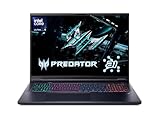
Acer Predator Helios Neo 18 AI
The premium option here. The RTX 5070 Ti paired with the Core Ultra 9 275HX targets 1440p gaming at high frame rates, and the 18-inch WQXGA 240Hz G-SYNC panel is genuinely large and fast. 32GB DDR5 and 2TB of Gen 4 storage mean this machine will not feel constrained for years. Owner reviews highlight the expansive screen and strong sustained performance.
- Pro: Top-tier GPU and CPU combination in this list; handles 1440p AAA titles comfortably.
- Pro: 32GB RAM and 2TB storage provide future-proof capacity.
- Con: At $2199.99, the price is nearly double the entry-level RTX 5060 options, and the 18-inch chassis makes portability difficult.
Skip it if your budget is under $1600 or you need a laptop you can carry daily.
Light Gaming Laptop Ryzen 5 7430U
Despite the “Light Gaming” label, this machine has no dedicated GPU. The Ryzen 7430U handles its integrated Vega graphics adequately for indie titles, older esports games, and light creative work. Owners report it stays quiet and cool, which appeals to those who play turn-based or strategy games rather than fast shooters. It occupies a niche: functional but not a true game laptop.
- Pro: Integrated graphics run cool and quiet for casual gaming sessions.
- Pro: At $969.98, it undercuts every dedicated-GPU entry by a wide margin.
- Con: No discrete GPU means AAA titles and modern shooters are out of reach.
Skip it if you want to play graphically demanding titles at playable frame rates.
Lenovo Legion LOQ
Lenovo’s value play in the mid-tier. The RTX 5050 is one step below the ASUS and GIGABYTE options, but at $1524.99 the pricing is competitive and the 15.6-inch FHD IPS 144Hz G-Sync display is a good match for what the GPU can deliver. The i7-13650HX is previous-generation but still handles modern game workloads. Owner feedback notes a well-built chassis and comfortable keyboard.
- Pro: G-Sync at 144Hz eliminates tearing without demanding a 240Hz panel the GPU cannot fill.
- Pro: 16GB memory and 1TB storage match the current practical floor.
- Con: The RTX 5050 is the weakest discrete GPU in this roundup, limiting settings in demanding titles.
Skip it if you want headroom for 1440p or ultra settings at high frame rates.
17.3-Inch Intel Quad-Core Laptop
This product carries no dedicated GPU, no high-refresh display specification, and an unnamed Intel quad-core processor. Its 6000 mAh battery and 17.3-inch screen make it a passable media consumption and productivity machine. It does not belong in a comparison of game laptops, and we include it here only to clarify that screen size alone does not equal gaming capability. At $439.29 it is a budget notebook, not a gaming one.
- Pro: Large 17.3-inch display and solid battery capacity for general use.
- Pro: Very low price for casual web browsing and video.
- Con: No dedicated GPU, unspecified RAM and storage details, and no gaming-relevant display specifications.
Skip it if gaming is your primary reason for shopping. Choose a different category.
GIGABYTE Gaming A16
GIGABYTE pairs the same RTX 5060 GPU as the ASUS ROG Strix G16 with an AMD Ryzen 7 260 processor at $1249.99—a full $333 less. The 165Hz WUXGA display matches the ASUS panel closely, and 16GB DDR5 with a 1TB SSD covers the same storage needs. Owner feedback points to adequate cooling but notes GIGABYTE’s service network is thinner than Lenovo’s or ASUS’s.
- Pro: RTX 5060 performance at a significantly lower price than comparable ASUS models.
- Pro: AMD platform offers strong multi-core value in this price band.
- Con: Brand support and driver experience trail the larger OEMs.
Skip it if you want the most polished software ecosystem or worry about after-sale service availability.
Light Gaming Laptop Ryzen 7 5700U
At $559.99 this is the cheapest machine in the roundup with a full Ryzen 7 processor, but like its sibling above, it has no discrete GPU. The integrated Vega 8 graphics handle light indie games, visual novels, and older titles at modest settings. The 16GB RAM is a genuine plus at this price, and the 5700U clocks up to 4.3GHz. Owner reviews call it a capable daily driver that was never meant to be a gaming laptop.
- Pro: Excellent price-to-RAM ratio for a budget purchase.
- Pro: Quiet operation and low power draw suit travel and shared spaces.
- Con: Integrated graphics cannot run modern AAA games or competitive titles at competitive frame rates.
Skip it if your goal is anything beyond casual or retro gaming.
15.6-Inch Celeron N4000 Laptop
A Celeron N4000 with 8GB LPDDR4 and a 256GB SSD does not qualify as a game laptop under any definition. Listed at $239.99, it is a web-browsing and document-editing machine that happens to have a 15.6-inch IPS FHD display. The “2025 Gaming Laptop” marketing text is misleading. Owner feedback confirms basic responsiveness for light tasks but warns against any expectation of performance beyond the browser.
- Pro: The lowest absolute cost in this comparison for a screen of this size.
- Pro: 180-degree hinge adds flexibility for shared viewing.
- Con: Celeron processor and integrated graphics cannot run any modern game at playable settings.
Skip it entirely if gaming factors into your purchase decision at all.
Buying Guide
GPU Tier: The Single Biggest Divider
When comparing game laptops, the discrete GPU is the spec that matters most. In this 2026 lineup, RTX 5050 through RTX 5070 Ti represent the meaningful range. A laptop without a dedicated GPU—regardless of how many CPU cores or gigabytes of RAM it lists—will not sustain 60+ frames in any current AAA release. If your budget cannot stretch to at least an RTX 5050, lower your expectations to indie and esports titles rather than buying a machine that cannot deliver what you hope for.
Display Refresh Rate and Resolution Must Match the GPU
A 240Hz panel is wasted if the GPU only pushes 80 frames in your target game. The sweet spot at the mid tier is 144–165Hz at FHD+ or WUXGA. The Acer Predator Helios Neo 18 justifies its 240Hz WQXGA panel because the RTX 5070 Ti can realistically fill those frames at 1440p. When evaluating any laptop, confirm the GPU is strong enough for the panel’s native resolution before you let refresh rate numbers impress you.
RAM, Storage, and Upgradeability
16GB DDR5 and a 1TB Gen 4 SSD have become the practical minimum for game laptops, since modern titles routinely exceed 100GB per install. The two budget options with 512GB SSDs will force you to manage library size aggressively. Check whether RAM and storage slots are user-accessible before buying; a machine with soldered 16GB is less adaptable long-term than one with a free slot, even at the same price.
Our Verdict
Top pick: The GIGABYTE Gaming A16 delivers RTX 5060 performance at $1249.99, making it the strongest value in dedicated-GPU game laptops under $1300. Budget pick: The Light Gaming Laptop with Ryzen 7 5700U at $559.99 suits players whose library is indie and retro, provided they accept the integrated-graphics ceiling. Condition where another product wins: If you need a large, high-refresh 1440p panel for competitive titles, the Acer Predator Helios Neo 18 is the only machine here that matches that screen to a GPU capable of driving it.
FAQ
Is 16GB RAM enough for game laptops going forward?
Yes, for the near term. Current AAA titles run comfortably within 16GB when background applications are managed. The Acer Predator Helios Neo 18 ships with 32GB, which provides extra headroom for heavy multitasking or future titles, but 16GB DDR5 is not yet a bottleneck.
Do I need a dedicated GPU if I only play esports titles?
Not strictly. Games like League of Legends, Valorant, and Dota 2 run on integrated graphics at moderate settings. However, a dedicated RTX 5050 or better lets you sustain higher frame rates that match a 144Hz panel, which is the practical reason gamers upgrade to discrete GPUs.
Why are some laptops marketed as “gaming” but lack a discrete GPU?
Marketing labels do not equal hardware certification. Several machines in this list carry gaming-branded names but include only integrated graphics. Always verify the GPU model in the spec sheet rather than relying on the product title or description keywords.
Is a 165Hz panel noticeably better than 144Hz for gaming?
The difference between 144Hz and 165Hz is small in practice; you will feel the improvement over 60Hz most strongly. Both benefit competitive shooters, but the jump to 240Hz only makes sense if your GPU can consistently deliver frames above 165 in your chosen titles.