Key takeaways
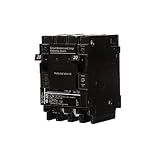
- Breaker-style Type 2 SPD: Snaps into two spare 15A or 20A slots like a 240V breaker. Cleanest install, shortest wire leads. Requires two adjacent free spaces in a modern 100A to 200A panel. Best for Siemens, Eaton, Square D QO / Homeline panels when you buy the matching brand unit.
- External-mount Type 2 SPD: Small grey box wired through a knockout to a dedicated 20A double-pole breaker. Works when your panel is full or is an older brand. Units like the Square D HEPD80 or Eaton CHSPT2 series use this style and can mount on most panels.
- Type 1 SPD: Wires in before the main breaker, usually at the meter or service entrance. Needed if you have no spare breaker spaces at all or want utility-side protection. Almost always requires utility coordination and an electrician, not DIY.
Yes, a whole home surge protector is worth it for most single-family homes with modern electronics, especially if you work from home, run a home theater or smart home gear, or live in an area with frequent storms or unstable grid power. It will not make your home lightning-proof and it does not replace a UPS or plug-in strip for your PC, but for roughly the price of replacing one motherboard or refrigerator control board, it adds a critical first layer of defense at your electrical panel.
As an Amazon Associate we earn from qualifying purchases at no extra cost to you.



What whole home surge protection actually does
A whole home surge protector, properly called a Type 1 or Type 2 Surge Protective Device (SPD), mounts at or next to your main breaker panel and diverts high-voltage transients to ground before they spread through your branch circuits. Whole home surge protection is worth it as a whole-house filter, not a force field.
It is designed to handle externally generated surges from grid switching, transformer issues, downed lines, and nearby lightning, plus large internally generated surges when your AC compressor, well pump, or dryer cycles on and off. What it does well is clamp that 2,000 to 6,000-volt spike down to 600-900 volts before it reaches your outlets.
What it cannot do is clamp down to the 130-330 volts that sensitive PC power supplies, OLED TVs, and gaming consoles want to see. That final step is why point-of-use protection is still required. Think of it as two stages: the panel unit takes the big hit, the strip or UPS at your desk cleans up the remainder.
Installation cost in 2026: the real math
For gizmopc.com readers, the question home surge protector worth it usually comes down to cost versus one dead PC. Here is the typical market range for a licensed electrician install in the U.S. in 2026:
| Cost item | Typical range | Notes |
|---|---|---|
| SPD unit (Type 2, 80-140kA) | $90 – $350 | Siemens BoltShield, Eaton Ultra, Square D HEPD, Leviton 51120 series are common types |
| Electrician labor (1-2 hours) | $250 – $600 | Higher in high-cost metros, if panel is crowded or subpanel work needed |
| Permit / service fee | $0 – $150 | Some jurisdictions require permit for panel work |
| Total installed | $350 – $950 | Most straightforward installs land around $450 – $650 |
Compare that to common out-of-warranty replacements: $180 to $400 for a quality ATX power supply plus diagnostic time, $400 to $900 for a refrigerator main control board and labor, $600 to $1,500 for an HVAC control board or variable-speed drive, $1,000+ for an OLED TV panel. If the SPD diverts even one moderate surge over its 5 to 10-year life, it pays for itself.
A simple way to calculate it: $550 installed / 7 years expected life = about $79 per year, or about $6.55 per month to protect every circuit in the house. A single good plug-in protector for a gaming PC setup alone costs $45 to $90 and protects only that one outlet.
Panel compatibility: will it fit your house?
Most whole-home SPDs are brand-agnostic, but installation method matters:
- Breaker-style Type 2 SPD: Snaps into two spare 15A or 20A slots like a 240V breaker. Cleanest install, shortest wire leads. Requires two adjacent free spaces in a modern 100A to 200A panel. Best for Siemens, Eaton, Square D QO / Homeline panels when you buy the matching brand unit.
- External-mount Type 2 SPD: Small grey box wired through a knockout to a dedicated 20A double-pole breaker. Works when your panel is full or is an older brand. Units like the Square D HEPD80 or Eaton CHSPT2 series use this style and can mount on most panels.
- Type 1 SPD: Wires in before the main breaker, usually at the meter or service entrance. Needed if you have no spare breaker spaces at all or want utility-side protection. Almost always requires utility coordination and an electrician, not DIY.
You will need a 200A or 100A single-phase 120/240V panel with a proper ground. Homes with ungrounded two-wire wiring, a corroded ground rod, Federal Pacific / Zinsco / pushmatic panels, or a crowded subpanel fed from a detached garage should have the panel evaluated first. An SPD cannot shunt surge current if there is no low-impedance ground path.
Renters, condo owners, and anyone with a locked meter room usually cannot install one. In that case, skip to high-quality Type 3 point-of-use protection and a UPS for PCs.
Protection limits by the numbers
Product listings emphasize one big number – kA – but three specs actually matter:
| Spec | Entry 40-50kA unit | Mid-range 80-108kA unit | Heavy-duty 120-140kA unit |
|---|---|---|---|
| Surge current per phase | 40,000 – 50,000 amps | 80,000 – 108,000 amps | 120,000 – 140,000 amps |
| Voltage Protection Rating (VPR, L-N) | 700 – 900V | 600 – 800V | 600 – 700V |
| Short-circuit current rating | 10,000 – 22,000 amps | 22,000 – 200,000 amps | 22,000 – 200,000 amps |
| Typical clamping response | less than 1 nanosecond | less than 1 nanosecond | less than 1 nanosecond |
| Best for | Apartments, small homes, low-lightning areas | Most 2,000 sq ft homes with PCs and appliances | Rural, well-pump, frequent outage areas |
For most PCs, the sweet spot is 80kA to 108kA per phase with a VPR of 700V or lower. Going from 80kA to 140kA does not double real-world protection – it mainly adds lifespan because the larger metal-oxide varistors (MOVs) absorb repeated small surges with less degradation.
No panel SPD protects against a direct lightning strike to your house. A direct strike is 20,000 to 200,000 amps at millions of volts. The SPD will sacrifice itself and may still let damaging energy through. It also does not protect against sustained overvoltage, like a lost neutral delivering 180V for hours, or against brownouts. That is UPS territory.
Why you still need strips and UPS for computers
A panel unit leaves 500 to 800 volts on the wire. Modern ATX 3.0 power supplies and laptop adapters can ride through brief spikes to around 400 volts, but repeated 600-volt hits degrade input capacitors, NVMe controllers, and motherboard VRMs over time.
Layering solves this:
- Panel SPD (Type 1 or 2): Takes 80-90% of the surge energy. Protects appliances, HVAC, washer/dryer boards, LED drivers, smart switches.
- Plug-in SPD strip (Type 3) with 1,000-2,500 joules and 330-400V VPR: Needed at PC, OLED TV, AV receiver, 3D printer, NAS. Keep cord length under 10 feet for best clamping.
- Line-interactive or online UPS with AVR: Needed for desktop PCs, NAS with spinning drives, home servers, and fiber ONT / router. Only a UPS bridges sags, brownouts, and 2-10 second outages that SPDs ignore.
Do not daisy-chain cheap power strips behind a UPS, and do not use a $12 strip with no UL 1449 listing and no thermal fuse. After a big event, check both layers: if the green Protected LED is out on the panel unit or plug-in strip, that MOV section is dead and protection is gone even though power still passes through.
When is it worth it – and when is it not?
Worth it now if you match this profile
- You own a home with a modern grounded 100A-200A panel and two free breaker spaces.
- You have $2,000+ in vulnerable gear: gaming PC, NAS, OLED TV, smart appliances, mini-split HVAC.
- You get frequent thunderstorms, utility flickers, or well-pump / AC cycling that dims lights.
- You already use a UPS for PCs and want to stop replacing plug-in strips every 2-3 years.
Skip or delay if
- You rent or cannot modify the panel – invest in a UPS and two quality Type 3 strips instead.
- Your panel has no ground, recalled breakers, or rust / water damage – fix safety issues first.
- You need backup power – an SPD provides zero runtime. Budget for a UPS or portable power station instead.
Bottom line for PC owners: whole home surge protection is worth it as insurance for everything in the walls, but it is stage one of a two-stage system. Pair an 80kA+ panel SPD installed with short, straight leads to a dedicated double-pole breaker with a UL 1449-listed strip or UPS at your desk. That combination covers large external surges, internal switching spikes, and the low-voltage sags that actually crash PCs and corrupt drives.
Ownership realities
MOVs wear out with each hit. Expect 5 to 10 years in a suburban home, 3 to 5 years in lightning-heavy or rural areas. Heat is the killer – avoid mounting the external box in direct sun or above a furnace. Most quality units have an audible alarm or dry contacts for monitoring and a 3 to 5-year connected-equipment warranty, but those warranties require professional install and registration, and rarely cover labor. Add checking the indicator lights to your spring smoke-detector routine, and budget $150 to $300 for a replacement unit after a major nearby strike.