Key takeaways
- Compare the best oil paints by pigment load, consistency and drying time, with guidance on student and artist grade tubes for canvas and studio painting.
As an Amazon Associate we earn from qualifying purchases.
Oil paint asks for patience and gives back depth of color that few other media can match. Choosing a first set, or upgrading an existing one, comes down to a handful of honest questions: how much real pigment is in the tube, how the paint handles from the tube, how predictably it dries, and how clearly the maker labels what is inside. The five sets here are organized by the job they do: a broad student palette for learning to mix, a boxed starter set that adds a medium and brushes, a water-mixable set for painters who want to skip solvents, an artist-grade introductory set built on genuine pigments, and a large-tube studio set for big canvases.
Two ideas run through the guide. First, grade describes pigment load, not talent: student paint stretches pigment with filler so one box can hold more colors, while artist paint packs in pigment and little else. Second, safe habits are part of the craft: some traditional pigments contain heavy metals, and solvents need ventilation and careful storage.
Disclosure: This article contains affiliate links. If you make a purchase through these links, we may earn a commission at no extra cost to you.
Our top picks
How to Choose
Student grade and artist grade, explained plainly
The difference between the two grades is what fills the tube. Artist-grade paint is mostly pigment ground in oil, with just enough binder to hold it together, so a small amount colors a mixture strongly. Student-grade paint uses the same kinds of pigment in smaller proportions and makes up the volume with inert filler such as chalk or marble dust. That is how a student line can offer twenty colors in one box. The trade-offs are lower tinting strength, weaker color in glazes, and mixtures that turn muted sooner. For learning and underpainting, student paint is a sensible tool; for finished work where a mixture has to stay vivid, artist paint earns its place.
What “Hue” on a label really means
Many student colors carry the word Hue after the color name, as in Cadmium Red Hue. It means the tube does not contain the pigment named on the front; the maker has blended other, more uniform pigments to imitate that traditional color. Genuine cadmium, cobalt, and cerulean pigments are difficult to source consistently and carry handling warnings, so hues exist for good reasons, and a well-made hue looks close to the original on the palette. The honest limits: a hue usually has less tinting strength, can behave a little differently in mixtures, and dries on the schedule of the pigments actually inside. Check the back of the tube, where makers list the pigments actually used.
Pigment load and consistency
Consistency decides how paint feels under a brush or knife. Stiffer paint holds a ridge and keeps knife marks, which suits textured, direct painting. Softer, creamier paint levels out more, which suits blending and smooth passages. Pigment load shows up the moment you start mixing: a strongly loaded paint changes a puddle of white with a small touch, while a lightly loaded one needs a generous squeeze. If you paint large, that difference decides how far each tube goes.
Drying time is a range, not a number
Oil paint does not dry by evaporation; it hardens by absorbing oxygen, and each pigment drives that process at its own pace. Earth colors such as burnt umber and raw umber are famously quick, often touch dry in a day or two. Titanium white and ivory black sit at the slow end and can stay workable far longer, and most reds and yellows fall in between. Plan around the slow colors in a mixture, let a layer reach at least a touch-dry state before painting over it, and remember that a canvas can feel dry on the surface while remaining soft underneath for weeks. Thick passages need months before varnish.
Fat over lean, in plain language
The oldest rule in oil painting says each new layer should be at least as flexible as the layer beneath it. Flexibility comes from oil content, so the rule is stated as fat over lean: start with lean paint, thinned down or used straight from the tube in thin layers, and save richer paint, and any oil or alkyd medium, for the layers on top. A lean, fast-drying layer painted over a fat, slow one gets pulled around as the layer below keeps moving, and the surface can crack or wrinkle. Keep early layers thin, add medium only as you move upward, and the rule is working for you.
Working safely with pigments and solvents
Some traditional oil pigments contain heavy metals. Genuine cadmium yellows and reds, cobalt blues and violets, and lead-based whites such as flake white all carry warnings for a reason, and every tube prints its own safety information. Read the label on each tube and follow it. Never eat or drink while painting, wash your hands when a session ends, and keep paints, mediums, and solvents stored away from children. Avoid sanding dry oil paint, since that turns pigment into dust.
Solvents deserve the same respect. Work with ventilation, keep containers closed when not in use, and keep them away from heaters and open flame. Rags soaked in solvent or drying oil can heat up bunched in a bin and have started fires in studios; spread used rags flat outdoors to dry fully, or store them in a sealed metal container, and dispose of them according to local guidance and the maker’s instructions. Water-mixable oils genuinely reduce solvent use: they thin with water in early layers and brushes wash out with soap and water. They are still oil paint with the same pigments inside, so the pigment habits above apply in full.
1. Winsor & Newton Winton Oil Colour Set, 20 x 12ml — Student-Grade Palette

Winton is the student line from Winsor & Newton, built for the stage when a painter needs many colors in small tubes. Twenty 12ml tubes cover a broad mixing range, so a beginner can learn how primaries, earths, and a white behave together without committing to large tubes of colors that may sit unused. The small format suits sketching outdoors and classroom work.
The maker formulates Winton with quality pigments at a moderate pigment load and a uniform, fairly stiff consistency, so colors handle alike across the set and hold a brush mark. Several colors at this level are Hue versions of traditional pigments, which the tubes state openly. Expect mixtures to be a touch less forceful than artist paint, and plan on white being the tube you replace first.
Specs
- 20 tubes of 12ml (0.4 oz) each
- Student-grade Winton line from Winsor & Newton
- Quality pigments at a moderate pigment load, per the maker
- Uniform, stiff consistency suited to brush and palette knife work
- Broad starter palette including mixing primaries, earths, and white
2. Winsor & Newton Winton Studio Set — Beginner Box Set with Mediums
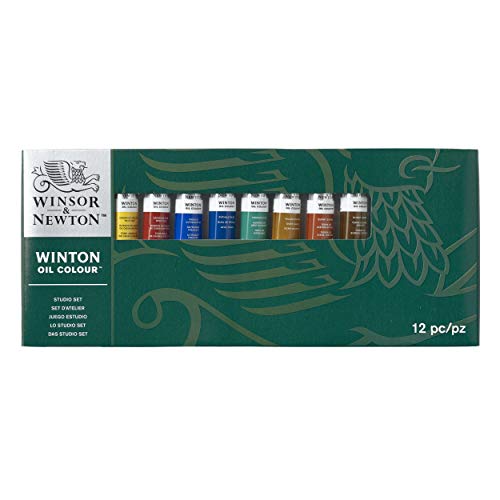
Most starter sets stop at paint. This boxed Winton set adds what a first studio session needs: a bottle of Liquin Original, the maker’s alkyd medium, and two hog brushes, so a beginner learns how a medium changes paint from the first day. Liquin thins paint while keeping it workable and speeds drying, a forgiving partner for early layered work, provided the fat-over-lean order in the guide section is respected.
The color side is a compact mixing palette: eight 21ml tubes built around French Ultramarine, Phthalo Blue, two cadmium hues, Viridian Hue, and three earths, plus a larger 37ml tube of Titanium White. An instructional leaflet walks through the basics. Treat this as a teaching set: it covers mixing, medium use, and layering in one purchase, and colors can graduate to bigger tubes as your habits settle.
Specs
- 8 tubes of 21ml Winton Oil Colour plus a 37ml tube of Titanium White
- 75ml bottle of Liquin Original painting medium included
- Two Winton hog brushes, sizes 2 and 4, included
- Instructional leaflet included; 12 pieces in the box
- Palette built on French Ultramarine, Phthalo Blue, cadmium hues, Viridian Hue, and earth colors
3. Winsor & Newton Artisan Water Mixable Oil Colour Set, 10 x 37ml — Water-Mixable Set

Artisan is Winsor & Newton’s water-mixable oil range, made with modified linseed and safflower oils so the paint thins with water and brushes clean up with soap and water. For painters in shared homes, classrooms, or small rooms without strong ventilation, removing solvent from cleanup is a real change in daily practice. The honest limit: the pigments are the same pigments found in traditional oils, so label warnings still apply.
On the palette, Artisan handles like a conventional oil: buttery, blendable, and slow enough to keep passages open while you work, with drying that follows each pigment in the usual way. The ten 37ml tubes cover a working palette of Lemon Yellow, Cadmium Yellow Hue, Cadmium Red Hue, Permanent Alizarin Crimson, French Ultramarine, Cerulean Blue Hue, Phthalo Green (Blue Shade), Yellow Ochre, Burnt Umber, and Titanium White. Water works best for thinning early, lean layers; for richer later layers the maker offers water-mixable mediums.
Specs
- 10 tubes of 37ml (1.25 oz) each
- Water-mixable oil colour made with modified linseed and safflower oils
- Thins with water; brushes clean with soap and water, no solvent needed for cleanup
- Ten-color working palette from Lemon Yellow to Titanium White, per the maker
- Behaves and dries like traditional oil paint once on the canvas
4. Gamblin Artist Oil Colors Introductory Set — Artist-Grade Set

This is the step up to artist-grade paint. Gamblin’s artist line is built on pigment and linseed oil with high pigment loads and no stretching filler, so colors mix cleanly and keep their strength in thin passages and glazes. The introductory set gathers nine 37ml tubes as a traditional working palette: Cadmium Yellow Light, Yellow Ochre, Burnt Umber, Cadmium Red Light, Alizarin Crimson, Ultramarine Blue, Viridian, Ivory Black, and Titanium White.
One detail deserves plain statement: the two cadmium colors here are genuine cadmium pigments, not hues. That is part of why the set mixes with such authority, and it is also why the tube warnings matter. Read the labels, keep food and drink away from the easel, and wash your hands after painting. Gamblin makes its paint in Portland, Oregon, and publishes detailed pigment information for each color.
Specs
- 9 tubes of 37ml each, artist grade
- High pigment load with linseed oil binder, per the maker
- Includes genuine Cadmium Yellow Light and Cadmium Red Light; follow tube label warnings
- Palette of nine traditional colors including Alizarin Crimson, Viridian, and Ultramarine Blue
- Made in Portland, Oregon, USA, per the maker
5. Paul Rubens Oil Paint Set, 20 Colors x 50ml — Large-Tube Studio Set

Painters who work big, paint often, or cover dark grounds run through small tubes quickly, and that is the gap this set fills. Twenty colors arrive in 50ml tubes, a full litre of paint in the box, so a studio painter can lay down broad passages without rationing. The maker describes a creamy consistency with strong saturation, formulated to keep brush and palette-knife marks, which suits direct, textured work on canvas and prepared wood panels.
The palette is selected with landscape, seascape, and general studio painting in mind. A set like this makes sense once you know your mixing habits: a large tube only earns its space if the color inside gets used, so beginners may be better served by a smaller set first. Give thick passages the long drying time they need before varnishing.
Specs
- 20 colors in 50ml tubes, 1 litre of paint in total
- Creamy consistency that holds brush and palette-knife marks, per the maker
- High saturation color aimed at professional studio work
- Suited to canvas and prepared wood panels
- Palette selected for landscape, seascape, and general painting subjects
FAQ
Should a beginner start with student-grade or artist-grade paint?
Student grade is the practical place to start: it buys more colors, and learning to mix is easier with a wide palette in front of you. Move to artist grade color by color, beginning with the tubes you use most, once student mixtures start turning muted. Many painters keep both: student paint for studies and underpainting, artist paint for the layers that show.
What does “Hue” mean on a tube of oil paint?
It means the tube imitates the named color with a blend of other pigments instead of containing the traditional pigment itself. Cadmium Red Hue, for example, contains no cadmium. Hues are consistent and clearly labeled, but they usually tint a little less strongly and can mix slightly differently from the genuine pigment. The back of the tube lists the pigments actually used.
How long does oil paint take to dry?
It depends on the pigment, the thickness, and the medium. Fast earth colors such as burnt umber can be touch dry in a day or two, while titanium white and ivory black stay workable much longer, and a painting dries at the pace of its slowest mixture. Touch dry is not cured: thin work may be ready for varnish in months, and thick passages need longer. Alkyd mediums shorten the schedule; water-mixable oils dry on roughly the traditional timeline.
How do I use oil paints safely at home?
Read and follow the warning label on every tube, since some pigments contain heavy metals such as cadmium, cobalt, or lead. Never eat or drink while painting, wash your hands after each session, and store paints and solvents away from children. Ventilate the room when using solvents, keep them sealed and away from heat, and treat solvent-soaked rags as the fire risk they are: dry them flat outdoors or store them in a sealed metal container, and dispose of them per local guidance. Water-mixable oils cut solvent use, since they clean up with soap and water.
Conclusion
Each set here suits a different painter. Choose the Winton 20-color set if you are learning and want the widest palette in small tubes. Choose the Winton Studio Set if you want one box that adds a medium and brushes to the lesson. Choose the Artisan set if solvent-free cleanup matters in your space, and the Gamblin introductory set if you are ready for artist-grade pigment strength, with the label discipline genuine cadmium colors require. Choose the Paul Rubens set if you paint at scale and want large tubes across a ready-made palette. Whichever you pick, read the pigment information on the tubes, build layers fat over lean, and give paint its drying time.
More from Amazon
Programs that pair well with the guide above. Offers and eligibility are set by Amazon and may change.
Free shipping on eligible items, Prime Video and more. Eligible new members can start with a free trial.
Start a Prime free trialAd-free music streaming. Eligible new subscribers can start with a free trial.
Try Music Unlimited freeA Prime membership for ages 18-24 with a trial period. Eligibility is set by Amazon.
See Prime for Young AdultsAudiobooks and podcasts to listen to on the go. Eligible new members can start with a free trial.
Try Audible freeAs an Amazon Associate we earn from qualifying purchases.