Our Short List of 3
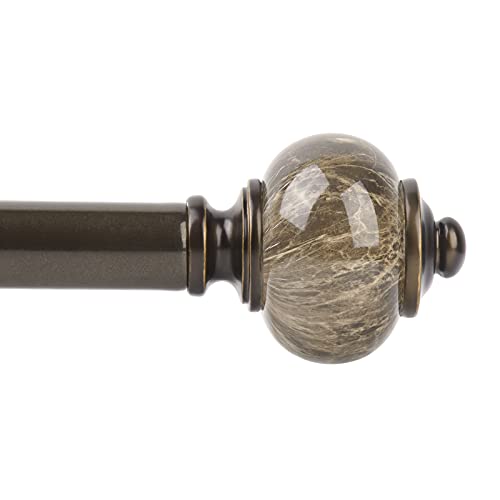
- Rod diameter: 1 inch, steel tube with 0.6 mm wall thickness
- Adjustable length: 48 to 84 inches, screw-together segments plus telescoping end
- Weight capacity: up to 22 pounds
- Finish: antique bronze with marble-look finials
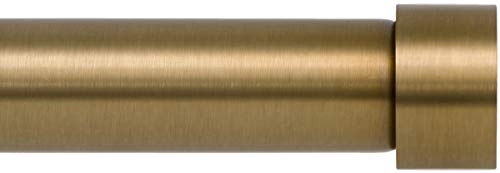
- Rod diameter: 1 inch metal pole
- Adjustable length: 48 to 86 inches, telescoping
- Finials: solid metal end caps, low profile
- Finish: warm gold

- Rod diameter: 3/4 inch, steel construction
- Adjustable length: 66 to 144 inches, telescoping
- Weight capacity: up to 22 pounds
- Design: wrap-around curved ends return panels flush to the wall
All 5 Picks at a Glance
| Product | Specs | Action |
|---|---|---|
| KAMANINA 1-Inch Curtain Rod, Antique Bronze (48 to 84 Inches) |
| Check price on Amazon |
| Ivilon Drapery Window Curtain Rod, End Cap Style, Warm Gold (48 to 86 Inches) |
| Check price on Amazon |
| Umbra Twilight Curtain Rod, Nickel (66 to 144 Inches) |
| Check price on Amazon |
 KAMANINA 1-Inch Double Curtain Rod, Black (66 to 120 Inches) |
| Check price on Amazon |
 Amazon Basics Adjustable Curtain Rod, Nickel (36 to 72 Inches) |
| Check price on Amazon |
Key takeaways
- Compare the best curtain rods for windows large and small, adjustable and wrap-around designs, with brackets and finish guidance for clean installs.
As an Amazon Associate we earn from qualifying purchases.
A curtain rod looks like the simplest piece of hardware in the room, yet it decides how your curtains hang, how much light leaks in around the edges, and whether the whole setup stays on the wall after a year of daily tugging. A rod that is too thin sags under lined blackout panels. Brackets anchored into bare drywall creep loose. A rod cut exactly to the window width leaves the open curtains covering a third of the glass, dimming the room you were trying to brighten.
The five rods below cover the main jobs a household actually has. Two are sturdy 1-inch single rods for everyday windows, in different finishes and styles. One wraps around the window so blackout panels seal against the wall. One is a double rod that layers sheers under heavier drapes. The last is a plain, dependable rod for spare rooms, rentals, and secondary windows. Every pick telescopes or splices to an adjustable length, because almost no two windows measure the same.
Before the picks, here is what matters: measuring, diameter versus curtain weight, why brackets and anchors deserve more suspicion than the rod itself, finial clearances, layering, and bay windows.
Disclosure: This article contains affiliate links. If you make a purchase through these links, we may earn a commission at no extra cost to you.
How to Choose a Curtain Rod
Measure wider than the window. A rod should extend roughly 3 to 6 inches past each side of the window frame. That extra span gives open curtains somewhere to go: the fabric stacks back against the wall instead of covering the glass, so you keep your daylight and the window looks larger. Mounting height matters too. Hanging the rod 4 to 6 inches above the frame, or midway between the frame and the ceiling, draws the eye upward and makes ceilings feel taller. One detail catches people out: the stated length is the rod itself and usually excludes finials, so add finial width on both ends when checking a tight wall-to-wall fit.
Match diameter to curtain weight. Skinny 5/8-inch rods are fine for sheers and cafe curtains. A 3/4-inch rod handles light to medium panels. For heavy blackout or lined drapes, and for spans beyond about six feet, step up to a 1-inch rod or thicker. Telescoping rods are weakest at the middle joint, and a long rod at full extension will bow under a heavy panel unless a center bracket carries the middle. Check your curtain hardware against the rod as well. Most grommet panels use an inner grommet opening of about 1-9/16 inches, made to slide over rods up to roughly 1-3/8 inches, so a 1-inch rod is the comfortable sweet spot. For rod-pocket panels, confirm the pocket opening clears the rod with room for the fabric to bunch.
Be honest about brackets and anchors. The rod rarely fails; the mounting does. A pair of lined blackout panels can weigh 10 to 20 pounds, and that load hangs on two or three small brackets. The screws and basic plastic anchors bundled with most rods are the weakest link in the box. Screwed into drywall alone, they can creep and pull out over time, especially on windows where curtains are yanked open every morning. Wherever you can, drive at least one bracket screw into a stud. Everywhere else, use proper toggle bolts or quality expansion anchors matched to your wall. And fit the center support bracket on long spans: when a maker states a weight capacity, that figure usually assumes the center bracket is installed.
Finials are decoration with a footprint. Ball, cage, and marble-look finials typically add 2 to 4 inches per side beyond the rod length, and they need clearance from side walls, corners, and the ceiling. Measure for them before you fall for a style. In tight corners, or where a rod runs nearly wall to wall, low-profile end caps or a wrap-around design are the smarter choice. Finish is the easy part: match the rod finish to the hardware already in the room, such as door handles and light fixtures, rather than trying to match the curtain fabric.
Wrap-around rods solve the side-light problem. A standard rod holds the panel a few inches off the wall, leaving a vertical gap at each side where morning light pours in. Wrap-around rods curve at both ends so the panel returns to the wall and closes that gap. Paired with blackout or room-darkening panels, they are the right tool for bedrooms, nurseries, and media rooms, and the sealed edge also cuts drafts. The trade-off is a plainer look, since the design replaces decorative finials with the curved return.
Double rods are for layering. A double rod carries sheers on the thinner back rod for daytime privacy and the main drape on the front rod for darkness and insulation at night. Remember that double brackets project farther from the wall than single brackets, so check the clearance against any blinds or shades mounted inside the frame before you drill.
Bay windows need angles, not force. A straight rod cannot turn a corner, and trying to bend one ruins it. Your real options are elbow connectors that join straight sections at an angle, flexible bendable rods, or a separate short rod on each facet of the bay. Elbow connectors are sold separately and are specific to a rod diameter and often to a brand’s joint system, so buy them from the same maker as the rod. Measure each facet of the bay and the angles between them before ordering anything.
KAMANINA 1-Inch Curtain Rod, Antique Bronze (48 to 84 Inches)
- Rod diameter: 1 inch, steel tube with 0.6 mm wall thickness
- Adjustable length: 48 to 84 inches, screw-together segments plus telescoping end
- Weight capacity: up to 22 pounds
- Finish: antique bronze with marble-look finials
If your windows carry real curtains, meaning lined drapes or blackout panels with some heft, this is the single rod to build around. KAMANINA uses a 1-inch steel tube with a 0.6 mm wall, about double the thickness of the flimsy tubes common in this category, and supports up to 22 pounds. Instead of a simple two-piece telescope, the rod splices together from screw-together segments with a telescoping end section, which keeps the middle of a long span sturdier.
The antique bronze finish and marble-look finials suit traditional living rooms and bedrooms, and the adjustable brackets let you fine-tune how far the rod sits from the wall, which helps clear trim and existing blinds. It is a working rod first and a decorative one second, and that is the right order of priorities for heavy panels.
Ivilon Drapery Window Curtain Rod, End Cap Style, Warm Gold (48 to 86 Inches)
- Rod diameter: 1 inch metal pole
- Adjustable length: 48 to 86 inches, telescoping
- Finials: solid metal end caps, low profile
- Finish: warm gold
The Ivilon takes the opposite approach to decoration: instead of a finial that shouts, it ends the rod with a clean, solid metal end cap. The result is a modern, architectural line that works in living rooms where the curtains, not the hardware, should get the attention. The warm gold finish adds warmth without the ornament of a ball or cage finial, and the low profile is a genuine advantage in corners and near side walls, where a big finial would crowd or collide.
Underneath the styling it is a complete, conventional kit: a telescoping 1-inch metal pole, brackets, screws, and instructions in the box. The 1-inch diameter suits standard grommets and medium to heavier panels, and the 48 to 86 inch range covers the most common single and double window widths. Choose this one when you want the rod to disappear politely.
Umbra Twilight Curtain Rod, Nickel (66 to 144 Inches)
- Rod diameter: 3/4 inch, steel construction
- Adjustable length: 66 to 144 inches, telescoping
- Weight capacity: up to 22 pounds
- Design: wrap-around curved ends return panels flush to the wall
The Twilight is the specialist in this roundup, built for one job: keeping a bedroom dark. Both ends of the rod curve back to the wall, so your blackout panel wraps around the side of the window and rests flush against the wall instead of hanging inches away from it. That closes the side gaps where standard rods leak light, and it helps with drafts and insulation as a side benefit.
This is the long 66 to 144 inch size in matte nickel, suited to wide living room windows and sliding doors as well as bedrooms. The 3/4-inch steel rod supports up to 22 pounds, which covers most blackout panels, though genuinely heavy lined drapes on a very long span still deserve the center bracket and solid anchoring described above. There are no finials to admire here; the design trades decoration for darkness, and for shift workers, light-sensitive sleepers, and nursery windows, that is exactly the right trade.
KAMANINA 1-Inch Double Curtain Rod, Black (66 to 120 Inches)
- Front rod: 1 inch diameter, 0.6 mm wall; back rod: 3/4 inch for sheers
- Adjustable length: 66 to 120 inches
- Weight capacity: up to 33 pounds combined
- Finish: matte black with end cap finials
Layering is the oldest trick in window dressing because it works: sheers soften daylight and give privacy at noon, and the main panels close over them at night for darkness and insulation. This double rod from KAMANINA puts a full 1-inch front rod, with the same 0.6 mm wall as its single-rod sibling, in front of a slimmer 3/4-inch back rod for sheers. The maker puts the combined capacity at up to 33 pounds, so the front rod can carry proper drapes rather than token panels.
The matte black finish and plain end caps lean modern and industrial, a good match for lofts and contemporary living rooms. The 66 to 120 inch range suits wide windows where layering matters most. The double brackets project farther off the wall than single brackets, so confirm clearance against inside-mounted blinds before drilling, and anchor properly: a loaded double rod carries more weight than any single rod here.
Amazon Basics Adjustable Curtain Rod, Nickel (36 to 72 Inches)
- Rod diameter: 1 inch
- Adjustable length: 36 to 72 inches, telescoping
- Finials: round ball style
- Finish: nickel
Not every window needs a statement. For guest rooms, kids’ rooms, home offices, and rentals, this Amazon Basics rod is the sensible default: a 1-inch telescoping rod in a brushed nickel finish with simple round ball finials that go with nearly everything and draw attention to nothing. The 36 to 72 inch range covers the standard single windows that make up most of a house.
It includes its brackets and mounting hardware, installs the same way as every other rod here, and the 1-inch diameter means it works with the same grommet and rod-pocket panels you would hang anywhere else. It will not seal a blackout panel to the wall or carry heavyweight drapes across a ten-foot span, but it was never meant to. As a second and third rod for the rooms you do not show off, it is the pick that simply gets the job done.
Frequently Asked Questions
How far past the window should a curtain rod extend?
Plan on 3 to 6 inches beyond the frame on each side, and mount the rod 4 to 6 inches above the frame. The extra width lets open curtains stack against the wall instead of covering the glass, and the extra height makes the window and ceiling look taller. Remember that the stated rod length excludes finials, so allow for those in tight spaces.
What diameter rod do heavy blackout curtains need?
Choose a 1-inch rod, and install the center support bracket on any span much beyond six feet. Diameter alone does not hold the weight; anchoring does. Drive screws into studs where possible and use toggle bolts or quality anchors elsewhere, because the basic anchors in most boxes are the first thing to fail under a heavy panel.
Will standard grommet curtains fit these rods?
Almost certainly yes. Most grommet panels have an inner opening of about 1-9/16 inches, designed for rods up to roughly 1-3/8 inches in diameter. Every rod in this roundup is 1 inch or 3/4 inch, so grommets will slide freely. For rod-pocket curtains, check that the pocket opening clears the rod with room for the fabric to gather.
How do I hang curtains on a bay window?
A straight rod cannot bend around a bay, so use elbow connectors that join straight rod sections at an angle, a flexible bendable rod, or one short rod per facet of the bay. Elbow connectors are sold separately and must match your rod’s diameter and joint style, so order them from the same brand as the rod, and measure each facet and angle of the bay first.
Conclusion
For most living rooms and bedrooms with medium to heavy curtains, the KAMANINA 1-inch single rod is the safest all-round choice, thanks to its thicker tube wall and honest hardware. If your decor runs modern and minimal, the Ivilon end cap rod gives the same 1-inch practicality in a cleaner profile. For a bedroom that needs to stay dark, the Umbra Twilight is the only design here that seals panels to the wall. For layering sheers under drapes, the KAMANINA double rod does it on one set of brackets. And for spare rooms and rentals, the Amazon Basics rod covers standard windows without fuss. Whichever you pick, spend as much care on studs, anchors, and the center bracket as on the rod itself; that is where installs succeed or fail.
More from Amazon
Programs that pair well with the guide above. Offers and eligibility are set by Amazon and may change.
Free shipping on eligible items, Prime Video and more. Eligible new members can start with a free trial.
Start a Prime free trialAd-free music streaming. Eligible new subscribers can start with a free trial.
Try Music Unlimited freeA Prime membership for ages 18-24 with a trial period. Eligibility is set by Amazon.
See Prime for Young AdultsAudiobooks and podcasts to listen to on the go. Eligible new members can start with a free trial.
Try Audible freeAs an Amazon Associate we earn from qualifying purchases.