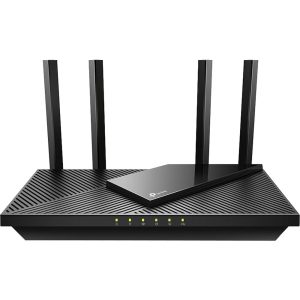
Key takeaways
- $76.99–$99: EAP650 on deal, EAP723, U7 Lite — dual-band, no 6 GHz.
- $129.99–$146.20: Grandstream GWN7665 — Wi-Fi 6E, the first 6 GHz radio.
- $149.99: Zyxel NWA130BE — the first tri-band Wi-Fi 7 access point.
- $169.99–$199: EAP772, U7 Pro, EAP773, U7 Pro XG — tri-band Wi-Fi 7.
- $199: U7 Mesh and U7 Pro Wall — outdoor mesh, and wall-mount.
- $229.99: Aruba Instant On AP32 — tri-band Wi-Fi 6E.
- $258.95–$299: EAP772-Outdoor, U7 Pro Max $279, EAP787 $279.99, U7 Pro XGS $299.
- $279–$334: U7 Pro Outdoor $279, NETGEAR WAX630E $333.99.
- $499.99: EAP783 and Ubiquiti E7 — the real flagships, still $99.99 past this budget.
At $300, the fastest access point still cost $149.99 — except for one band. At $400, the fastest access point still costs $279.99, and the flagships still cost $499. So what does the extra $100 buy? The first feature in this series that actually works instead of being promised: Automated Frequency Coordination. The best is the Ubiquiti UniFi U7 Pro Outdoor at $279 — the cheapest access point in the series with AFC shipping, tri-band Wi-Fi 7, and 5,000 square feet of coverage.
The honest part: for one phone indoors, nothing at $400 is faster than the TP-Link EAP787 from the under-$300 guide. What $400 buys is range, weather, and capacity.
The honest price ladder
- $76.99–$99: EAP650 on deal, EAP723, U7 Lite — dual-band, no 6 GHz.
- $129.99–$146.20: Grandstream GWN7665 — Wi-Fi 6E, the first 6 GHz radio.
- $149.99: Zyxel NWA130BE — the first tri-band Wi-Fi 7 access point.
- $169.99–$199: EAP772, U7 Pro, EAP773, U7 Pro XG — tri-band Wi-Fi 7.
- $199: U7 Mesh and U7 Pro Wall — outdoor mesh, and wall-mount.
- $229.99: Aruba Instant On AP32 — tri-band Wi-Fi 6E.
- $258.95–$299: EAP772-Outdoor, U7 Pro Max $279, EAP787 $279.99, U7 Pro XGS $299.
- $279–$334: U7 Pro Outdoor $279, NETGEAR WAX630E $333.99.
- $499.99: EAP783 and Ubiquiti E7 — the real flagships, still $99.99 past this budget.
Prices are November 2026 snapshots — check the current price on Amazon before buying.
Quick Picks
| Access point | Price (Nov 2026) | Wi-Fi | Port | PoE | Best for |
|---|---|---|---|---|---|
| Ubiquiti UniFi U7 Pro Outdoor | $279 at UI store | Wi-Fi 7, tri-band BE11000 | 2.5G | PoE+ (21 W) | Most people |
| Ubiquiti UniFi U7 Pro Max | $279 at UI store | Wi-Fi 7, tri-band, 8 streams | 2.5G | PoE+ (25 W) | Dense UniFi |
| NETGEAR WAX630E | $333.99 on Amazon | Wi-Fi 6E, tri-band AXE7800 | 2.5G | PoE++ (27.6 W) | Small business |
| TP-Link Omada EAP787 | $279.99 | Wi-Fi 7, tri-band BE15000 | 10G | PoE++ (29 W) | Best indoor |
| Ubiquiti UniFi U7 Pro Wall | $199 at UI store | Wi-Fi 7, tri-band | 2.5G | PoE+ | Wall-mount |
How to Choose
What $400 actually buys — AFC that ships, not AFC that is promised
Every guide in this series has carried the same footnote: the TP-Link EAP787 was promised Automated Frequency Coordination via firmware planned for April 2026, and as of November 2026 TP-Link’s own datasheet still lists it as planned, not live.
The U7 Pro Outdoor is the first access point in this series where AFC is a feature instead of a footnote. Ubiquiti’s second AFC access point after the $499 E7, it transmits on 6 GHz at standard power — 26 dBm with AFC, against 20 dBm without it — which is more range, not more speed. It is also the first outdoor access point in this series with a real 6 GHz radio: the EAP772-Outdoor has one too, but it costs $258.95 and has no AFC, and the U7 Mesh has none at all.
MLO, 320 MHz channels, and the 6 GHz ceiling
Wi-Fi 7’s headline features need 6 GHz: Multi-Link Operation bonds bands together, and a 320 MHz channel only exists on 6 GHz. All five picks here have both — but on UniFi’s U7 models, MLO arrived through firmware during 2026 and requires UniFi Network 8.2.93 or later. If your console is older, update it before you judge the radio. The ceiling has not moved either. One Wi-Fi 7 phone still sees the same 6 GHz ceiling — 5,765 Mbps — on the $279 U7 Pro Outdoor as on the $149.99 Zyxel NWA130BE. Only the EAP787’s 4×4 5 GHz radio, at 8,648 Mbps, is genuinely faster than every 2×2 pick. If your only goal is one device’s peak speed indoors, buy the EAP787 and keep $120.
PoE, PoE+, and PoE++ — the power ladder
Power is the hidden cost of this whole series: standard PoE (802.3af) up to 15.4 watts, PoE+ (802.3at) up to 30 watts, and PoE++ (802.3bt) 60 to 90 watts. Three picks here are cheap to power: the U7 Pro Outdoor draws 21 watts, the U7 Pro Max 25 watts, and the U7 Pro Wall runs on PoE+ — all from a PoE+ switch you may already own. None ships with an injector, so budget $20 to $30 if your switch is not PoE+.
The two flagships from the under-$300 guide are worse: the EAP787 needs PoE++ (29 W) for full power, and on a PoE+ port its 10G uplink drops to 2.5G. The WAX630E needs PoE++ too, up to 27.6 watts — the version with an adapter (WAX630EP) is $389.99 at NETGEAR.
Controller software: five ecosystems, one rule
Aruba Instant On is cloud-managed by design: install the app, scan the unit, and HPE’s free cloud configures it — no controller, no subscription. Omada is the only other ecosystem that works completely alone, with a full standalone web interface and a free controller. UniFi’s Network Application is free, but UniFi access points have no local web interface and need the app or a controller. NETGEAR Insight includes one year free with the WAX630E — then it is a paid subscription. If you already run one ecosystem, buy that brand’s access point.
1. Ubiquiti UniFi U7 Pro Outdoor — Best Overall
Specs: Tri-band Wi-Fi 7 BE11000 (688 Mbps + 4,320 Mbps + 5,765 Mbps), 6 streams, AFC shipping, 1 × 2.5 GbE PoE+ port (21 W), 300+ clients, ~5,000 ft², IPX6 (IP67 with included cable-gland door kit), two external omni antennas, pole/wall mount, −30 to 60 °C.
Pros: The cheapest access point in this series with AFC shipping — 6 GHz at 26 dBm instead of 20 dBm — plus the largest coverage in the series at 5,000 square feet, a real 6 GHz radio outdoors, and two external antennas in the box. At $279 from the Ubiquiti store it fits by $121.
Cons: That $279 is the Ubiquiti store price — retailers list it at $319.99 to $399.99, so buy it from Ubiquiti or pay the markup. Its 5 GHz radio is 2×2, not the 4×4 of the EAP787, so it is slower with many clients at once indoors.
Best for: Most buyers who want the strongest access point under $400 — especially anyone covering a yard or a patio.
2. Ubiquiti UniFi U7 Pro Max — Best for Dense UniFi
Specs: Tri-band Wi-Fi 7 (688 Mbps + 8,648 Mbps + 5,765 Mbps), 8 streams (4×4 on 5 GHz), spectral scanning radio, 1 × 2.5 GbE uplink, PoE+ (25 W), 500+ clients, ~1,750 ft².
Pros: The same 8-stream radio and spectral scanning as the U7 Pro XGS for $20 less, and it runs on PoE+ instead of PoE++ — any PoE+ switch you already own powers it at full speed. At $279 from the Ubiquiti store it fits by $121.
Cons: That $279 is the Ubiquiti store price — retailers list it at $307 to $341.29, so buy it from Ubiquiti or pay up to $62 more for the same box. Its 2.5 GbE uplink is the bottleneck if you ever add 10G switching. No local web interface, no injector in the box.
Best for: UniFi homes and offices with many devices but no 10G switch.
3. NETGEAR WAX630E — Best Wi-Fi 6E for Small Business
Specs: Tri-band Wi-Fi 6E AXE7800 (600 Mbps + 4.8 Gbps + 2.4 Gbps), 8 streams, 1 × 2.5 GbE port + 1 × GbE port, PoE++ (up to 27.6 W), 600 clients, up to 3,000 ft², WPA3, VLANs, Insight (1 year included), 5-year warranty.
Pros: The only non-UniFi, non-TP-Link pick in this guide — and the only one with a 5-year warranty. Its 8-stream radio covers up to 3,000 square feet and 600 clients, and at $333.99 on Amazon it fits by $66.01. Price trackers show it as low as $189.99.
Cons: It is Wi-Fi 6E, not Wi-Fi 7 — no MLO, no 320 MHz channels, no 4K-QAM — and it costs $55 more than the U7 Pro Outdoor while being a generation older. It needs PoE++ and ships with no adapter; the version with one (WAX630EP) is $389.99 at NETGEAR. Insight is free for one year, then paid.
Best for: Small businesses that already run NETGEAR Insight and want Wi-Fi 6E with a 5-year warranty.
4. TP-Link Omada EAP787 — Best Indoor
Specs: Tri-band Wi-Fi 7 BE15000 (688 Mbps + 8,648 Mbps + 5,765 Mbps), 8 streams (4×4 on 5 GHz), dedicated RF scanning radio, 1 × 10G port, 29 W, 510+ clients, ~2,050 ft², Omada or standalone, 5-year warranty.
Pros: Still the fastest single radio in this series — the only 4×4 5 GHz radio under $400 — plus the only dedicated RF scanning radio at this price, a 10G port, and the largest client count in the guide. It works fully standalone.
Cons: Its 6 GHz radio is still 2×2, so one Wi-Fi 7 phone sees the same ceiling as the $149.99 Zyxel. AFC is still a promise — TP-Link’s datasheet lists it as planned for April 2026, not confirmed live as of November 2026. Full power needs PoE++ (29 W), no injector included.
Best for: Indoor buyers who want the fastest radio and a 10G port — if you do not need outdoors or AFC, this is still the pick.
5. Ubiquiti UniFi U7 Pro Wall — Best Wall-Mount
Specs: Tri-band Wi-Fi 7 (688 Mbps + 4,320 Mbps + 5,765 Mbps), 6 streams, 1 × 2.5 GbE PoE+ uplink, 300+ clients, wall mount.
Pros: The cheapest tri-band Wi-Fi 7 access point that mounts flat on a wall — $199 from the Ubiquiti store, fitting by $201 — with the same 2×2 radio set as the U7 Pro. The natural pick for hotel-style rooms, offices, and hallways where a ceiling puck looks wrong.
Cons: That $199 is the Ubiquiti store price — retailers list it at $258.65. It has no downstream switch ports at all, the most common purchasing mistake with this model: the single Ethernet port handles uplink, power, and data only. If you need wired ports at the wall, buy the U7 In-Wall at $149 instead — it has three 2.5 GbE ports, one with PoE out.
Best for: Wall-mounted deployments where the access point itself is the only thing on the wall.
What to Avoid
- TP-Link and the FCC. CNET’s November 2, 2026 editor’s note says the FCC’s March 25, 2026 notice bans the sale of new foreign-made routers going forward, and Asus, Netgear, and Eero are the only consumer brands with an exemption as of November 2 — TP-Link has not. Products already on sale keep receiving updates until at least January 1, 2029.
- The U7 Pro Outdoor’s 5 GHz radio is 2×2, not 4×4. Some retailer listings quote it at 8,600 Mbps on 5 GHz, which is wrong: Dong Knows Tech’s spec table shows 2×2 at up to 4.3 Gbps. The 4×4 5 GHz radios in this series are the EAP787 and the U7 Pro Max.
- The U7 Outdoor is not the U7 Pro Outdoor. The plain U7 Outdoor is dual-band Wi-Fi 7 with four streams and no 6 GHz radio — a different, cheaper model. Listings show it around $343, so do not pay Pro Outdoor money for it.
- The WAX630 is not the WAX630E. The WAX630 is dual-band Wi-Fi 6 AX6000 at $308.22; the WAX630E is tri-band Wi-Fi 6E AXE7800 at $333.99. Same family, different radios — check the “E”.
- Zyxel’s BandFlex is not tri-band. The NWA220AX-6E at $304.89 runs 2.4 GHz plus 5 GHz or 2.4 GHz plus 6 GHz — never all three at once.
- The PoE trap, again. Only the U7 Mesh and the AP32 run on plain 802.3af PoE. The U7 Pro Outdoor, U7 Pro Max, and U7 Pro Wall need PoE+, and the EAP787 and WAX630E need PoE++.
Still Doesn’t Fit
- TP-Link Omada EAP783, $499.99. The real BE22000 Omada flagship: 4×4 on all three bands, two 10G ports. It misses by $99.99.
- Ubiquiti UniFi E7, $499. Tri-band Wi-Fi 7 with 10 streams, a 10 GbE uplink, 1,000+ clients, and AFC shipping. It misses by $99.
- Ubiquiti UniFi E7 Campus, $799. The weatherproof version of the E7. It misses by $399.
- Zyxel WBE660S, $599.99. Tri-band Wi-Fi 7 BE22000 with 4×4 radios and a 10G port — $199.99 past this budget.
FAQs
Is the U7 Pro Outdoor worth $130 more than the NWA130BE?
Only if you value what the $130 buys: AFC that ships, IP67 weatherproofing, 5,000 square feet of coverage, and external antennas. On single-client 6 GHz speed the two tie at 5,765 Mbps.
Do I need a PoE++ switch for these access points?
For two of the five picks: the EAP787 (29 W) and the WAX630E (up to 27.6 W). The other three run on PoE+. None of the five ships with an injector — budget $20 to $30 for PoE+, or $39 to $60 for PoE++.
What is AFC, and should I care?
Automated Frequency Coordination lets a 6 GHz access point transmit at standard power instead of the low-power indoor limit — more range on 6 GHz. The U7 Pro Outdoor and the E7 already ship with it; the EAP787 was promised it via firmware planned for April 2026, but as of November 2026 it is still not confirmed live.
Is the 10G port on the EAP787 worth it?
Only if you already own 10G switching. The EAP787’s 4×4 5 GHz radio is worth paying for on its own, but its 10G port is not — on a PoE+ port it drops to 2.5G.
Verdict
Buy the Ubiquiti UniFi U7 Pro Outdoor at $279 from the Ubiquiti store — the first access point in this series with AFC shipping, tri-band Wi-Fi 7, and 5,000 square feet of coverage.
Go in with your eyes open: its 5 GHz radio is 2×2, not 4×4, and the $279 is a Ubiquiti store price — retailers list it at $319.99 to $399.99. If you only need indoors, buy the EAP787 at $279.99 instead. If you run UniFi and need density, buy the U7 Pro Max at $279. On a wall, buy the U7 Pro Wall at $199.
The honest budget for a tri-band access point is $150 for the unit and about $170 with the power to run it.
As an Amazon Associate, we earn from qualifying purchases.
Suggested internal links
- Best Wi-Fi Access Point Under $300
- Best Wi-Fi Access Point Under $250
- Best Wi-Fi 7 Router Under $250
More from Amazon
Programs that pair well with the guide above. Offers and eligibility are set by Amazon and may change.
Free shipping on eligible items, Prime Video and more. Eligible new members can start with a free trial.
Start a Prime free trialAd-free music streaming. Eligible new subscribers can start with a free trial.
Try Music Unlimited freeA Prime membership for ages 18-24 with a trial period. Eligibility is set by Amazon.
See Prime for Young AdultsAudiobooks and podcasts to listen to on the go. Eligible new members can start with a free trial.
Try Audible freeAs an Amazon Associate we earn from qualifying purchases.