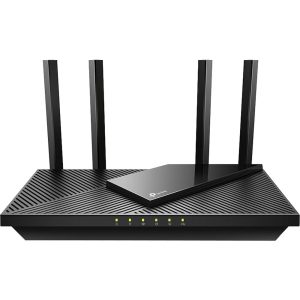
Key takeaways
- Best PoE Network Switch Under $300 — the GS316EPP, 15 PoE+ ports on a 231W budget, $251.99.
- Best PoE Network Switch Under $200 — the GS316EP, the first 16-port PoE network to fit.
- Best 8-Port Gigabit Switch Under $400 — the SG3210XHP-M2, the same 2.5G PoE switch in its first starring role.
Four hundred dollars is where the PoE series stops compromising. The $300 guide’s managed 24-port switch fit only on a 231W budget, at a price that missed the previous guide by $1.99.
At $400, three walls fall at once: managed 2.5-gigabit PoE fits, managed PoE++ fits, and a 24-port managed switch with a 250W budget fits with $65 to spare. The headline is the TP-Link TL-SG2428P: 24 PoE+ ports on a 250W budget, L2+ management, four SFP uplinks, $334.99 in November 2026. But full 60W PoE++ on all eight ports still does not fit, a 380W 24-port switch still does not fit at a verified price, and 10-gigabit copper plus PoE is still $690. All prices below are November 2026 snapshots — check the current price on Amazon before buying.
Quick Picks
| Switch | Best For | Price (Nov 2026) | PoE Ports / Budget | Managed? |
|---|---|---|---|---|
| TP-Link TL-SG2428P | Best Overall | $334.99 | 24× PoE+ / 250W | L2+ smart managed |
| TP-Link TL-SG3210XHP-M2 | Best 2.5G PoE+ | $385.80 | 8× 2.5G PoE+ / 240W | L2+ Omada managed |
| Ubiquiti USW-Pro-8-PoE | Best L3 + PoE++ | $378.98 | 6× PoE+ + 2× PoE++ / 120W | UniFi L3 managed |
| D-Link DGS-1210-28P | Best 24-Port Smart | $378.99 | 24× PoE+ / 193W | Smart managed, L3 Lite |
| NETGEAR GS724TPv3 | Best Cloud-Managed 24-Port | $369.99 | 24× PoE+ / 190W | Smart managed + Insight |
How to Choose a PoE Network Switch Under $400
PoE vs PoE+ vs PoE++
PoE (802.3af) tops out at 15.4W per port — a basic phone or camera. PoE+ (802.3at) reaches 30W, the standard for most cameras, access points and PTZ cameras. PoE++ (802.3bt) reaches 60W or 90W for the hungriest devices: Wi-Fi 7 access points, big PTZ cameras, digital signage. Every pick here is PoE+ at minimum; one finally brings real PoE++ under $400.
PoE budget math
The budget decides how many devices a switch can actually power: a 250W budget powers sixteen cameras at 15W each, or eight devices at the full 30W ceiling. The trap is the per-port number: a switch can advertise 30W per port on 24 ports and still only have a 190W budget. Always read the budget, never the per-port maximum.
Managed vs unmanaged
An unmanaged switch forwards traffic and powers devices, and that is all it does. A managed switch adds VLANs, QoS, port mirroring, ACLs, static routing and PoE auto recovery — restarting a hung port automatically. Under $400, management is no longer a luxury: all five picks here are managed.
Port count and speed
Eight ports cover a small home; twenty-four cover a real small business, with room to grow. Every switch here is gigabit at minimum, the floor in 2026 — a 10/100 switch wearing a PoE label is a trap. But $400 is also the first budget where the ports themselves get faster: our 2.5-gigabit pick gives Wi-Fi 6 and 7 access points the full 2.5 Gbps instead of throttling them to a gigabit.
Fanless vs fan, desktop vs rack
A fanless switch belongs in a living room; a fanned switch belongs in a closet or a rack. Every 24-port switch in this guide has a fan — 250W of PoE in a 1U chassis means moving air — while the compact 8-port picks run quieter. Twenty-four-port switches are rack-mount machines with ears included.
1. TP-Link TL-SG2428P — Best Overall
Specs: 24× GbE PoE+ ports (up to 30W each), 250W budget, 4× GbE SFP slots, L2+ managed (VLAN, QoS, ACLs, static routing, PoE auto recovery), Omada SDN, 56 Gbps, fan-cooled, rack ears included, limited lifetime warranty.
The pick the whole PoE series has been building toward: 24 PoE+ ports on a 250W budget, L2+ management, four SFP uplinks — $334.99, verified in November 2026 at Newegg and in our catalog check. List price is $309.99, so this is a genuine street price, not a one-day deal.
The 250W budget powers sixteen cameras at 15W each, or eight devices at the full 30W ceiling. Management is genuinely useful too: static routing, ACLs, PoE scheduling and Omada SDN.
The honest caveats: 250W is the biggest budget of any 24-port switch you can actually buy at a verified US price under $400 — a 375W Zyxel exists on paper, but Amazon US shows no offers for it in November 2026. The SG2428P has a fan, so put it in a rack, not a bedroom. And the TL-SG2428P is the older JetStream branding, the SG2428P the current Omada branding — same switch, so do not pay a premium for one name.
Pros: 24 PoE+ ports on a 250W budget; L2+ management; four SFP uplinks; Omada SDN; $65 under budget; lifetime warranty.
Cons: Fan-cooled, not silent; 250W still cannot run all 24 ports at 30W at once; two names for the same switch.
Best for: Anyone building a real 24-device PoE network — cameras, access points and phones — on one managed switch.
2. TP-Link TL-SG3210XHP-M2 — Best 2.5G PoE+
Specs: 8× 2.5GBASE-T PoE+ ports (up to 30W each), 240W budget, 2× 10G SFP+ slots, L2+ managed (VLAN, QoS, ACLs, static routing), Omada SDN, 80 Gbps, metal chassis, rack ears included, limited lifetime warranty.
The fastest switch in this guide, and the first managed 2.5-gigabit PoE switch to fit any budget. Our $300 guide said it did not fit at about $385 — right, for $300. Under $400 it fits: $385.80 at B&H, in stock in November 2026, against a $349.99 launch MSRP.
What the speed buys is real: a Wi-Fi 6 or 7 access point on a gigabit port is capped at 1 Gbps. The 240W budget covers all eight ports at 30W at once, and the two 10G SFP+ uplinks keep it from bottlenecking to the router.
The honest caveats: the price is the most volatile in this guide — $199.99 in June 2026, $385.80 in November — so do not pay over $400. Eight ports is the ceiling, and a camera fleet gains nothing from 2.5-gigabit ports.
Pros: Managed 2.5G PoE+ finally fits under $400; 240W budget covers all eight ports at 30W; 2× 10G SFP+ uplinks; Omada SDN.
Cons: Price swung from $199.99 to $385.80 in five months; only eight ports; 2.5G only helps fast devices.
Best for: Wi-Fi 6 and Wi-Fi 7 access points, and anyone whose access points are the bottleneck.
3. Ubiquiti USW-Pro-8-PoE — Best L3 + PoE++
Specs: 6× GbE PoE+ ports (up to 30W each) + 2× GbE PoE++ ports (up to 60W each, 802.3bt Type 3), 120W budget, 2× 10G SFP+ ports, true Layer 3 (inter-VLAN routing, static routing, DHCP server and relay), UniFi managed, compact desktop or wall-mount chassis.
The most capable small switch in this guide — and the first managed PoE++ switch to fit any budget. Our $300 guide said the cheapest managed route was about $378.98; under $400 it fits, at exactly that price, matching the $379 Ubiquiti store price.
The two PoE++ ports will power a Wi-Fi 7 access point, a big PTZ camera or a digital signage display that PoE+ cannot run, and true Layer 3 routing keeps inter-VLAN traffic on the switch. The two 10G SFP+ ports give it a backbone a gigabit switch cannot match.
The honest caveats: the 120W budget is the smallest here — both 60W PoE++ ports at full draw consume it entirely, so plan on one 60W device plus a few 15W ones. It also needs a UniFi controller, with no standalone web interface, so the $379 price assumes you already run UniFi. And at $378.98 it sits only $21 under the ceiling.
Pros: First managed PoE++ under $400; true Layer 3 routing; 2× 10G SFP+ uplinks; compact and quiet.
Cons: 120W budget cannot feed both 60W ports plus the rest; requires a UniFi controller; only $21 under the ceiling.
Best for: UniFi homes and small offices with one or two power-hungry devices and a real need for Layer 3.
4. D-Link DGS-1210-28P — Best 24-Port Smart
Specs: 24× GbE PoE+ ports (up to 30W each), 193W budget, 4× combo SFP ports, smart managed with L3 Lite static routing, surveillance mode, NDAA/TAA compliant, fan-cooled, rack ears included, D-Link lifetime protection.
The smartest 24-port switch here: L3 Lite static routing, surveillance mode, NDAA/TAA compliance — no other 24-port pick offers routing or compliance paperwork. It costs $378.99, verified by our catalog check and real US sellers.
The 193W budget powers twelve cameras at 15W each, or six devices at the full 30W ceiling. The four combo SFP ports are real uplinks for fibre runs.
The honest caveats: 193W is thin for 24 ports — the top pick gives four more cameras at 15W for $44 less, so buy this one for the routing and compliance, not the budget. The name game is the worst here: the DGS-1210-28 has no PoE, the 28P has 24 PoE+ ports on 193W, and the 28MP has the same ports on 370W.
Pros: L3 Lite static routing on a 24-port PoE switch; surveillance mode; NDAA/TAA compliant; four combo SFP ports.
Cons: Only 193W for 24 ports; $44 more than the top pick for a smaller budget; the DGS-1210-28 name game.
Best for: Small businesses and installers who need routing, fibre uplinks or compliance paperwork.
5. NETGEAR GS724TPv3 — Best Cloud-Managed 24-Port
Specs: 24× GbE PoE+ ports (up to 30W each), 190W budget, 2× GbE SFP ports, Smart managed with optional Insight remote/cloud management, 1-year Insight subscription included, 52 Gbps, fan-cooled, desktop or rack-mount, NETGEAR limited lifetime warranty.
The cloud-managed 24-port pick, and a returning model: the top pick of our 24-port gigabit switch guide under $400, back in a new role — $369.99 at the NETGEAR store, $30 under budget.
What it offers that the others do not is Insight: remote and cloud management, one-year subscription included. For a business with switches in more than one building, one cloud dashboard is worth more than 60W of PoE budget.
The honest caveats: 190W is the smallest 24-port budget here — the top pick gives 60W more for $35 less. Insight is free for one year and paid after that, though the switch keeps working standalone. And the GS724TPPv3 has a 380W budget — one letter P, double the power, $489.99.
Pros: Insight cloud management with a free first year; 24 PoE+ ports; lifetime warranty; $30 under budget.
Cons: Smallest 24-port budget here at 190W; Insight costs money after year one; the GS724TPPv3 name trap.
Best for: Multi-site small businesses that want cloud management more than raw PoE budget.
What to Avoid
The 380W NETGEAR at a stale catalog price. Catalog listings show the GS724TPP at $328.99 — 24 ports on a 380W budget, which would be the best pick here by a wide margin. Do not plan around it: NETGEAR’s own store lists the GS724TPPv3 at $489.99 and other sellers show $605 out of stock. The $328.99 figure is stale.
The 370W D-Link at exactly the ceiling. The DGS-1210-28MP — 24 PoE+ ports on a 370W budget — lists at exactly $400.00, with no headroom and most sellers higher. Under $400 it beats our top pick; at $400 or above, it does not.
10/100 switches wearing a gigabit label. The TRENDnet TPE-S50 and TP-Link TL-SF1008P are both 10/100 switches — one-tenth the speed of gigabit — sold in listings that bury the speed. If the listing does not say “gigabit” in the product name, check the spec sheet.
Passive PoE. Some cheap switches deliver power without negotiating, and a non-PoE device plugged into a passive port can be damaged. Every switch here uses 802.3af/at/bt negotiation, which only powers a device that asks for it. If a listing names no IEEE standard, do not buy it.
“PoE” without the plus. A switch that says PoE but not PoE+ tops out at 15.4W per port, and most modern cameras and access points ask for more. There is no reason to buy a PoE-only switch in 2026.
The NETGEAR GS308 name game. Six switches share the GS308 name — GS308, GS308E, GS308EP, GS308PP, GS308LP, GS308EPP — and only some have PoE. One letter is the difference between a switch that powers your cameras and one that does not.
FAQs
Is a 24-port PoE switch really available under $400?
Yes — three in this guide: the TL-SG2428P for $334.99 on a 250W budget, the DGS-1210-28P for $378.99 with L3 Lite routing, and the GS724TPv3 for $369.99 with cloud management. The catch is the same: the budget is 190–250W, not 380W.
Does managed PoE++ fit under $400?
Yes — barely, and only on two ports. The USW-Pro-8-PoE gives you two 60W PoE++ ports plus six PoE+ ports for $378.98, with Layer 3 routing and 10G SFP+ uplinks. The catch is the 120W budget: both 60W ports at full draw consume it entirely. Full 60W on all eight ports would need a 480W budget, and the cheapest route there is still around $489.
Does 2.5-gigabit PoE fit under $400?
Yes. The TL-SG3210XHP-M2 gives you eight 2.5-gigabit PoE+ ports on a 240W budget with two 10G SFP+ uplinks for $385.80 at B&H — the first managed 2.5G PoE switch to fit any budget in this series. The 16-port version lists at $439.99 — $40 over.
How many cameras can a 250W budget power?
Sixteen cameras at 15W each, or eight devices at the full 30W PoE+ ceiling. Most fixed cameras draw 7–15W; a PTZ camera can draw 25–30W, so count those separately.
Do I need a UniFi controller for the USW-Pro-8-PoE?
Yes — through the UniFi Network Application (a Cloud Key, a UniFi console, or the self-hosted app). There is no standalone web interface, so if you do not want a controller, buy a standalone smart switch instead.
Verdict
The best PoE network switch under $400 is the TP-Link TL-SG2428P at $334.99 — 24 PoE+ ports on a 250W budget, L2+ management, four SFP uplinks, Omada SDN.
For faster-than-gigabit access points, the TL-SG3210XHP-M2 at $385.80. For PoE++ and Layer 3 in a small box, the USW-Pro-8-PoE at $378.98 — provided you already run UniFi. The DGS-1210-28P at $378.99 for routing or compliance; the GS724TPv3 at $369.99 for cloud management.
As an Amazon Associate, we earn from qualifying purchases.
Suggested internal links
- Best PoE Network Switch Under $300 — the GS316EPP, 15 PoE+ ports on a 231W budget, $251.99.
- Best PoE Network Switch Under $200 — the GS316EP, the first 16-port PoE network to fit.
- Best 8-Port Gigabit Switch Under $400 — the SG3210XHP-M2, the same 2.5G PoE switch in its first starring role.
More from Amazon
Programs that pair well with the guide above. Offers and eligibility are set by Amazon and may change.
Free shipping on eligible items, Prime Video and more. Eligible new members can start with a free trial.
Start a Prime free trialAd-free music streaming. Eligible new subscribers can start with a free trial.
Try Music Unlimited freeA Prime membership for ages 18-24 with a trial period. Eligibility is set by Amazon.
See Prime for Young AdultsAudiobooks and podcasts to listen to on the go. Eligible new members can start with a free trial.
Try Audible freeAs an Amazon Associate we earn from qualifying purchases.