Onboard audio on most motherboards still delivers muddy highs, compressed bass, and a noisy mic input that no amount of software EQ can fix. A dedicated sound card solves that problem by giving you a cleaner DAC, a better amplifier stage, and—on interface models—genuinely usable preamps with phantom power for condenser microphones. The catch is that “sound card” now spans everything from a $9 USB adapter that simply gives your desktop a headphone jack to a $180 PCIe board with its own headphone amplifier and surround processor.
What separates a good purchase from a wasted one in 2026 is matching the device to your actual bottleneck. A gamer who never touches a microphone does not need an XLR input, and a podcaster who records two voices should not buy a single-channel consumer dongle. We compared published specifications, street prices, and aggregated owner feedback to sort these eight products by use case.
Our top picks
 Creative Sound Blaster Audigy Fx Pro Hi-Res
- Delivers ultra-clear playback with 32-bit / 384 kHz…
- Supports discrete 7.1-channel analog output for immersive multi-channel…
- Connects effortlessly to multi-channel PC speaker systems, SPDIF…
 Focusrite Scarlett Solo 3rd Gen USB-C Audio
- Pro performance with great pre-amps - Achieve a…
- Get the perfect guitar and vocal take with…
- Studio quality recording for your music & podcasts…
 SABRENT USB External Stereo Sound Card Adapter
- USB Type-A connector with a 3.5mm stereo headphone…
- WORKS ON WINDOWS, MAC AND LINUX - Driverless…
- TWO JACKS, TWO JOBS - The green jack…
| Product | Key specs | |
|---|---|---|
| Creative Sound Blaster Audigy Fx Pro Hi-Res | Delivers ultra-clear playback with 32-bit / 384 kHz… Supports discrete 7.1-channel analog output for immersive multi-channel… Connects effortlessly to multi-channel PC speaker systems, SPDIF… | Check price |
| Focusrite Scarlett Solo 3rd Gen USB-C Audio | Pro performance with great pre-amps - Achieve a… Get the perfect guitar and vocal take with… Studio quality recording for your music & podcasts… | Check price |
| SABRENT USB External Stereo Sound Card Adapter | USB Type-A connector with a 3.5mm stereo headphone… WORKS ON WINDOWS, MAC AND LINUX - Driverless… TWO JACKS, TWO JOBS - The green jack… | Check price |
 Focusrite Scarlett Solo 4th Gen USB-C Audio Focusrite Scarlett Solo 4th Gen USB-C Audio | The new generation of the songwriter's interface: Plug… Studio-quality sound: With a huge 120dB dynamic range,… Find your signature sound: Scarlett 4th Gen's improved… | Check price |
 Live Sound Card Live Sound Card | 【Professional-Grade, True Repair Sound】Universal for mobile phones and… Multi-Device Support: 【No need to switch cables】Can be… 【Noise reduction】Using intelligent noise reduction chip, audio processing… | Check price |
 Facmogu F998 Live Sound Card Audio Mixer Facmogu F998 Live Sound Card Audio Mixer | 【Multi-Function Podcast Audio Mixer】-- 7 Independent volume knob… 【Entry-Level Podcast System】-- Using digital DSP intelligent processing… 【Born for Live Streaming】-- Integrate audio and sound… | Check price |
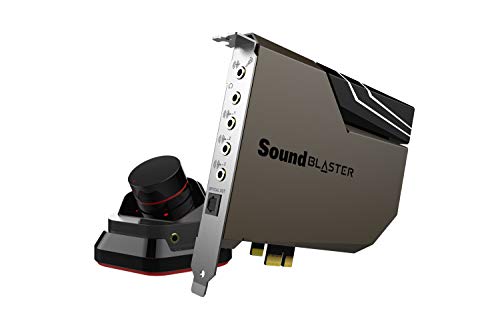 Creative Sound Blaster AE-7 Hi-Res PCIe Gaming Creative Sound Blaster AE-7 Hi-Res PCIe Gaming | PRISTINE AUDIO OUTPUT | Supreme audio fidelity with… MASSIVELY POWERFUL HEADPHONE AUDIO | Custom Xamp discrete… GRADE DISCREET AND VIRTUAL SURROUND | Supports discrete… | Check price |
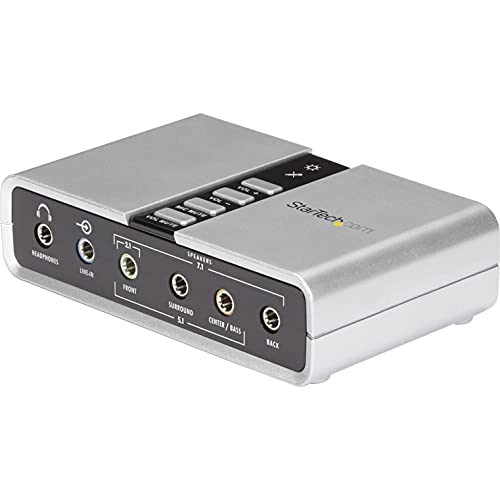 StarTech 7.1 USB Audio Adapter StarTech 7.1 USB Audio Adapter | 7.1 USB SOUND CARD: This External Sound Card… With support for analog and digital audio output… Supports 44.1KHz and 48KHz sampling rates for analog… | Check price |
As an Amazon Associate we earn from qualifying purchases at no extra cost to you.
Quick Picks
| Product | Best for | Price |
|---|---|---|
| Creative Audigy Fx Pro Hi-Res | Upgrading desktop audio without breaking the bank | $75.99 |
| Focusrite Scarlett Solo 3rd Gen | Budget-conscious voiceovers and solo recording | $119.99 |
| SABRENT AU-MMSA | Replacing a dead onboard jack instantly | $8.99 |
| Focusrite Scarlett Solo 4th Gen | Solo creators wanting the latest Focusrite features | $159.99 |
| Mini Sound Mixer Board (Live Sound Card) | Mobile streamers and casual podcasters | $23.99 |
| Facmogu F998 | Streamers who want effects and a second mic input | $28.47 |
| Creative Sound Blaster AE-7 | Enthusiasts wanting reference-class Hi-Res audio | $181.53 |
| StarTech ICUSBAUDIO7D | 7.1 surround over USB for office or media PCs | $38.00 |
How We Picked
We weighted four factors: output quality relative to price (SNR and THD figures from spec sheets, cross-referenced with owner impressions), input flexibility for creators (phantom power, preamp gain range, channel count), driver and software support (whether the manufacturer still ships updates), and value density—whether the device solves one problem exceptionally or tries to solve many poorly. Products that fell apart on any single criterion were ranked below alternatives at a similar price.
The 8 Best Sound Card in 2026
Creative Sound Blaster Audigy Fx Pro Hi-Res
This PCIe card targets anyone whose motherboard audio is merely functional and wants a step up without learning a new ecosystem. Its 120 dB SNR and dedicated headphone amplifier push noticeably cleaner output through passive speakers or closed-back cans compared to integrated codecs. Creative’s software, while sometimes bloated, provides equalizer profiles and basic surround virtualization that onboard drivers rarely match.
- Pro: Hi-Res capable (up to 192 kHz/24-bit) with a real amplifier stage
- Pro: Low CPU overhead; PCIe bus avoids USB contention on crowded rigs
- Con: No mic preamp worth mentioning—still unsuitable for XLR condenser mics
Skip it if your primary need is recording voiceovers; its input path is no better than your motherboard’s.
Focusrite Scarlett Solo 3rd Gen
The Solo 3rd Gen remains a dependable entry point for solo podcasters and singers who want a genuine instrument/mic input with 48V phantom power. Its Class A preamp delivers clean gain up to 56 dB, and the direct monitoring path introduces no perceptible latency. Software bundles (Ableton Live Lite, Red samples) add value that Creative’s consumer cards do not.
- Pro: Transparent Class A preamp with solid headroom for dynamic and condenser mics
- Pro: USB bus-powered; works on laptops with no extra adapter
- Con: Single mic input means two-person interviews require a separate purchase
Skip it if you need stereo line-level inputs for hardware synths or an audio mixer chain.
SABRENT USB External Stereo Sound Card Adapter (AU-MMSA)
At under ten dollars this adapter exists for one scenario: your motherboard audio jack died, or you need a headphone and mic combo on a device with neither. It is a basic stereo DAC and ADC with zero amplification power beyond what a low-impedance earbud needs. Plug-and-play on Windows and macOS with no driver installation.
- Pro: Costs less than most single-pack of XLR cables; no driver hassle
- Pro: Tiny and genuinely portable; useful as a travel backup
- Con: Audible hiss and distortion on high-impedance headphones above ~80 ohms
Skip it for any critical listening or recording task; it is a functional workaround, not an audio upgrade.
Focusrite Scarlett Solo 4th Gen
The fourth generation brings a redesigned preamp with more headroom, a custom clip indicator, and a 32-bit float recording option via Focusrite Control software that protects against accidental peaks. For someone who already owns the 3rd Gen the jump is marginal, but for a first-time buyer the added safety net of 32-bit float makes it the most forgiving solo interface currently sold.
- Pro: 32-bit float recording eliminates gain-staging anxiety for beginners
- Pro: Updated software mixer with loopback routing for streaming
- Con: A $40 premium over the 3rd Gen buys real but incremental improvements
Skip it if budget is tight and the 3rd Gen’s 24-bit path already handles your gain correctly.
Mini Sound Mixer Board with 16 Effects and Voice Changer
This board-style device is built for mobile content creators who want on-the-fly voice effects, echo, and a simple Bluetooth loopback into a phone or tablet. Its 16 built-in effects cover laugh tracks, claps, and pitch shifts that would otherwise require a separate app and a steady hand on a keyboard.
- Pro: Physical faders and effect buttons let you react during a live stream without looking at a screen
- Pro: Bluetooth input for wireless mic or phone audio routing
- Con: Preamp quality is consumer-grade; recorded voiceovers will sound boxy without a good external mic
Skip it if your priority is clean recording fidelity; those effects are a gimmick for archival audio.
Facmogu F998 Live Sound Card Audio Mixer
Similar in philosophy to the mini mixer above but with two microphone inputs, the F998 suits two-person interviews and karaoke setups. It adds a second XLR or 6.35 mm channel, a dedicated loopback button, and a slightly more refined effect bank. Owners praise its ease of setup for phone-connected live streams.
- Pro: Dual mic inputs at under $30 make it the cheapest genuine two-channel interface
- Pro: Loopback routing for OBS or TikTok without extra software
- Con: Plastic build and noisy potentiometers degrade noticeably after a year of heavy use
Skip it if you need reliable long-term durability for a daily studio session.
Creative Sound Blaster AE-7
The AE-7 is the enthusiast pick in this lineup. It pairs a 127 dB SNR DAC with a dedicated headphone amplifier capable of driving 600-ohm open-backs, an optical output for external DACs, and a Smart Volume module that normalizes quiet dialogue in games and movies. The included Audio Control Module sits on your desk for quick source switching.
- Pro: Amplifier headroom and output clarity rival interfaces costing far more
- Pro: Optical and coaxial digital outputs future-proof the card for external DAC chains
- Con: Recording input is still consumer-level; it is a playback-first device
Skip it if you primarily record rather than listen; you will pay a premium for features you will never touch.
StarTech 7.1 USB Audio Adapter (ICUSBAUDIO7D)
StarTech built this for IT professionals and office deployments where a PC needs 7.1 surround for video conferencing or media without opening the case. It exposes three 3.5 mm jacks that map to front, rear, side, and center/sub channels, driven by C-Media silicon that Windows recognizes natively.
- Pro: True 7.1 channel mapping over USB with no PCIe slot required
- Pro: Driverless on Windows and macOS; ideal for hot-desking or loaner machines
- Con: No hardware acceleration, no dedicated amplifier; output level is modest
Skip it for music production or critical gaming audio; it is a convenience adapter, not a performance card.
Buying Guide
Match the Device to Your Signal Path
Decide where the bottleneck is before you spend. If your speakers sound thin but your microphone already records well, a PCIe or USB DAC card (Audigy Fx Pro, AE-7, StarTech) is the fix. If your voice recordings have noise, hum, or clipping, you need a preamp-first interface (Scarlett Solo, Facmogu). Buying the wrong type wastes money because a DAC cannot add input quality and a preamp cannot add output power.
Check Impedance and Power Requirements
High-impedance headphones (250–600 ohms) demand a dedicated amplifier stage; most USB dongles and consumer cards output only 2–5 mW, producing a thin, low-volume result. PCIe cards with onboard headphone amps (AE-7, Audigy Fx Pro) typically deliver 50–200 mW. If you listen on in-ear monitors or passive bookshelf speakers, onboard amplification is sufficient and the extra cost is unnecessary.
Software Support and OS Longevity
Creative and Focusrite both maintain driver updates through current Windows and macOS releases, but Creative’s consumer software occasionally breaks after major OS patches, while Focusrite’s Control app is comparatively stable. Check that the manufacturer still ships updates for your platform before buying a used or leftover unit. USB class-compliant devices (SABRENT, StarTech) sidestep this problem entirely at the cost of advanced features.
Our Verdict
Top pick: The Focusrite Scarlett Solo 4th Gen is the most complete single-channel solution for creators—clean preamp, 32-bit float safety, and loopback routing make it nearly foolproof.
Budget pick: The SABRENT AU-MMSA at under nine dollars is the unbeatable fix for a broken jack or a missing port.
Condition for another winner: If you own 300-ohm or higher open-back headphones and your primary use is listening, the Creative AE-7 outperforms the Scarlett at this price by a wide margin.
FAQ
Do I need a sound card if my motherboard already has audio?
You need one if your onboard audio has a noisy mic preamp, limited headphone amplification, or missing outputs you require (XLR, optical, 7.1). For basic stereo playback through passive speakers, modern onboard codecs are adequate and a card offers negligible improvement.
Is a USB audio interface the same as a sound card?
Both convert between analog and digital signals, but interfaces prioritize input quality with dedicated preamps and phantom power, while traditional PCIe sound cards prioritize output fidelity and surround processing. A USB DAC is essentially a sound card without an input section.
Can a live sound card mixer replace a dedicated audio interface?
For casual streaming with effects and two-mic setups, yes. For any task requiring low noise floor, accurate gain staging, or DAW-compatible drivers, a Focusrite-class interface will outperform mixer boards in this price range.
Does a sound card improve microphone quality?
Only if the card has a better preamp and ADC than your motherboard. The Audigy Fx Pro and StarTech adapter will not noticeably help a mic; the Scarlett Solo or Facmogu F998 will, because they supply a higher-quality analog-to-digital path with more usable gain.