Understanding RAM Capacity for Your Workload
Random Access Memory is one of the most critical components in any desktop PC, yet it is often the last item on a builder’s shopping list. Choosing the right amount of RAM depends entirely on what you plan to do with your machine. For everyday tasks such as web browsing, document editing, and media playback, 16 GB has become the practical minimum in modern systems. Running a few browser tabs alongside an office suite and a music player can easily consume 8 GB, leaving little headroom for background processes or multitasking.
Creative professionals working with video editing, 3D rendering, or large datasets should consider 32 GB as a starting point. Developers running virtual machines or containers may also find that 32 GB keeps their workflow smooth without forcing the system to rely on slower storage for paging. Enthusiasts who keep dozens of applications open simultaneously, or who run memory-intensive simulation software, may benefit from 64 GB, though this capacity is rarely necessary for general use.
Our top picks
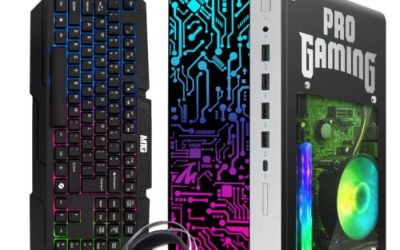
 KOTIN Gaming PC Desktop
- High-FPS Gaming PC Performance: AMD Ryzen 7 8700F…
- 16GB DDR5 + 1TB Gen4 NVMe SSD: 16GB…
- Cool, Clean Gaming Tower Build: A CPU air…
 KOTIN Prebuilt Gaming PC RTX 5070 12GB
- POWERED BY RTX 5070 12GB + RYZEN 7…
- 32GB DDR5 6000MHz MEMORY & 1TB NVMe SSD…
- IN 11.3-INCH Smart DISPLAY - An integrated smart…
| Product | Key specs | |
|---|---|---|
| KOTIN Gaming PC Desktop | High-FPS Gaming PC Performance: AMD Ryzen 7 8700F… 16GB DDR5 + 1TB Gen4 NVMe SSD: 16GB… Cool, Clean Gaming Tower Build: A CPU air… | Check price |
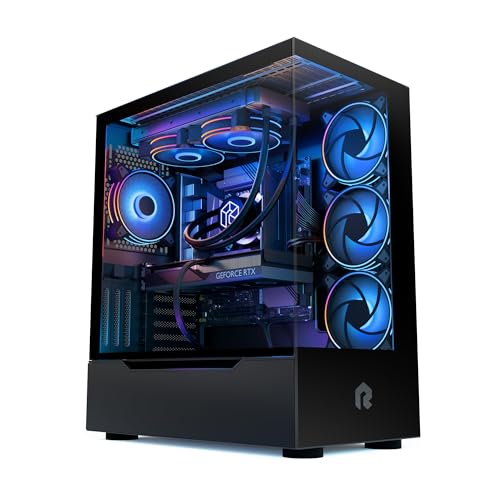 Build Redux Gaming Desktop PC Build Redux Gaming Desktop PC | Check price | |
| KOTIN Prebuilt Gaming PC RTX 5070 12GB | POWERED BY RTX 5070 12GB + RYZEN 7… 32GB DDR5 6000MHz MEMORY & 1TB NVMe SSD… IN 11.3-INCH Smart DISPLAY - An integrated smart… | Check price |
 ASUS ROG G700 ASUS ROG G700 | Fearless ROG Design Unstoppable Power Optimized Thermals | Check price |
 Evounic Gaming PC Desktop Computer RTX 4060 Evounic Gaming PC Desktop Computer RTX 4060 | Gaming PC / Prebuilt Gaming PC / Gaming… RTX 4060 Gaming PC / High FPS Gaming… i7 Gaming PC / Gaming Desktop / 16GB… | Check price |
 ZOTAC MEK Gaming PC Desktop ZOTAC MEK Gaming PC Desktop | Effortless Gaming: MEK from ZOTAC comes with all… Heart of the MEK: the ZOTAC GAMING GeForce… Powerful Processor: the AMD Ryzen 5 9600X AM5… | Check price |
 Evounic Gaming Desktop PC 12-Core Processor Evounic Gaming Desktop PC 12-Core Processor | Check price | |
 ZOTAC MEK Gaming PC Desktop ZOTAC MEK Gaming PC Desktop | Effortless Gaming: MEK from ZOTAC comes with all… Heart of the MEK: the ZOTAC GAMING GeForce… Powerful Processor: the AMD Ryzen 7 9700X AM5… | Check price |
As an Amazon Associate we earn from qualifying purchases at no extra cost to you.
Speed, Timings, and What They Actually Mean
RAM speed is measured in megatransfers per second (MT/s), and higher numbers generally indicate faster data throughput. However, speed alone does not define performance. Memory timings, expressed as a sequence of numbers like 16-18-18-36, represent the number of clock cycles the RAM takes to access data at each stage of its internal operation. Lower timings mean the modules respond more quickly to requests from the processor.
The practical difference between, say, 5600 MT/s RAM and 6000 MT/s RAM is small in most real-world desktop workloads. For gaming, a modest speed bump can yield a few extra frames per second in CPU-bound titles, but the gains diminish quickly beyond a certain threshold. Productivity tasks such as file compression or code compilation benefit more from capacity than from marginal speed increases. Buyers should prioritize getting the right amount of memory before chasing higher frequency numbers.
Checking Motherboard and CPU Compatibility
Before purchasing RAM, you must confirm what your motherboard and processor support. Each motherboard has a maximum supported memory capacity, a specific number of DIMM slots, and a validated list of compatible module speeds. Most modern platforms for desktop PCs use DDR5, while older systems rely on DDR4. The two standards are physically incompatible, so a DDR5 module will not fit into a DDR4 slot.
Processors also impose their own memory controller limits. If a CPU officially supports up to 5600 MT/s on a DDR5 platform, installing faster modules will typically result in the system downclocking to the supported rate unless you enable an overclocking profile in the BIOS. Always consult your motherboard’s Qualified Vendor List, or QVL, to reduce the risk of compatibility issues, though many modules outside the QVL will still work without problems.
Practical Tips for a Smooth Upgrade
When buying new RAM, match the capacity and speed of existing modules if you are upgrading rather than starting fresh. Mixing modules with different speeds causes the system to run all sticks at the lowest common speed, potentially wasting the performance you paid for. Installing memory in the correct slots, usually labeled A2 and B2 on dual-channel motherboards, ensures you activate dual-channel mode, which roughly doubles the available bandwidth between RAM and the CPU.
After installation, run the memory built into your operating system or a dedicated testing utility to confirm the modules are recognized and stable. If you plan to enable a high-speed profile in the BIOS, stress testing over several hours is advisable to catch any errors that might not appear during light use. Taking these steps ensures your desktop PC delivers the performance you expect from the components you selected.