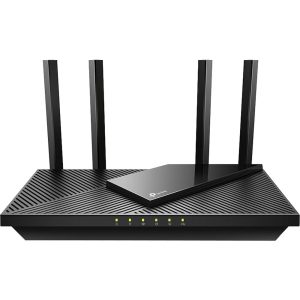
Eight ports is the sweet spot for a home or small-office network: enough for a router uplink, a NAS, a couple of access points, and a handful of cameras, without paying for a 16-port switch you will never fill. At $300, the market changes character. Below $200, you pick two of three — PoE power, real management, or multi-gigabit speed — and give up the third.
Not everything fits. Ten-gigabit copper still does not. Brand-name managed 2.5G with PoE still does not. And the fastest 2.5G PoE switch here costs exactly $299.99 — zero room for tax, a cable, or a mistake. Every price below was checked against live catalog and retailer listings in November 2026 — check the current price on Amazon before buying, because switch prices move weekly.
Quick Picks
| Switch | Best For | Ports | PoE Budget | Management | Price (Nov 2026) |
|---|---|---|---|---|---|
| Cisco CBS220-8FP-E-2G | Best Overall | 8× GbE PoE+ + 2× SFP | 130W | Smart managed | $259.99 |
| TRENDnet TPE-BG380 | Best 2.5G PoE++ Value | 8× 2.5G PoE++ | 230W | Unmanaged | $239.99 |
| NETGEAR MS108UP | Best 2.5G Speed | 8× 2.5G PoE++ | 230W | Unmanaged | $299.99 |
| EnGenius EWS2910FP-FIT | Best Cloud-Managed | 8× GbE PoE+ + 2× SFP | 110W | Cloud managed L2+ | $196.90 |
| TP-Link TL-SG1210MPE | Best Value Managed PoE | 8× GbE PoE+ + uplinks | 123W | Easy Smart | $209.99 |
How to Choose an 8-Port Gigabit Switch Under $300
Managed vs unmanaged: buy the management you will actually use
An unmanaged switch forwards packets and nothing else. A managed switch adds VLANs, QoS, port mirroring, link aggregation, and per-port PoE control — the tools that isolate cameras from your main network, prioritize a video call over a backup job, and reboot a hung access point from your desk instead of climbing a ladder.
PoE vs non-PoE: count watts, not ports
“8 PoE ports” tells you almost nothing. What matters is the power budget — the total watts the switch can deliver across all ports at once. A camera draws about 15W, a Wi-Fi 6 access point 15–25W, a pan-tilt-zoom camera up to 30W, and a PoE++ device up to 60W. A 62W budget powers about four cameras; a 123–130W budget powers all eight at 15W each; a 230W budget handles PoE++ devices.
Switching capacity: the number that quietly decides speed
Switching capacity is the total throughput the backplane can move. A full-duplex 8-port gigabit switch needs 16 Gbps to run every port at full speed in both directions; a good one delivers 20 Gbps. For 2.5G switches, the bar is 40 Gbps. Every pick here meets or beats its bar.
Fanless vs fan
All five picks here are fanless: silent, with no moving part to fail. If a switch in this class has a fan, ask what it is compensating for — usually a PoE budget the chassis cannot shed passively.
Desktop vs wall-mount
Most 8-port switches are desktop boxes the size of a paperback, and most can be wall-mounted with the included brackets. Measure the shelf first: the Cisco and EnGenius picks are wider than the TP-Link and TRENDnet boxes, and the power brick on the PoE++ models is a separate lump the size of a paperback itself.
1. Cisco CBS220-8FP-E-2G — Best Overall
Specs: 8× 10/100/1000 PoE+ ports (30W each) · 2× gigabit SFP uplink slots · 130W PoE budget · 20 Gbps switching capacity · smart managed (web UI, VLANs, QoS, SNMP) · fanless metal chassis · limited lifetime warranty
Price checked November 2026 — check the current price on Amazon before buying.
The CBS220-8FP-E-2G is the first Cisco to top an 8-port guide in this series, and it earns the spot the boring way: it does everything, and it does nothing wrong. Eight PoE+ ports with a 130W budget — the largest of any gigabit pick here — power eight cameras at 15W each with 10W to spare.
The trade-offs are honest ones. This is a gigabit switch, not a 2.5G switch: if your NAS and workstation both have 2.5G ports, the TRENDnet or NETGEAR below moves files two and a half times faster. And the “FP” matters: the cheaper CBS220-8P-E-2G looks nearly identical but carries only a 65W budget, half the power, for about $207.
Pros: Largest PoE budget among gigabit picks (130W); two SFP uplinks; real smart management; limited lifetime warranty; fanless.
Cons: Gigabit only — no 2.5G; street price varies ($260–$293); wider than rivals; easy to confuse with the 65W CBS220-8P.
Best for: Small offices and serious home networks that need managed PoE+ for eight devices and a fiber uplink, with a warranty that outlasts the hardware.
2. TRENDnet TPE-BG380 — Best 2.5G PoE++ Value
Specs: 8× 2.5G PoE++ ports (60W each) · 230W PoE budget · 60 Gbps switching capacity · unmanaged · fanless metal chassis · 3-year warranty
Price checked November 2026 — check the current price on Amazon before buying.
The TPE-BG380 was the runner-up in our under-$250 guide, and it returns here because the math has not changed: $239.99 buys eight 2.5G ports, PoE++ on every one of them, and a 230W budget that can feed a 60W device on two ports and 15W cameras on the rest at the same time. Nothing else from a recognizable brand gets you multi-gigabit plus PoE++ at this price.
What it does not do is manage anything: no web interface, no VLANs, no QoS, no remote power-cycle for a hung camera. For a flat network that is fine; for a segmented network with guest and IoT VLANs, it is a deal-breaker, and the Cisco above is the right buy.
Pros: 2.5G + PoE++ on all eight ports for $239.99; huge 230W budget; 60 Gbps capacity; fanless; $60 under budget.
Cons: Unmanaged — no VLANs, QoS, or remote PoE reboot; no SFP uplink; no 10G port.
Best for: Camera systems and Wi-Fi 6/7 access-point deployments where every device wants 2.5G and PoE++, and the network is flat enough not to need VLANs.
3. NETGEAR MS108UP — Best 2.5G Speed
Specs: 8× 2.5G PoE++ ports (60W each) · 230W PoE budget · 40 Gbps switching capacity · unmanaged · fanless metal chassis · 5-year warranty
Price checked November 2026 — check the current price on Amazon before buying.
The MS108UP is the fastest switch in this guide, and it costs exactly $299.99 — every dollar of the budget, with nothing left over. Eight 2.5G PoE++ ports, a 230W budget, and a 40 Gbps backplane that runs all eight ports at full speed simultaneously. Ultra60 PoE++ means up to 60W per port for the hungriest devices: pan-tilt-zoom cameras, high-end access points, and PoE-powered lighting controllers.
The price is the whole story. At exactly $299.99, there is no headroom for tax, shipping, or a single cable — a $309.99 listing is over budget, full stop. Like the TRENDnet, it is unmanaged: you pay for speed and power, not control.
Pros: Full 2.5G on all eight ports; 230W PoE++ budget; 40 Gbps capacity; fanless; 5-year warranty; NETGEAR support.
Cons: Exactly $299.99 — zero headroom; unmanaged; $60 more than the TRENDnet for the same ports and power; no SFP uplink.
Best for: Buyers who want the fastest 2.5G PoE++ switch a major brand sells, with a warranty and a support line behind it, and who do not need VLANs.
4. EnGenius EWS2910FP-FIT — Best Cloud-Managed
Specs: 8× 10/100/1000 PoE+ ports (30W each) · 2× gigabit SFP slots · 110W PoE budget · 20 Gbps switching capacity · cloud managed (EnGenius Fit, L2+ features) · fanless metal chassis · limited lifetime warranty
Price checked November 2026 — check the current price on Amazon before buying.
The EWS2910FP-FIT is the cheapest managed switch here that takes cloud management seriously. EnGenius Fit gives you a cloud dashboard for the whole network — switch, access points, and all — with L2+ features including static routing, access control lists, and per-port PoE scheduling, all without a local controller box.
Check the name first: the EWS2910P-FIT is a different model with a 55W budget — half the power — and the two listings are routinely confused. The “FP” is the one you want. The 110W budget is also the smallest of the managed picks, so count your devices first.
Pros: Cloud-managed L2+ with no controller hardware; 110W budget; two SFP slots; limited lifetime warranty; cheapest pick at $196.90.
Cons: 110W is the smallest managed PoE budget here; cloud features depend on EnGenius Fit; easy to confuse with the 55W EWS2910P-FIT; gigabit only.
Best for: Small businesses already using EnGenius access points, or anyone who wants to manage the network from a phone without running a controller.
5. TP-Link TL-SG1210MPE — Best Value Managed PoE
Specs: 8× 10/100/1000 PoE+ ports (30W each) · 1× gigabit RJ45 uplink + 1× combo gigabit SFP/RJ45 port · 123W PoE budget · 20 Gbps switching capacity · Easy Smart managed (VLANs, QoS, PoE auto recovery) · fanless metal chassis · 5-year warranty
Price checked November 2026 — check the current price on Amazon before buying.
The TL-SG1210MPE is the value pick that refuses to behave like one. Eight PoE+ ports with a 123W budget, Easy Smart management with VLANs and QoS, PoE auto recovery that power-cycles a dead device on its own, and — the part no other pick at this price has — two extra uplink ports: a dedicated gigabit RJ45 and a combo SFP/RJ45 slot.
The catch is the price, the most chaotic in this guide. Our catalog check found listings from $129.99 to $268.10 for the same model; we use $209.99 as the verified catalog price, but we have also seen it at $99.99 during Amazon sale events. Never pay over $210 — and under $150 it is the best value here by a wide margin. The other catch is the name: the TL-SG1210MP (no E) is the unmanaged twin with the same 123W budget. Check the model number letter by letter.
Pros: 123W budget + two uplink ports (10 ports total); Easy Smart management; PoE auto recovery; 5-year warranty; fanless; frequently on sale well under $210.
Cons: Street price swings wildly ($130–$268 across sellers); unmanaged twin (TL-SG1210MP) looks identical; gigabit only.
Best for: Budget-conscious buyers who want managed PoE+ with room to grow, and who are willing to shop around for the right price.
What Still Does Not Fit Under $300
Honesty is the point of this series, so here is what $300 still cannot buy in an 8-port switch.
10G copper (10GBASE-T) does not fit. The cheapest 8-port switch with 10G RJ45 ports is still the NETGEAR XS508M at around $430 — with no PoE at all.
Brand-name managed 2.5G with PoE does not fit. The TRENDnet and NETGEAR 2.5G PoE switches here are both unmanaged. The cheapest managed 2.5G PoE++ switch from a major brand is the TP-Link Omada SG3210XHP-M2 at around $385.
PoE and true L3 routing together do not fit. The MikroTik CRS310 from our under-$250 guide does real L3 routing with OSPF, but it has no PoE. The CRS320 adds PoE to the same platform at around $599.
Full 60W PoE++ on all eight ports at once does not fit. Eight ports at 60W each is 480W; the biggest budget in this guide is 230W — enough for two 60W devices plus six 15W cameras, but not eight power-hungry devices at once.
What to Avoid
10/100 switches wearing a gigabit label. If a listing says “gigabit” but the specs say 10/100 Mbps, it is a Fast Ethernet switch that caps every device at 100 Mbps. Check the port speed in the specifications, not the title.
Passive PoE. Passive PoE pushes power without negotiating with the device and can damage non-PoE equipment. Every pick here uses 802.3af/at (or bt) negotiation. If a switch does not name the standard, walk away.
The NETGEAR GS308 name game. There are at least six switches called some variant of GS308, spanning unmanaged, Easy Smart, PoE, and non-PoE versions. Check the suffix and the spec sheet.
The TP-Link one-letter trap. TL-SG1008P has four PoE ports; TL-SG1008MP has eight. TL-SG1210MP is unmanaged; TL-SG1210MPE is managed. One letter changes the switch.
Listings that count SFP as copper ports. An “8-port” switch with six copper ports and two SFP slots is a six-port switch for most buyers. Count RJ45 ports, not total ports.
Frequently Asked Questions
Do I need a managed switch for a home network?
Probably not a fully managed one, but the smart-managed tier here is worth it for most buyers: VLANs isolate cameras and IoT gadgets, and per-port PoE control reboots a hung device remotely. If your network is just a router, a NAS, and a few wired devices, unmanaged is fine — but at $300, management costs almost nothing extra.
How many PoE cameras can a 123W switch power?
Eight cameras at 15W each draw 120W, so a 123W budget covers eight standard cameras with almost nothing to spare — in practice most draw 7–12W, so eight is comfortable. With pan-tilt-zoom cameras at 25–30W each, budget four per 123W switch, or step up to a 230W PoE++ model.
Is 2.5G worth it over gigabit?
For internet traffic, no — no home connection saturates gigabit yet. For a NAS, yes: moving files at 2.5G cuts transfer times by more than half. If your NAS and workstation both have 2.5G ports, buy a 2.5G switch. If they do not, gigabit is fine.
Can I mix a 2.5G switch with gigabit devices?
Yes. Multi-gigabit ports auto-negotiate down to 1G and 100M, so old devices work fine. Just check the cable is at least Cat5e, which any cable installed in the last fifteen years will be.
Verdict
The best 8-port gigabit switch under $300 is the Cisco CBS220-8FP-E-2G at $259.99. It is the only pick that combines a 130W PoE budget — enough for eight devices at once — with real smart management, two SFP uplinks, and a limited lifetime warranty from a vendor with a support line.
If speed matters more than management, the TRENDnet TPE-BG380 at $239.99 gives you 2.5G and PoE++ on every port for $20 less, and the NETGEAR MS108UP at $299.99 is the same idea with a longer warranty and a bigger name — at exactly the budget ceiling.
One last note: the only switch combining a 10G uplink with PoE++ under $300 is the Ubiquiti USW-Flex-2.5G-8-PoE from our under-$250 guide — $199 for the switch plus a $79 adapter for the full 196W budget, a real total of $278.
As an Amazon Associate, we earn from qualifying purchases.
Suggested internal links
- Best 8-Port Gigabit Switch Under $100
- Best 8-Port Gigabit Switch Under $250
- Best 2.5GbE Network Switch Under $100
More from Amazon
Programs that pair well with the guide above. Offers and eligibility are set by Amazon and may change.
Free shipping on eligible items, Prime Video and more. Eligible new members can start with a free trial.
Start a Prime free trialAd-free music streaming. Eligible new subscribers can start with a free trial.
Try Music Unlimited freeA Prime membership for ages 18-24 with a trial period. Eligibility is set by Amazon.
See Prime for Young AdultsAudiobooks and podcasts to listen to on the go. Eligible new members can start with a free trial.
Try Audible freeAs an Amazon Associate we earn from qualifying purchases.